
BPC 157 Peptides in California Offer New Hope for Chronic Soft Tissue Injuries
What to Know About BPC 157 Peptides in California
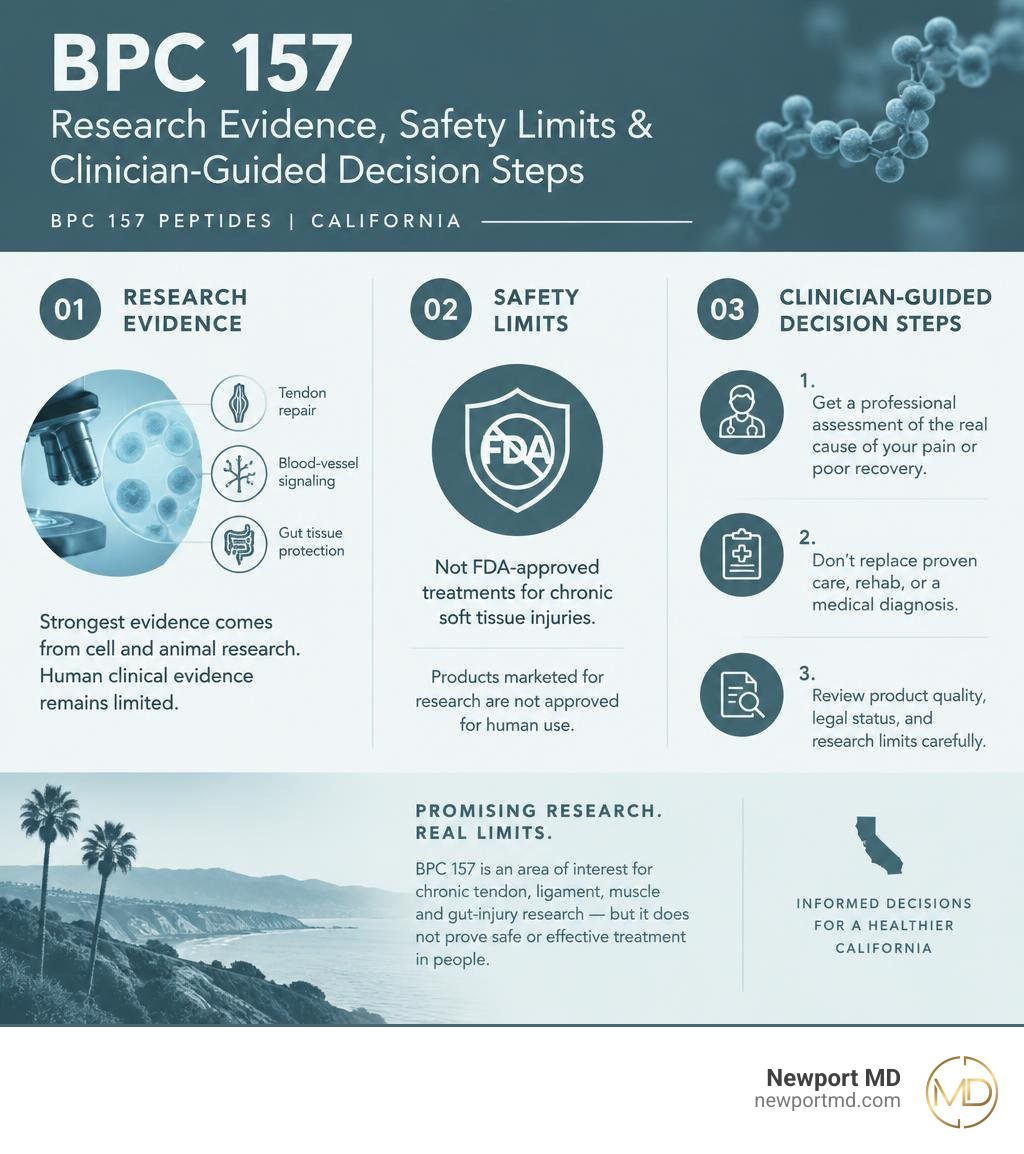
BPC 157 peptides in California are not FDA-approved treatments for chronic soft tissue injuries. The strongest evidence comes from cell and animal research, where this 15-amino-acid peptide has been associated with tendon repair, blood-vessel signaling, and gastrointestinal tissue protection. Human clinical evidence remains limited.
If you are considering BPC-157, start with these steps:
- Ask a qualified healthcare provider to assess the actual cause of ongoing pain or poor recovery.
- Understand that BPC-157 should not replace proven injury care, rehabilitation, or a medical diagnosis.
- Review product quality, legal status, and research limits carefully. Products marketed for research are not approved for human use.
Preclinical studies suggest BPC-157 may influence pathways involved in fibroblast movement, collagen organization, angiogenesis, and tissue protection. That makes it a topic of interest for chronic tendon, ligament, muscle, and gut-injury research, but it does not prove safe or effective treatment in people.
Researchers and clinicians who follow the peptide literature often compare BPC-157 with other regenerative compounds, including TB-500, because both have been studied in laboratory models of soft tissue repair. However, the mechanisms are not identical, and the regulatory status of each compound remains distinct. For Californians, the practical takeaway is that BPC-157 is currently a research-use-only substance, not a clinical therapy that can be prescribed or administered as part of standard medical care.
I am Joe Semerdjian, and I will walk through what the research says, where its limits are, and what Californians should know before making health decisions.
Simple bpc 157 peptides california word guide:
Understanding BPC 157 Peptides California Research and Biological Mechanisms

At Newport MD, our team closely follows the emerging literature surrounding regenerative compounds and the biological potential of peptides. BPC-157—short for Body Protection Compound 157—is a synthetic pentadecapeptide composed of 15 amino acids (sequence: Gly-Glu-Pro-Pro-Pro-Gly-Lys-Pro-Ala-Asp-Asp-Ala-Gly-Leu-Val). It has a molecular weight of 1419.55 Da and is registered under CAS number 137525-51-0. Originally isolated as a stable fragment of a naturally occurring protective protein found in gastric juice, BPC-157 has generated substantial interest across more than 180 PubMed-indexed preclinical studies.
In animal and in vitro models, the peptide displays notable biological activity at picomolar concentrations. Researchers have focused on two primary mechanisms of action:
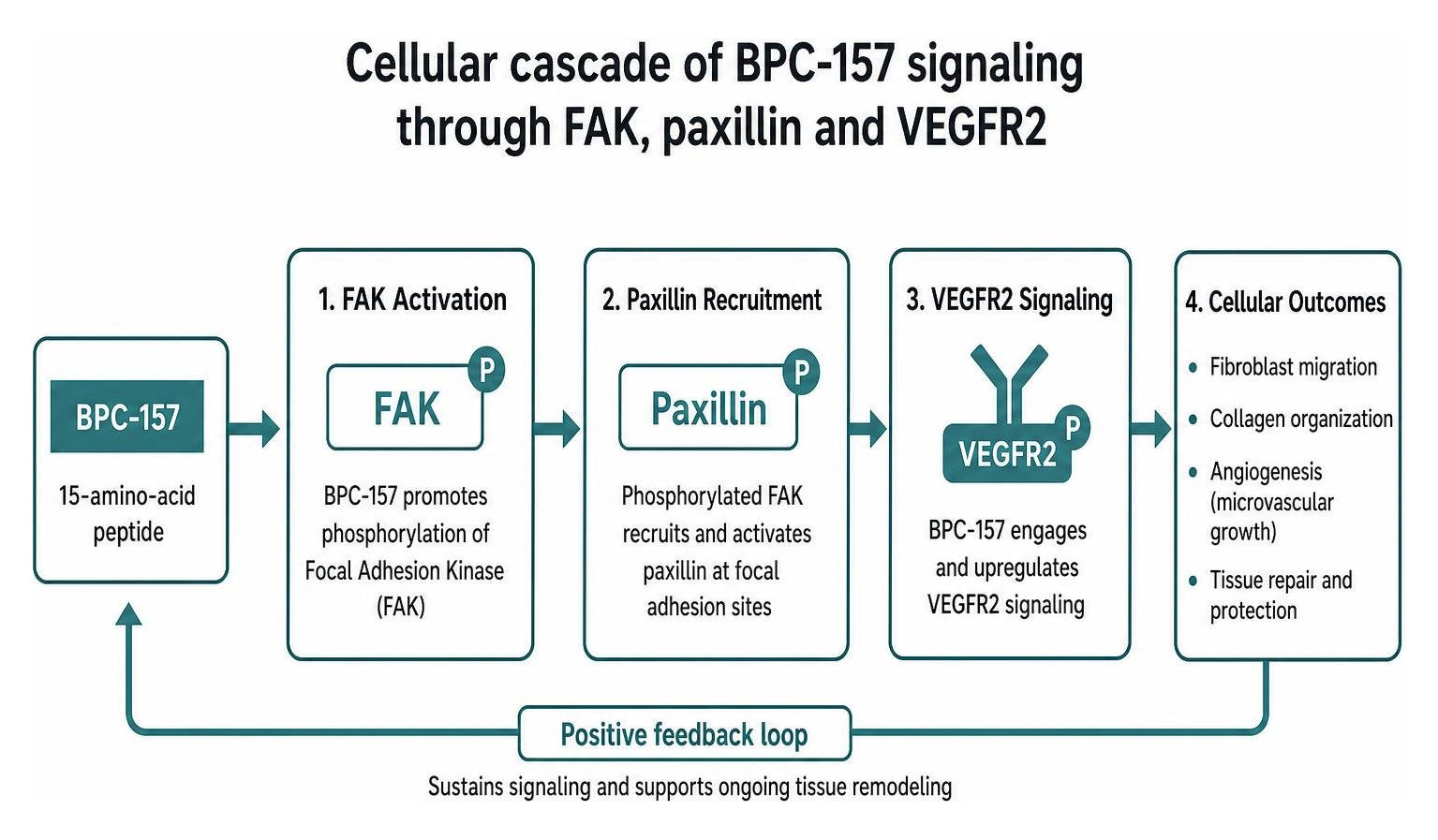
- FAK-Paxillin Pathway Activation: BPC-157 promotes the phosphorylation of Focal Adhesion Kinase (FAK) and paxillin, structural proteins critical for cell migration, focal adhesion assembly, and tissue restructuring.
- Angiogenesis and VEGFR2 Upregulation: The sequence interacts with vascular endothelial growth factor receptor 2 (VEGFR2), stimulating early microvascular growth and modulating the nitric oxide (NO) system to support healthy blood flow to hypovascular tissues.
These proposed mechanisms are drawn from laboratory observations rather than confirmed human clinical outcomes. The distinction matters because cellular signaling in controlled experimental models does not automatically translate into predictable tissue repair in people. For a broader scientific overview of peptide classification and function, the National Center for Biotechnology Information provides peer-reviewed molecular biology resources that can help readers understand how peptide sequences are characterized and studied.
Cellular Pathways in Tendon and Ligament Regeneration
Tendon and ligament injuries present a distinct clinical challenge because dense connective tissue receives limited blood supply. In laboratory models of Achilles tendon transection, BPC-157 exposure has been associated with accelerated fibroblast outgrowth, enhanced synthesis of functional type I collagen, and improved biomechanical tensile strength. For those exploring foundational peptide basics, understanding these cellular cascades helps explain why scientists study pentadecapeptides to address structural tissue repair.
It is important to note that these findings come primarily from rodent and in vitro studies. While the observed effects on fibroblast migration and collagen organization are scientifically interesting, they do not yet establish that BPC-157 can reliably accelerate tendon or ligament healing in humans. Clinicians evaluating chronic tendinopathy in California should continue to prioritize evidence-based rehabilitation, diagnostic imaging, and individualized medical assessment rather than relying on experimental peptides as a substitute for standard care.
Gastrointestinal and Multi-System Healing Properties
Unlike many fragile peptide structures, BPC-157 remains structurally stable in human gastric juice for over 24 hours. Preclinical literature outlines significant mucosal cytoprotection in rodent models exposed to nonsteroidal anti-inflammatory drugs (NSAIDs), ethanol, and surgical anastomosis. These findings suggest that the compound supports gut barrier integrity through endothelial preservation and tight junction maintenance, pointing toward targeted peptide therapy for digestive repair as an active field of experimental study.
Researchers have also examined BPC-157 in models of esophageal reflux, inflammatory bowel disease, and anastomotic healing. The peptide’s apparent stability in gastric secretions distinguishes it from many other synthetic peptides that degrade rapidly in the digestive tract. Still, the absence of robust human clinical trials means that gastrointestinal applications remain investigational. Anyone interested in gut health should work with a qualified provider who can recommend validated diagnostic and treatment approaches rather than experimental compounds.
Comparing Tissue Repair Compounds: BPC-157 vs. TB-500
When evaluating research literature on cellular repair, BPC-157 is frequently contrasted with TB-500, a synthetic fragment of the naturally occurring peptide Thymosin Beta-4. While both exhibit regenerative properties in preclinical settings, their molecular targets and mechanisms differ substantially.
| Feature / Mechanism | BPC-157 (Body Protection Compound) | TB-500 (Thymosin Beta-4 Fragment) |
|---|---|---|
| Primary Structure | 15-amino-acid synthetic sequence | 43-amino-acid peptide fragment (LKKTETQ core) |
| Primary Action | FAK-paxillin activation; VEGFR2 signaling | Actin filament sequestration; cell motility |
| Tissue Selectivity | Tendons, ligaments, GI tract, microvasculature | Broad muscular, dermal, and systemic migration |
| Gastric Stability | Highly stable in gastric secretions | Rapidly degraded in digestive enzymes |
| Primary Research Role | Focal structural repair and cytoprotection | Systemic cellular migration and flexibility |
Researchers investigating synergistic BPC-157 and TB-500 combinations often observe complementary biological signaling, where TB-500 facilitates actin-driven cell movement while BPC-157 anchors cell adhesion and local vascularization.
Synergistic Effects in Connective Tissue Restoration
The combined application of these pathways has led scientists to investigate whether co-administration enhances collagen deposition and microvascular perfusion more effectively than single-agent protocols. However, it is essential to distinguish laboratory promise from confirmed clinical practice; separating the therapeutic potential and realities of BPC-157 requires objective medical oversight and evidence-based caution.
For readers who want to understand the broader scientific context of peptide research, the U.S. Food and Drug Administration offers regulatory guidance on how investigational compounds are evaluated before they can be marketed for human use. This background can help clarify why preclinical findings, however promising, do not automatically support clinical application.
Sourcing and Laboratory Protocols for Tissue Repair Peptides
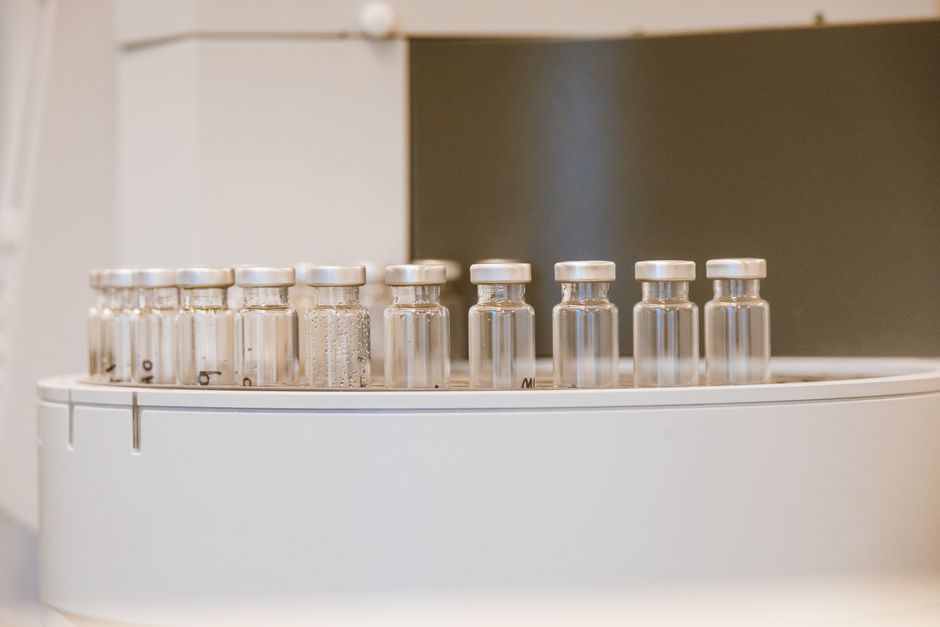
For California research institutions and laboratories, sourcing high-purity chemical compounds is paramount to experimental reproducibility. High-performance liquid chromatography (HPLC) and mass spectrometry (MS) serve as the industry gold standards to confirm compound identity, exact molecular mass, and absence of synthetic contaminants.
Laboratory Reconstitution and Handling Standards for BPC 157 Peptides California
Lyophilized peptide material requires strict adherence to laboratory hygiene and temperature controls:
- Solvent Addition: Reconstitute lyophilized powder using sterile bacteriostatic water (0.9% benzyl alcohol) by gently introducing the diluent down the glass vial wall.
- Handling: Never vortex or vigorously shake the solution, as mechanical shear stress can disrupt delicate peptide chains; gently swirl until fully dissolved.
- Storage: Maintain lyophilized vials at -20°C for long-term preservation; once reconstituted, store solutions between 2°C and 8°C protected from light, utilizing aliquots within 30 to 60 days to prevent degradation.
These handling standards are designed for laboratory and research environments, not for at-home or clinical use. Because BPC-157 is not approved for human administration, there are no established clinical dosing, reconstitution, or storage protocols for patient care. Researchers should follow institutional safety guidelines and document all procedures according to their facility’s standard operating procedures.
Navigating Quality Assurance for BPC 157 Peptides California
Quality assurance protocols demand a batch-specific Certificate of Analysis (COA) confirming greater than or equal to 99% purity. Researchers must verify independent laboratory validation to ensure analytical consistency, reflecting broader standards observed across preventive health and longevity peptide advances.
A reliable COA should include HPLC chromatograms, mass spectrometry data, and residual solvent analysis. Independent third-party verification adds another layer of confidence, particularly when sourcing from suppliers that market research peptides online. California laboratories should also confirm that suppliers comply with state chemical handling and shipping regulations, and that all documentation is retained for audit purposes.
Regulatory Landscape and Research Compliance in California
The legal landscape surrounding synthetic peptides requires careful navigation. In California, BPC-157 is legally available exclusively for in vitro and animal research under the Research Use Only (RUO) designation.
Federal and California state regulatory guidelines establish clear parameters:
- Research Classification: Compounds designated as RUO are strictly non-clinical and must not be sold, labeled, or administered for human consumption, therapeutic use, or diagnostic applications.
- Institutional Oversight: Academic and private research initiatives within California must adhere to Institutional Animal Care and Use Committee (IACUC) standards, standard operating procedures (SOPs), and strict environmental safety protocols.
- Clinical Integration: Clinicians cannot prescribe or administer non-FDA-approved RUO peptides as standard therapies. Any medical protocol for tissue rehabilitation must rely on established, approved therapeutic modalities guided by licensed healthcare providers.
This regulatory framework exists to protect both researchers and the public. Because BPC-157 has not undergone the clinical trials required for FDA approval, its safety and efficacy in humans remain unestablished. Californians who encounter clinics, spas, or online vendors marketing BPC-157 for injection, oral use, or injury recovery should approach such claims with caution. Legitimate medical providers at Newport MD and elsewhere in California focus on evidence-based diagnostics and approved treatment pathways rather than experimental research chemicals.
Frequently Asked Questions About BPC-157
How does BPC-157 accelerate tendon and ligament recovery?
Preclinical evidence demonstrates that BPC-157 stimulates the phosphorylation of FAK and paxillin proteins within fibroblasts, facilitating cell migration toward damaged tissue sites while upregulating growth factors and vascular remodeling via VEGFR2 pathways. These findings come from laboratory and animal models, and they have not been confirmed in human clinical trials. As a result, the term “accelerate” should be understood as a description of experimental observations rather than a proven clinical outcome.
What is the recommended storage protocol for reconstituted BPC-157?
In laboratory settings, reconstituted BPC-157 should be stored in a dedicated refrigeration unit at 2°C to 8°C, protected from light exposure, and used within 30 to 60 days to preserve peptide stability and minimize contamination risks. Lyophilized powder is typically maintained at -20°C for longer-term storage. These protocols apply to research use only and are not intended as guidance for human administration.
Is BPC-157 legal for research purposes in California?
Yes. BPC-157 is legal to purchase and possess in California when strictly designated and utilized for laboratory and animal research purposes (RUO) in compliance with state chemical handling guidelines and federal regulations. It is not legal to sell, market, or administer BPC-157 for human consumption or therapeutic use in California.
Conclusion
The scientific inquiry surrounding BPC-157 highlights exciting advancements in translational regenerative medicine and soft tissue biology. While preclinical data reveals encouraging mechanisms in cellular migration, angiogenesis, and mucosal integrity, these laboratory insights must not be conflated with proven clinical therapies.
At Newport MD, our clinical philosophy centers on science-driven, evidence-based healthcare. We guide our patients through validated treatment strategies, comprehensive diagnostic testing, and physician-supervised protocols tailored to individual physiological needs. To learn more about our medical approach to wellness and recovery, explore our comprehensive health optimization services.
For Californians interested in peptide science, the most responsible path forward is to stay informed about the evolving research while working with qualified medical professionals who can recommend appropriate, approved interventions. BPC-157 remains an intriguing research compound, but its clinical future depends on rigorous human studies that have not yet been completed.