

Is BPC-157 Too Good to Be True
The BPC 157 Peptide: Promising Science or Overhyped Trend?
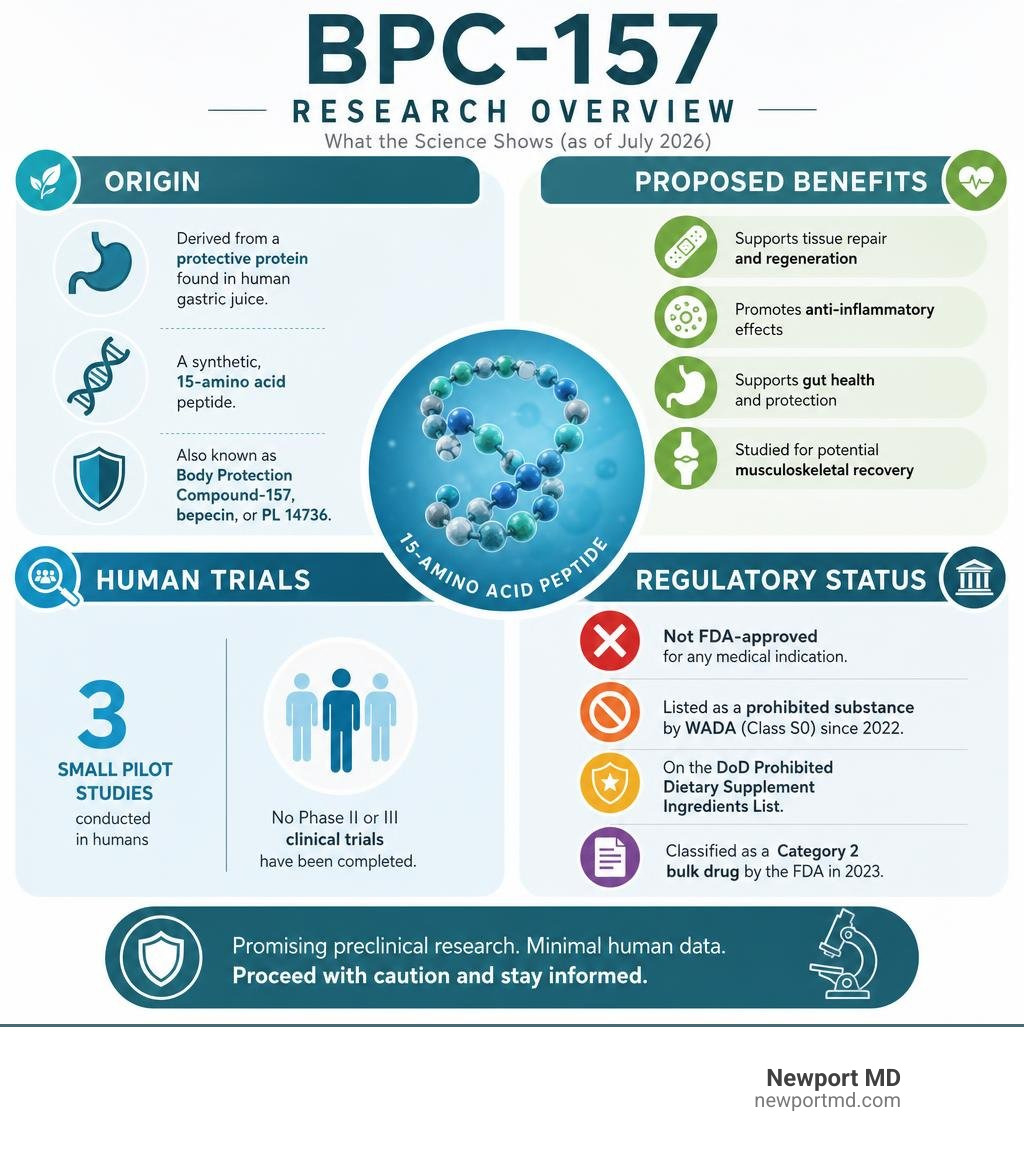
The BPC 157 peptide has become one of the most talked-about compounds in regenerative medicine and health optimization circles — and for good reason. It sits at a fascinating crossroads: robust animal research on one side, a near-complete absence of large human clinical trials on the other.
Here’s a quick summary of what the evidence actually shows:
What BPC-157 is:
- A synthetic, 15-amino acid peptide derived from a protective protein found in human gastric juice
- Also known as Body Protection Compound-157, bepecin, or PL 14736
- Studied for tissue repair, anti-inflammatory effects, and gut protection
What the research shows (as of July 2026):
- Over 100 preclinical (animal) studies suggest regenerative and cytoprotective effects
- Only three small pilot studies have examined BPC-157 in humans
- No Phase II or III clinical trials have been completed
What you need to know about its status:
- Not FDA-approved for any medical indication
- Listed as a prohibited substance by WADA (Class S0) since 2022
- On the DoD Prohibited Dietary Supplement Ingredients List
- Classified as a Category 2 bulk drug by the FDA in 2023
If you’re a health-conscious adult exploring peptide therapy for recovery, energy, or performance, BPC-157 may already be on your radar. But before drawing conclusions, it’s worth understanding what the science actually says — not just what wellness influencers are claiming.
The gap between animal studies and human evidence is significant. And the regulatory picture is complicated. This guide breaks both down clearly, so you can have an informed conversation with your clinician.
Understanding the BPC 157 Peptide: Origin and Structure
To understand why researchers are so intrigued by the bpc 157 peptide, we have to look at its structural blueprint.
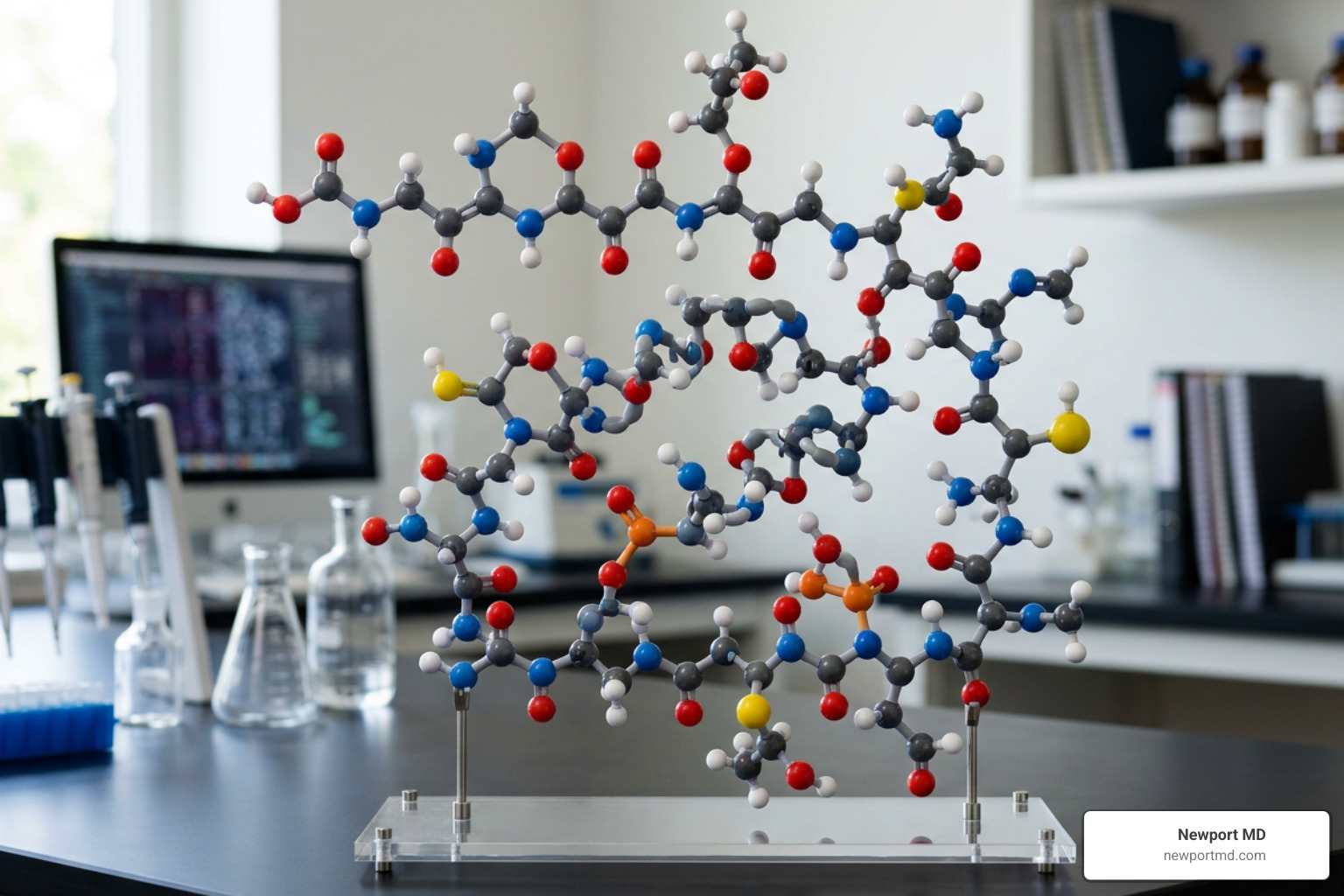
Chemically speaking, BPC-157 is a “pentadecapeptide”—a fancy way of saying it is a chain of 15 amino acids. Its molecular formula is $C_{62}H_{98}N_{16}O_{22}$, and it has a molecular weight of approximately 1419.55 grams per mole. You can explore its complete chemical profile on the Chemical structure of BPC-157 database page.
What makes this synthetic peptide unique is its origin story. It is derived from a naturally occurring, protective protein found in human gastric juice. In the early 1990s, a research group led by Predrag Sikiric at the University of Zagreb isolated this compound, recognizing its role in shielding the stomach lining from digestive acids and promoting cellular survival.
Chemical Profile and Gastric Origin
In scientific literature and patent filings, you might see BPC-157 referred to by its development codes or alternative names, such as bepecin or PL 14736.
Unlike many other therapeutic peptides that break down almost instantly when exposed to harsh digestive fluids, BPC-157 possesses a highly resilient structure. Its stability in gastric juice—which remains intact for more than 24 hours—is primarily due to its specific sequence containing “triple proline motifs.” These motifs act like structural armor, preventing non-specific proteolysis (the breakdown of proteins by enzymes). Additionally, an N-terminally located glycine acts as a stabilizer against enzymatic degradation.
This extreme stability is a major reason why researchers study BPC-157 through multiple administration routes, including oral pathways. However, as noted in the BPC-157 overview on Wikipedia, despite its gastric origin, the synthetic 15-amino acid sequence does not share direct structural homology with other known gut hormones, making it a highly distinct biological agent.
Proposed Mechanisms and Healing Pathways
How exactly does this tiny chain of amino acids signal the body to repair itself? While we do not have absolute clinical proof in humans, extensive laboratory models suggest that BPC-157 operates as a multi-pathway signaling molecule rather than a simple building block.
How the BPC 157 Peptide Interacts with the Body
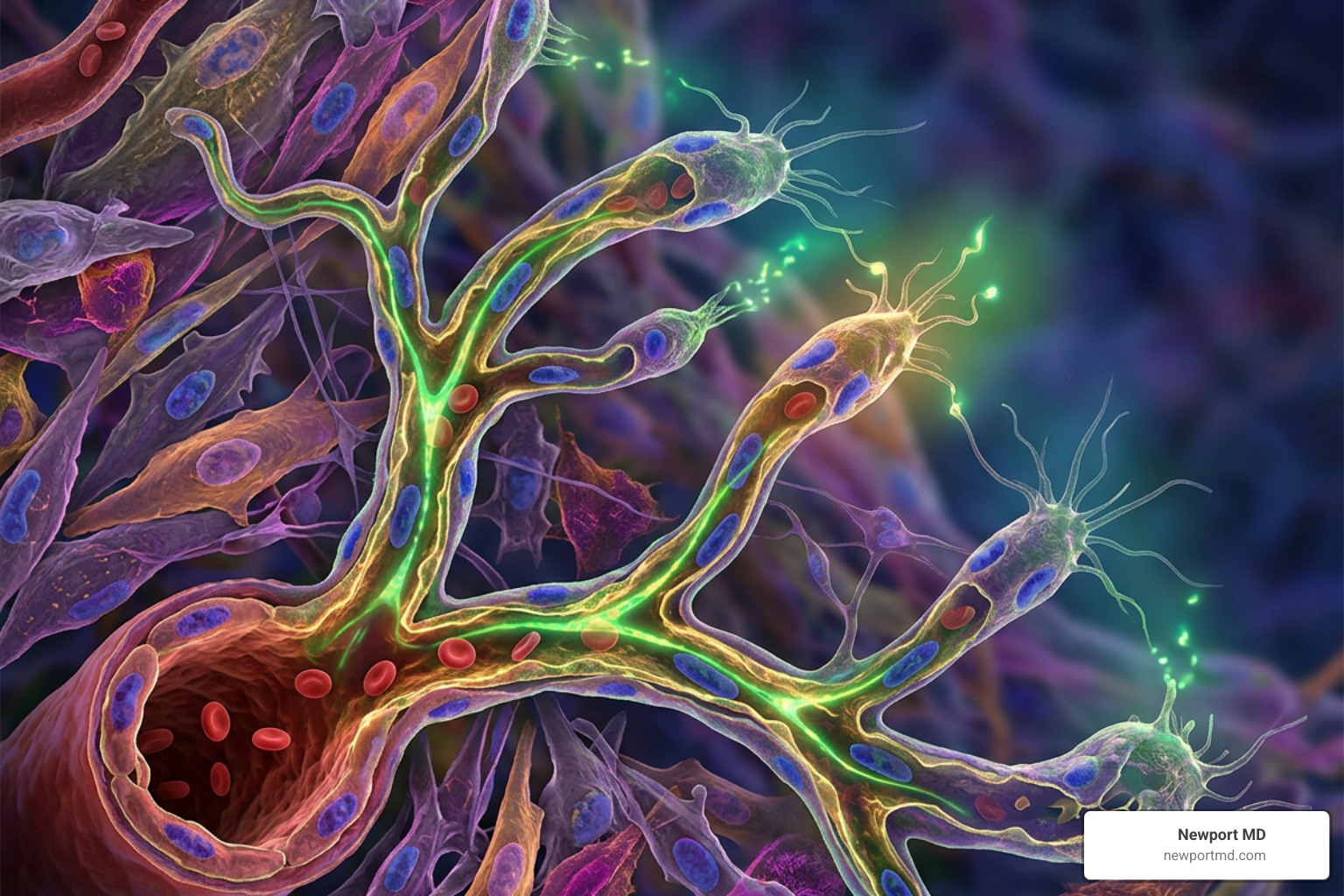
At the cellular level, the bpc 157 peptide appears to influence several crucial pathways involved in wound healing and inflammation:
- VEGFR2 Activation: BPC-157 upregulates the expression of Vascular Endothelial Growth Factor Receptor 2 (VEGFR2), initiating a cascade that leads to new blood vessel formation.
- The Akt-eNOS Pathway: By stimulating endothelial nitric oxide synthase (eNOS), the peptide modulates nitric oxide (NO) production. Moderate, localized NO release is associated with tissue protection and healthy vascular tone.
- The FAK-paxillin Pathway: This intracellular signaling pathway is crucial for cell migration. BPC-157 is believed to promote the migration and proliferation of fibroblasts (collagen-producing cells) to the site of an injury.
- Macrophage Modulation: The peptide may help shift the local immune response from a pro-inflammatory state (M1 macrophages) to a pro-healing, anti-inflammatory state (M2 macrophages).
To learn more about how cellular signaling works in regenerative medicine, you can read our comprehensive guide on Peptides and cellular signaling.
Angiogenesis and Tissue Regeneration
The most celebrated potential benefit of BPC-157 is its relationship with angiogenesis—the physiological process through which new blood vessels form from pre-existing ones.
Tissues like tendons, ligaments, and cartilage are notoriously slow to heal because they have a very poor blood supply. By stimulating VEGF and promoting cell migration, BPC-157 may help carry oxygen, nutrients, and healing factors to these stubborn “white zone” tissues.
Interestingly, animal research suggests that BPC-157 does not cause uncontrolled blood vessel growth. For instance, in corneal wound models, it promoted healing without causing abnormal neovascularization (cloudy vessel growth over the eye). This context-dependent behavior is a major focus of ongoing BPC-157 recovery evidence reviews.
Clinical Evidence, Safety, and Regulatory Status
If BPC-157 sounds like a miracle compound, this is where we must inject some healthy clinical skepticism. The gap between a laboratory rodent and a human patient is vast.
Preclinical Success vs. Human Trials
In animal models, BPC-157 has achieved remarkable milestones:
- Tendon Healing: Rat studies of Achilles and quadriceps tendon transections showed accelerated healing and improved biomechanical “load-to-failure” metrics within 10 to 14 days.
- Muscle Recovery: In muscle crush injury models, rapid fiber regeneration was observed within one to two weeks.
- Neurological Support: In spinal cord injury models, some animals maintained functional improvements up to 360 days after a single treatment.
However, we must watch out for publication bias. In the scientific community, studies showing positive, dramatic results are far more likely to be published than studies showing no effect. Furthermore, a substantial portion of the published animal literature on BPC-157 has originated from a single, highly dedicated research group in Croatia. Independent, multi-center replication is still limited.
We regularly discuss the importance of separating marketing hype from peer-reviewed evidence on our Health Optimization Blog.
Current Pilot Studies and Findings
To date, there are only three published pilot studies involving BPC-157 in humans. Here is what they evaluated:
- Intraarticular Knee Pain (2021): A retrospective study evaluated 16 patients with chronic knee pain who received local joint injections of BPC-157 (or BPC-157 combined with Thymosin Beta-4). The study reported that 14 out of 16 patients (87.5%) experienced significant pain relief.
- Interstitial Cystitis bladder pilot: A small pilot study of 12 individuals with moderate-to-severe interstitial cystitis (painful bladder syndrome) utilized direct intravesical (bladder) instillations of BPC-157. At 6 weeks post-treatment, researchers noted an 80% to 100% resolution of symptoms.
- Intravenous Safety & Pharmacokinetics (2025): A pilot study evaluated two healthy adult volunteers who received intravenous infusions of BPC-157 up to 20 mg. The treatment was well-tolerated, with no adverse events, no clinically meaningful changes in vital signs, and rapid clearance from the bloodstream within 24 hours.
| Parameter | Preclinical (Animal) Findings | Human Clinical Trial Data |
|---|---|---|
| Primary Focus | Soft tissue repair, bone healing, gastroprotection, neuroprotection | Initial safety, tolerability, and pilot efficacy for knee pain/cystitis |
| Study Volume | 100+ peer-reviewed studies | 3 small pilot/retrospective studies |
| Half-Life | Extremely short (estimated < 30 minutes in rats/dogs) | Confirmed rapid clearance; undetectable in plasma within 24 hours |
| Toxicity Profile | No minimum toxic or lethal dose identified in acute or 28-day safety studies | Well-tolerated in pilot subjects; no serious adverse events reported |
FDA, WADA, and DoD Classifications
Because of the lack of large-scale, randomized controlled trials (RCTs), regulatory bodies have taken a strict stance:
- The FDA: BPC-157 is not an approved drug and is not a dietary ingredient. It cannot be legally prescribed or sold over the counter. In 2023, the FDA classified BPC-157 as a Category 2 bulk drug substance, heavily restricting compounding pharmacies from using it due to concerns regarding immunogenicity, potential contamination, and lack of human safety data.
- WADA: The World Anti-Doping Agency banned BPC-157 in 2022. It is listed under Class S0: Non-Approved Substances. Any athlete subject to drug testing will face penalties if they test positive for BPC-157 or its metabolites (which can remain detectable in urine for 4 to 5 days using mass spectrometry).
- The Department of Defense (DoD): BPC-157 is on the DoD Prohibited Dietary Supplement Ingredients List. Active-duty military personnel are strictly advised to avoid any products containing it.
Sourcing and Administering BPC 157 Peptide Safely
Because BPC-157 cannot be legally prescribed as an approved medication, a massive gray market has emerged. Online vendors sell it labeled as “research chemicals” or “for research purposes only.”
Buying from these unregulated sources carries extreme risks. Independent analyses of online peptide vendors have found that 12% to 58% of ergo-nutritional supplements and research peptides are contaminated, under-dosed, or contain entirely different compounds.
In clinical settings where peptide therapy is explored under medical supervision, safety is the absolute priority. Clinicians rely strictly on accredited, high-standard pharmacies that provide independent third-party purity testing and certificates of analysis (COAs) showing greater than 99% purity. Regardless of where you live, you should never purchase research chemicals online for self-administration.
Frequently Asked Questions About BPC-157
Navigating peptide therapy can be confusing. Here are some of the most common questions patients ask our clinical team.
Is BPC-157 approved by the FDA?
No. BPC-157 is an unapproved drug. It is not listed in the FDA’s Approved Drugs database. The FDA has cautioned against its use due to the absence of large-scale clinical trials proving its safety, efficacy, and long-term side-effect profile in humans.
What is the half-life of BPC-157?
BPC-157 has an extremely short elimination half-life of less than 30 minutes (with some animal studies showing a range of 7.9 to 30 minutes). Despite this rapid clearance from the blood, preclinical studies suggest that its downstream tissue-regeneration and gene-expression effects can persist for weeks or even months.
Can BPC-157 be taken orally?
Yes, BPC-157 is highly stable in gastric acid due to its unique molecular structure. However, while oral administration is highly effective for localized gastrointestinal healing (such as inflammatory bowel issues or ulcers), it is still unclear how effectively oral BPC-157 can cross into systemic circulation to reach distant, poorly vascularized injury sites like a torn Achilles tendon. For musculoskeletal issues, subcutaneous or intramuscular routes are more commonly studied.
Conclusion
Is BPC-157 too good to be true? The honest answer is: it is too early to tell.
The preclinical science is undeniably exciting, showing a unique ability to coordinate healing pathways, reduce inflammation, and support tissue regeneration. However, without robust, double-blind, placebo-controlled human trials, BPC-157 remains an investigational compound that must be approached with caution, clinical guidance, and realistic expectations.
At Newport MD, we believe that true recovery and longevity are built on a foundation of personalized, science-driven wellness. If you are struggling with chronic pain, slow injury recovery, or poor energy, we recommend starting with comprehensive diagnostic testing. Often, optimizing your foundational health through customized Hormone Optimization and targeted lifestyle medicine yields the most sustainable, proven results.
If you would like to discuss your recovery goals and explore safe, clinically supervised health optimization options in Newport Beach, CA, we invite you to take the next step.
Book a Consultation with Newport MD or Explore Peptide Therapy at Newport MD to learn more about our medical programs.