

Beginner’s Guide to Testosterone Therapy: Basics & Risks
Is Testosterone Therapy Right for Low Energy and Other Symptoms?
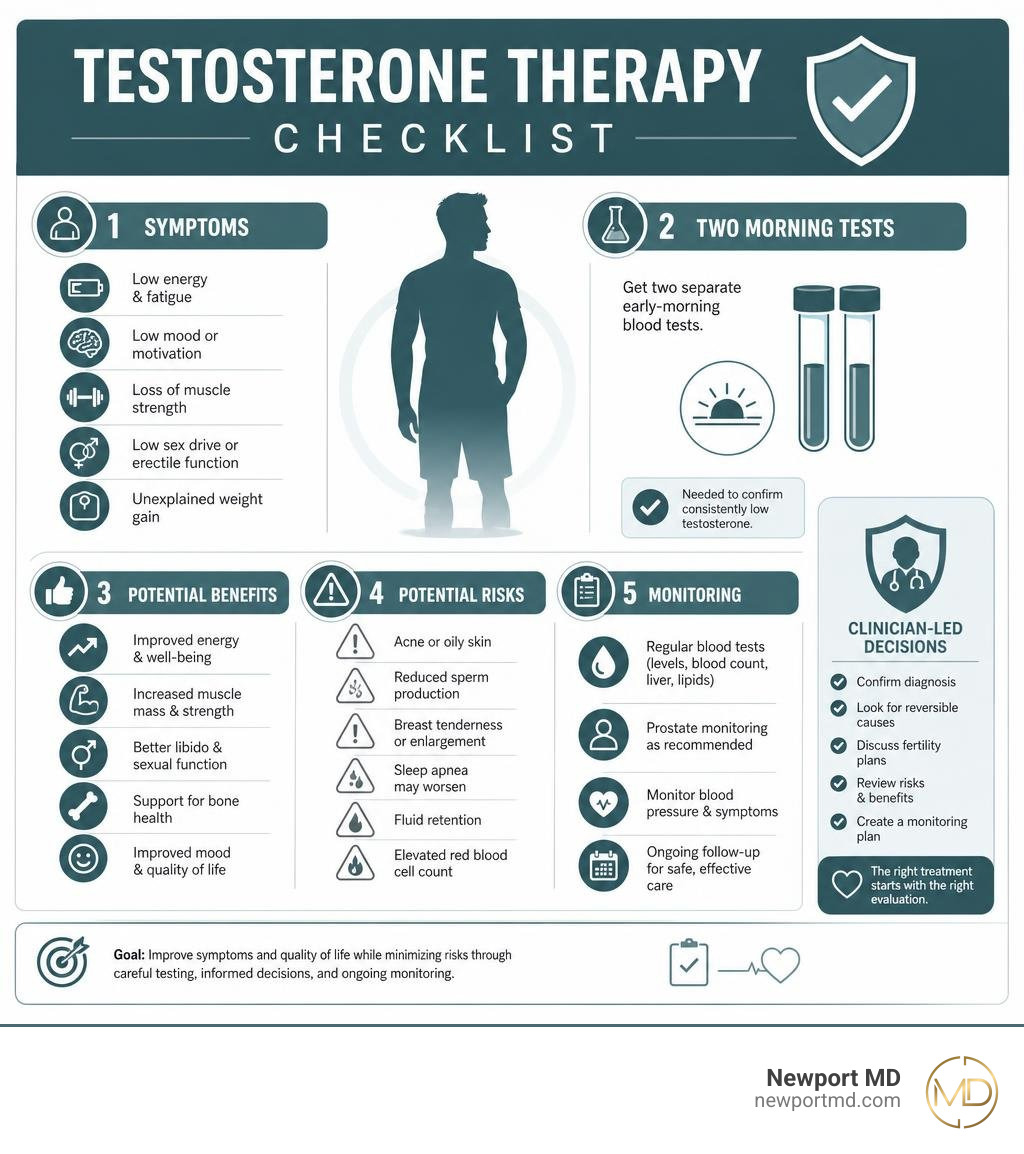
Testosterone therapy may help adults with confirmed low testosterone and related symptoms, but it is not a general anti-aging treatment. The safe first step is a clinician-led evaluation: review symptoms, take two separate early-morning blood tests, look for reversible causes such as poor sleep or excess weight, and discuss fertility plans and health risks before treatment.
Testosterone supports sex drive, erections, muscle and bone health, red blood cell production, mood, and energy. Levels often fall gradually with age, but fatigue, lower performance, and weight changes can also come from stress, sleep apnea, depression, medications, thyroid conditions, or other health concerns.
The key distinction is between normal age-related change and hypogonadism: a medical condition involving both persistent symptoms and repeatedly low lab results. For men considering treatment, the potential upside must be weighed against risks such as acne, reduced sperm production, breast tenderness or enlargement, sleep apnea worsening, fluid retention, and an elevated red blood cell count. Ongoing blood tests and prostate-focused monitoring are part of responsible care.
I’m Joe Semerdjian, and this guide explains the practical basics, risks, testing, and long-term decisions involved in testosterone therapy.
Glossary for testosterone therapy:
What Is Testosterone Therapy and How Does It Work?
The Biological Role of Testosterone
Testosterone is the primary male sex hormone, produced largely by the Leydig cells in the testes under the regulatory guidance of the brain’s hypothalamus and pituitary gland. It travels through the bloodstream, where the majority binds to sex hormone-binding globulin (SHBG) and albumin, leaving a small fraction as free testosterone. Together, free and albumin-bound forms represent bioavailable testosterone—the fraction readily available to bind with cellular androgen receptors.
Once testosterone engages these receptors, it triggers processes that support protein synthesis in skeletal muscle tissue, stimulate bone mineralization, regulate lipid metabolism, and influence neural pathways that govern mood, cognitive focus, and sexual desire. Testosterone can also be converted directly into dihydrotestosterone (DHT), which acts in tissues like the prostate and skin, or aromatized into estradiol, an essential estrogen that helps maintain male bone density and vascular flexibility.
Age-Related Decline vs. Clinical Hypogonadism
Starting around age 30 or 40, circulating serum testosterone levels in men tend to decline at an average rate of roughly 1% per year. By age 70, a man’s testosterone is frequently about 30% below its youthful peak. However, this gradual change is often part of the natural aging process, and total levels frequently remain within the broad physiological reference range of roughly 300 to 1,000 ng/dL.
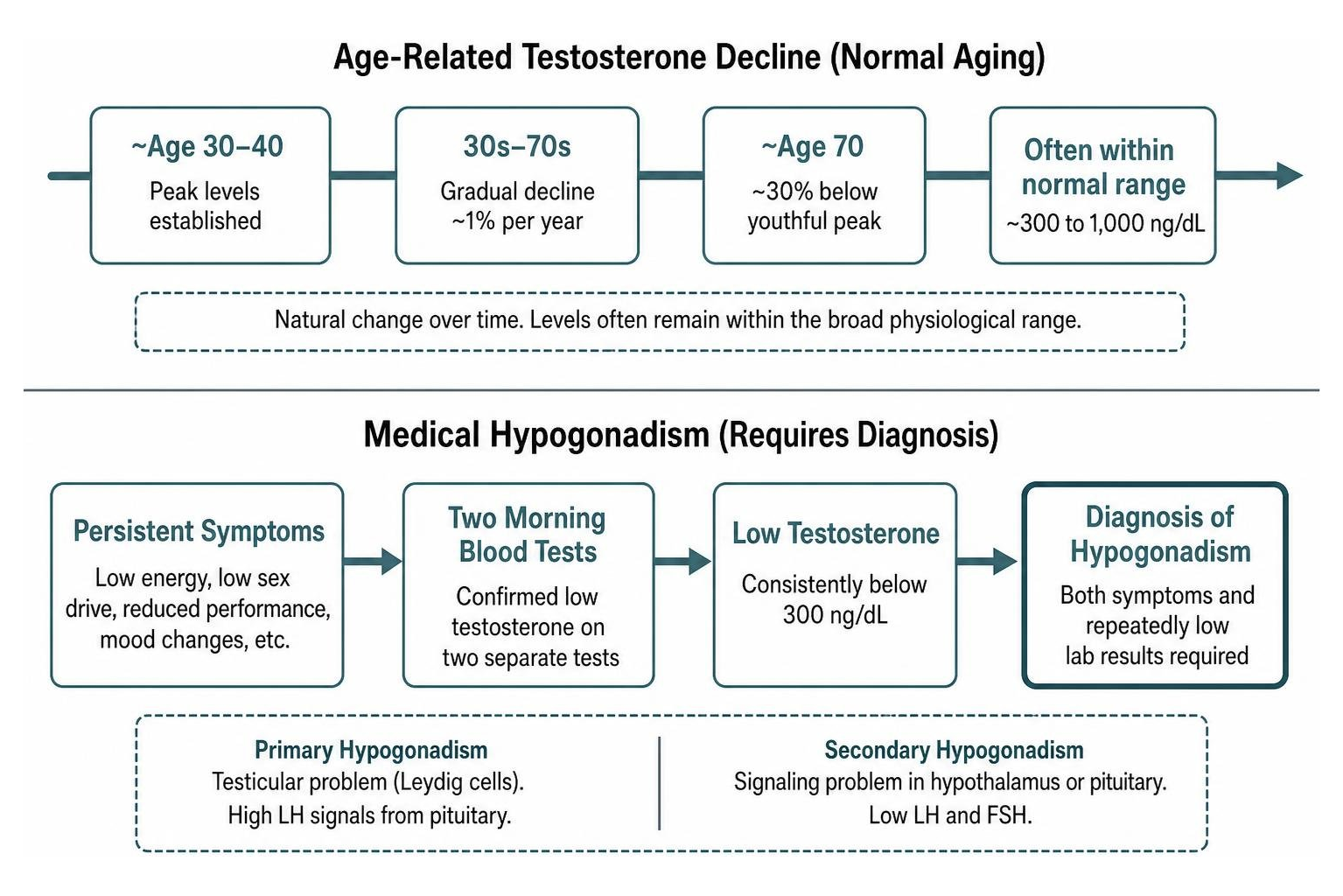
Clinical hypogonadism differs from simple chronological aging. According to the American Urological Association guidelines, hypogonadism requires both persistent, characteristic symptoms and confirmed low serum concentrations below 300 ng/dL on multiple occasions.
Medical providers distinguish between two main categories:
- Primary Hypogonadism: Originates within the testes themselves, where Leydig cells cannot produce adequate hormone despite elevated signals (luteinizing hormone, or LH) from the pituitary gland.
- Secondary Hypogonadism: Arises from a signaling failure within the hypothalamus or pituitary gland, resulting in low LH and follicle-stimulating hormone (FSH) production.
Learning about decoding your hormone blood test helps patients understand these diagnostic markers and partner effectively with their clinicians.
Who Is an Ideal Candidate for Testosterone Therapy?
An ideal candidate is an adult experiencing clinically documented low testosterone alongside persistent symptoms that interfere with daily well-being. Common indicators that prompt medical review include marked loss of libido, erectile difficulties, unexplained loss of lean muscle mass, persistent low energy, and low bone mineral density.
Before pursuing hormone replacement, it is important to undergo an individualized evaluation by a qualified healthcare provider to assess overall health, review current medications, and explore non-pharmacological factors. Understanding these criteria allows individuals to review understanding hormone therapy options within a structured clinical framework.
Key Benefits: What You Can Realistically Expect

When medically indicated, testosterone therapy aims to restore serum levels to a normal physiological range (typically between 450 and 600 ng/dL), rather than supraphysiologic levels. Clinical observations and prospective trials associate appropriate replacement with several key health improvements:
- Body Composition and Muscle Strength: Testosterone supports muscle protein synthesis, which can lead to modest increases in lean mass and reductions in visceral adipose tissue when paired with resistance training.
- Bone Mineral Density: Androgen receptor stimulation and peripheral aromatization into estradiol promote osteoblast activity, helping to maintain bone density over time.
- Sexual Function and Libido: Restoring physiologic androgen levels frequently improves sexual desire and spontaneous erections in men whose deficiency was the primary driver of dysfunction.
- Mood, Energy, and Cognitive Clarity: Many patients note improvements in persistent lethargy, brain fog, and dysthymic mood, though individual responses vary.
- Metabolic and Glycemic Markers: Normalizing androgen concentrations is associated with improved insulin sensitivity and better glycemic balance in men with metabolic syndrome.
Establishing accurate baseline markers by knowing what to expect from hormone panel testing allows clinicians to track these benefits objectively.
Weighing the Risks and Long-Term Safety Profile
What Are the Risks and Side Effects of Testosterone Therapy?
Every medical intervention involves potential trade-offs. Exogenous testosterone introduces biological changes that require careful medical oversight:

- Erythrocytosis and Polycythemia: Testosterone stimulates renal erythropoietin production, increasing red blood cell count. In fact, testosterone therapy can increase hemoglobin by 5% to 7%, and secondary polycythemia occurs in over 20% of men on therapy. If hematocrit rises above 54%, blood viscosity increases, which may raise the risk of vascular complications if unmonitored.
- Gynecomastia and Fluid Retention: A portion of circulating testosterone aromatizes into estradiol. In some individuals, this pathway can cause breast tissue sensitivity or enlargement (gynecomastia, reported in 10% to 25% of men on therapy) along with peripheral fluid retention.
- Obstructive Sleep Apnea (OSA): Hormone replacement can exacerbate underlying sleep-disordered breathing, requiring screening before and during treatment.
- Dermatological Reactions: Increased sebum production can trigger acne or oily skin, particularly across the back and shoulders.
A comprehensive StatPearls review on androgen replacement provides deeper insight into managing these adverse events under physician supervision.
Cardiovascular Health and Prostate Safety
Historical concerns suggested that testosterone therapy might accelerate cardiovascular complications or cause adverse prostate events. Modern clinical trials have added substantial clarity to this discussion.
The landmark TRAVERSE trial, which followed over 5,200 middle-aged and older men with confirmed hypogonadism and elevated cardiovascular risk, found no significant increase in major adverse cardiovascular events (such as non-fatal myocardial infarction or stroke) in men receiving topical testosterone compared to those receiving a placebo (Osterberg et al., 2014). Similarly, authoritative summaries like the Cleveland Clinic clinical overview of TRT highlight that while physiological hormone restoration does not appear to induce new prostate disease, regular prostate-specific antigen (PSA) surveillance and digital rectal examinations remain essential clinical safeguards.
Testosterone therapy can cause mild prostate volume enlargement of roughly 12%, consistent with normal physiological growth, but large analyses demonstrate that it does not typically worsen lower urinary tract symptoms in men with benign prostatic hyperplasia (BPH). A thoughtful review on evaluating if testosterone therapy is safe reinforces why individualized diagnostics are critical before beginning treatment.
Comparing Administration Methods: Gels, Injections, and Beyond
There are multiple delivery mechanisms for hormone replacement, each with distinct pharmacokinetic profiles, application routines, and clinical considerations.
| Delivery Method | Administration Frequency | Key Advantages | Potential Considerations |
|---|---|---|---|
| Intramuscular or Subcutaneous Injections (e.g., Cypionate, Enanthate) | Weekly or bi-weekly | Highly cost-effective; predictable dosing; avoids daily application | Peak-and-trough hormone fluctuations; local injection discomfort; higher rate of erythrocytosis |
| Transdermal Gels / Solutions | Daily morning application | Steady, stable serum concentrations; mimics natural circadian release | Risk of secondary transference to family members; skin irritation; variable skin absorption |
| Oral Undecanoate Capsules | Twice daily with meals | Non-invasive; avoids injection discomfort; bypasses primary liver toxicity via lymphatic uptake | Requires regular consumption with dietary fat; higher cost; requires strict meal timing |
| Nasal Gels / Buccal Patches | 2 to 3 times daily | Rapid absorption; minimal secondary transfer risk | Frequent daily dosing schedule; nasal irritation or gum sensitivity |
Clinicians consult FDA product labeling guidance when selecting the most appropriate administration route for each patient’s lifestyle and clinical needs.
Clinical Protocols: Testing, Treatment, and Monitoring
Safe androgen management requires a structured, multi-step medical approach rather than open-ended supplementation:
- Initial Diagnostic Confirmation: Total testosterone must be drawn between 7:00 AM and 10:00 AM on at least two separate mornings, as diurnal peaks occur early in the day. A comprehensive panel should also assess free testosterone, LH, FSH, prolactin, lipid profiles, comprehensive metabolic panels, and baseline PSA.
- Fertility Considerations: Exogenous testosterone suppresses the hypothalamic-pituitary-gonadal (HPG) axis, leading to reduced spermatogenesis and potential testicular shrinkage. For men desiring active or future fertility, alternative protocols—such as human chorionic gonadotropin (hCG) or selective estrogen receptor modulators (e.g., clomiphene citrate)—may be used to stimulate natural testicular production without compromising sperm counts.
- Long-Term Laboratory Surveillance: Follow-up assessments typically occur at 30 days, 3 to 6 months, and annually thereafter. These evaluations monitor hormone levels, hematocrit (pausing or adjusting therapy if hematocrit exceeds 54%), hepatic markers, and PSA changes.
Working alongside a qualified practitioner ensures these steps are handled carefully. You can explore finding a trusted TRT specialist to evaluate your baseline metrics and build a safe, personalized protocol (Sizar et al., 2023).
Frequently Asked Questions About Testosterone Replacement
Can you stop testosterone therapy once you begin?
Yes. Patients can discontinue testosterone therapy under medical supervision. Because exogenous testosterone suppresses the body’s natural signaling, endogenous hormone production may remain suppressed for weeks or months after stopping. Clinicians often implement a gradual tapering strategy or use adjunctive medications to assist the natural recovery of the hypothalamic-pituitary-gonadal axis.
How quickly do results appear after starting treatment?
Symptom improvements occur in stages:
- 3 to 6 Weeks: Enhancements in libido, sexual interest, and daytime energy levels often appear first.
- 1 to 3 Months: Improvements in glycemic regulation, mood stability, and systemic vitality typically manifest.
- 3 to 6 Months and Beyond: Noticeable changes in body composition, lean muscle mass, and bone mineral density continue to evolve over longer periods when combined with appropriate nutrition and exercise.
Does testosterone treatment cause infertility?
Exogenous testosterone signals the brain to reduce the output of LH and FSH, which halts natural intratesticular testosterone synthesis and suppresses sperm production. While this suppression is often reversible after stopping therapy, it can take several months or longer for sperm counts to recover. Men planning to father children should discuss fertility preservation strategies with their physician prior to initiating any hormone protocol.
Conclusion
Testosterone therapy is a clinically validated treatment for individuals diagnosed with hypogonadism, offering tangible improvements in energy, body composition, bone health, and sexual function. However, it is not a casual lifestyle shortcut or an automatic remedy for natural aging. Safe and effective outcomes rely on accurate diagnostics, thorough risk evaluations, and diligent ongoing monitoring.
At Newport MD in Newport Beach, CA, our clinical team focuses on personalized, science-driven wellness programs with expert medical oversight. We perform comprehensive laboratory testing and design individualized care plans tailored to your specific physiology. To take a measured, evidence-based approach to your health, reach out to our team to discuss personalized hormone optimization strategies today.
References
Osterberg EC, Bernie AM, Ramasamy R. “Risks of testosterone replacement therapy in men..” Indian journal of urology : IJU : journal of the Urological Society of India, 2014. PMCID PMC3897047. Omeed Sizar, Stephen W. Leslie, Jose Pico. “Androgen Replacement.” StatPearls Publishing, 2023. NBK534853.