

How to Get TRT and Reclaim Your Peak Performance
Why Getting TRT Right Starts With the Right Process
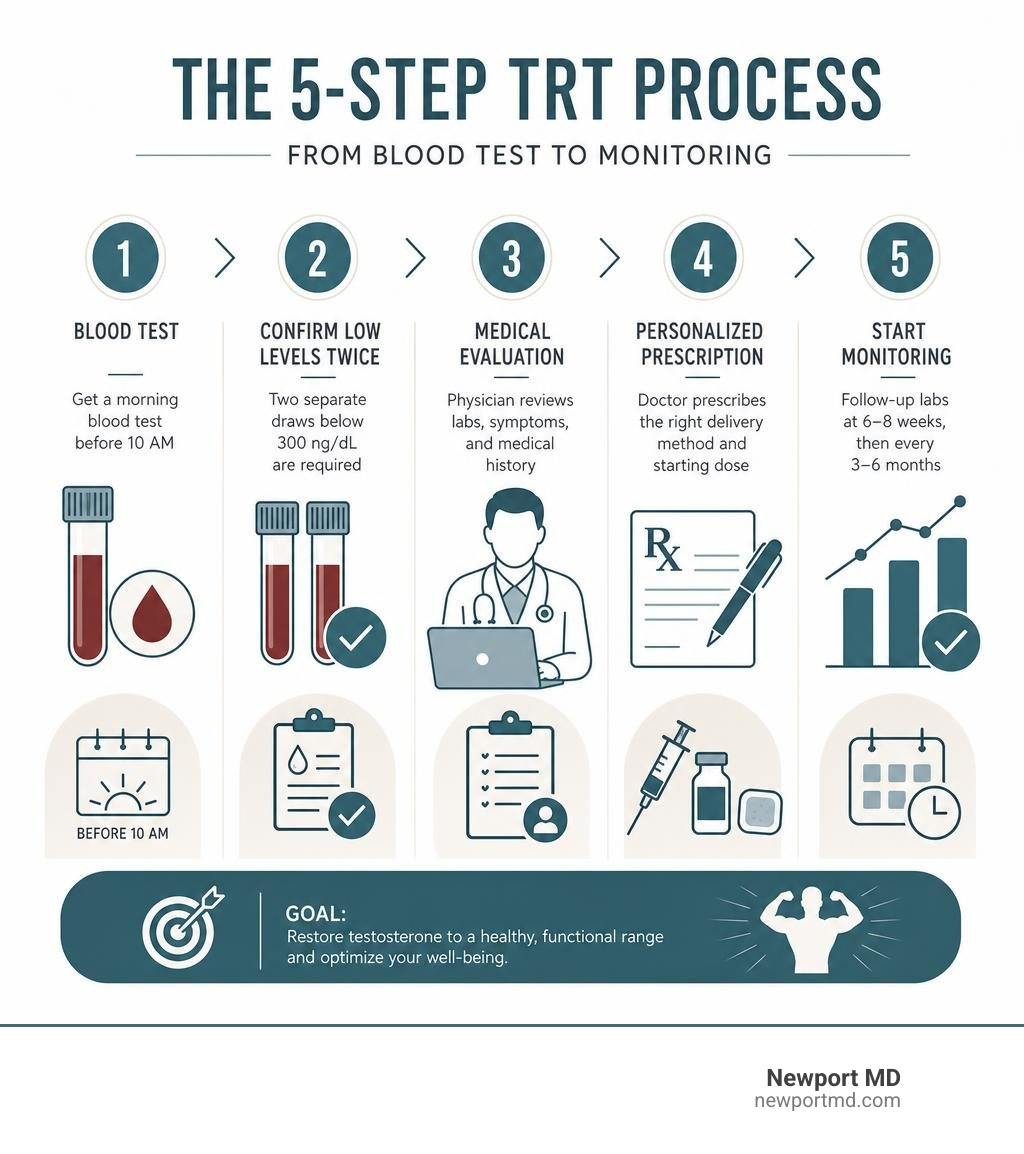
How to get TRT safely and legally comes down to five core steps (the same process we follow for TRT in Newport Beach):
- Get a morning blood test — measure total testosterone, free testosterone, and a full hormone panel before 10 AM
- Confirm low levels twice — current urology and endocrine guidelines generally require two separate early-morning testosterone measurements, often using a total testosterone level below 300 ng/dL as a diagnostic cut-off
- Get a medical evaluation — a licensed physician reviews your labs, symptoms, and medical history
- Receive a personalized prescription — your doctor chooses the right delivery method and starting dose for you
- Start monitoring — follow-up labs are typically used to check testosterone response, hematocrit, PSA when appropriate, and side effects
If you’re in your late 30s or 40s and dealing with stubborn fatigue, low drive, or that frustrating sense that your body just isn’t responding the way it used to — you’re not imagining it.
Testosterone levels can decline with age, but fatigue, low libido, weight gain, and brain fog can also come from sleep problems, thyroid disease, depression, medication effects, overtraining, or other medical issues. That is why symptoms alone are not enough to diagnose low testosterone.
For some men, the root cause is a measurable hormonal deficiency called hypogonadism — and physician-supervised treatment may help when the diagnosis is properly confirmed.
Testosterone replacement therapy (TRT) is a prescription medical treatment intended to restore testosterone toward a normal physiological range in men with clinically diagnosed testosterone deficiency. It should not be used as an unsupervised performance enhancer, and it is not appropriate for every patient.
This guide walks you through exactly how to get started: what tests you need, what the diagnosis process looks like, which delivery methods exist, what it costs, and what to realistically expect.
What is TRT and Who Actually Needs It?
To understand how to get started, we first need to clear up a massive amount of internet confusion. Testosterone replacement therapy (TRT) is a targeted, medically supervised treatment. It is different from the illicit use of anabolic steroids.
Anabolic steroid abuse involves taking supraphysiological doses of hormones for physique or performance goals, often without medical monitoring. That can increase the risk of serious endocrine, cardiovascular, liver, fertility, and mood-related complications.
TRT, on the other hand, is restorative when used appropriately. The clinical goal is to bring testosterone back into a normal physiological range based on symptoms, lab values, age, risk factors, and the physician’s judgment. It is not designed to turn you into a comic book superhero; it is designed to treat a confirmed hormone deficiency.
This brings us to the underlying medical condition TRT treats: hypogonadism. Hypogonadism occurs when your body cannot produce adequate amounts of testosterone. It is divided into two primary categories:
- Primary Hypogonadism: This stems from a direct issue in the testicles, which are unable to manufacture testosterone despite receiving the proper hormonal signals from your brain.
- Secondary Hypogonadism: This is a signaling issue. Your testicles are capable of producing testosterone, but your hypothalamus or pituitary gland in the brain fails to send the necessary chemical messengers (specifically Luteinizing Hormone, or LH) to prompt production.
For many men, low testosterone is a combination of age-related decline and lifestyle factors. However, the diagnostic threshold is strict. A simple drop in energy does not automatically mean you need hormone replacement. To determine if treatment is medically appropriate, we must look at both your clinical symptoms and objective lab data.
To explore if your symptoms warrant a medical evaluation, you can read more about the clinical guidance on this topic in the resource Is Testosterone Replacement Therapy Right for Me?.
Symptoms of Low Testosterone
The human body relies on testosterone for a surprising number of daily functions. When your levels drop below the optimal threshold, the symptoms rarely present as a single, obvious issue. Instead, it can feel like a gradual “fading out” across multiple areas of your life.
Common signs that may be associated with low testosterone include:
- Persistent Fatigue: Ongoing tiredness or reduced stamina that does not improve with normal rest.
- Low Libido: A noticeable decline in sex drive or spontaneous physical desire.
- Erectile Dysfunction: Difficulty achieving or maintaining quality erections, which can also be related to vascular, neurologic, medication, or psychological factors.
- Loss of Lean Muscle Mass: Reduced strength or changes in body composition despite consistent training and nutrition.
- Cognitive Changes or “Brain Fog”: Struggling to focus, losing your mental sharpness, or feeling like you are operating in a low-power mode.
- Mood Changes: Feeling uncharacteristically anxious, irritable, unmotivated, or flat.
Because these symptoms overlap with other health issues like depression, thyroid dysfunction, sleep apnea, medication side effects, or simple burnout, a thorough medical evaluation is non-negotiable. If you want to dive deeper into how hormone optimization can address these symptoms holistically, check out our More info about hormone optimization services page.
How to Get TRT: The Step-by-Step Medical Process
If you suspect your testosterone is low, you cannot simply walk into a pharmacy or order a bottle of real testosterone online. In California and across the United States, testosterone is classified as a Schedule III Controlled Substance. This means obtaining it legally requires a formal medical diagnosis and a prescription from a licensed healthcare provider.

The journey to getting prescribed TRT involves a structured medical protocol. This isn’t just bureaucratic red tape; it is essential for your safety. A professional urologist, endocrinologist, or specialized hormone optimization physician must guide you through this process.
The step-by-step process consists of two primary phases: comprehensive blood testing and a formal medical evaluation.
Step 1: Comprehensive Blood Testing
The foundation of any legitimate TRT protocol is objective, high-quality lab data. You cannot diagnose low testosterone based on symptoms alone, nor can you rely on a single, basic blood test.
Your body’s endocrine system operates on a diurnal rhythm. This means testosterone levels are typically highest in the early morning and lower later in the day. To get an accurate baseline, clinicians commonly order blood testing before 10:00 AM, often in a fasting state, and repeat the test on a separate morning if results are low.
A truly comprehensive hormone panel must look at the entire picture, not just a single number. Depending on your symptoms and risk factors, a diagnostic panel may include:
- Total Testosterone: The overall amount of testosterone circulating in your bloodstream.
- Free Testosterone: The active, unbound testosterone that your cells can actually use.
- Sex Hormone-Binding Globulin (SHBG): A protein that binds to testosterone, rendering it temporarily inactive. High SHBG can contribute to low free testosterone, even if total testosterone looks less concerning.
- Sensitive Estradiol: To measure estrogen levels, which can influence symptoms and side effects.
- Luteinizing Hormone (LH) & Follicle-Stimulating Hormone (FSH): To help determine whether low testosterone is primary, secondary, or mixed.
- Prostate-Specific Antigen (PSA): Often used in age-appropriate patients to evaluate prostate risk before and during therapy.
- Complete Blood Count (CBC): To establish baseline red blood cell and hematocrit levels.
To get your baseline levels checked professionally, you can access our specialized blood panels. Learn more by visiting our More info about blood testing services page.
Step 2: Medical Evaluation and Diagnosis
Once your lab results are back, you will sit down with a physician for a formal medical evaluation. This is where the data meets your personal history.
To qualify for a TRT prescription under modern clinical guidelines, you typically need two things:
- Clinical Symptoms: Physical, sexual, mood, or cognitive symptoms consistent with testosterone deficiency.
- Biochemical Confirmation: Low testosterone confirmed on at least two separate early-morning blood draws, commonly using a total testosterone threshold below 300 ng/dL as one diagnostic reference point.
During this evaluation, your doctor will also perform a physical exam and review your medical history to rule out any contraindications — medical conditions that may make TRT unsafe or require specialist evaluation first. These can include active prostate or breast cancer, markedly elevated PSA without urologic evaluation, elevated hematocrit, untreated severe sleep apnea, uncontrolled heart failure, a recent heart attack or stroke, or plans for near-term fertility.
If you are a candidate for treatment, we will design a personalized protocol tailored to your unique biochemistry, lifestyle, and long-term health goals.
Comparing TRT Delivery Methods and Protocols
There is no one-size-fits-all approach to TRT. The right delivery method depends on your daily routine, your physical comfort with injections, and how your body metabolizes hormones.
The primary goal is to establish stable blood levels. In the past, doctors often prescribed massive, single injections every two to three weeks. This created an emotional and physical roller coaster: supraphysiological peaks in the first few days, followed by a crashing trough before the next dose.
Today, we know that split dosing — such as injecting smaller amounts of testosterone cypionate or enanthate twice a week — keeps your levels incredibly stable, mimicking your body’s natural rhythm and dramatically reducing side effects.
To understand the broader clinical context of these treatments, you can read the comprehensive medical overview provided in Testosterone Replacement Therapy (TRT): What It Is.
Common TRT Delivery Methods
To help you visualize your options, let’s break down the most common delivery methods used in modern clinical practice:
| Delivery Method | Administration Frequency | Key Pros | Key Cons |
|---|---|---|---|
| Intramuscular / Subcutaneous Injections (e.g., Testosterone Cypionate) | 1 to 2 times per week (self-administered) | Highly precise dosing; very cost-effective; stable blood levels with split dosing. | Requires using small needles; requires self-injection prep. |
| Topical Gels (e.g., AndroGel) | Applied daily to clean, dry skin | Needle-free; steady daily micro-dosing. | Risk of transferring the gel to women or children via skin contact; variable absorption rates. |
| Nasal Gels (e.g., Natesto) | Applied inside the nostrils 2 to 3 times daily | Needle-free; preserves natural LH/FSH production better than other methods. | Inconvenient dosing schedule; potential nasal irritation. |
Understanding the Costs, Benefits, and Risks of Treatment
Like any medical treatment, TRT is a balance of investment, realistic expectations, and careful risk management.
When you begin TRT, our clinical objective is to safely guide you to your therapeutic target. This means keeping your testosterone in an appropriate treatment range while carefully monitoring safety markers like hematocrit (the percentage of red blood cells in your blood). Because testosterone can stimulate red blood cell production, monitoring helps clinicians identify erythrocytosis or polycythemia risk early and adjust treatment when needed.
What about long-term safety? Earlier research raised concerns about cardiovascular risk, while more recent large clinical trial data have been reassuring for many appropriately selected men. Still, TRT is not risk-free. It requires individualized screening, blood pressure and hematocrit monitoring, prostate-risk evaluation when appropriate, and ongoing medical follow-up. Current evidence does not show that properly monitored TRT causes prostate cancer, but testosterone may be inappropriate for men with active prostate cancer or concerning prostate findings until they are evaluated.
Expected Timeline of Results
TRT can be effective for appropriately diagnosed men, but it is not magic. It takes time for your body to adapt to optimized hormone levels, and results vary based on baseline health, sleep, nutrition, exercise, dose, delivery method, and underlying medical conditions. Here is a realistic timeline many patients discuss with their clinician:
- Weeks 3 to 6: Some men notice improvements in libido, morning erections, energy, or mental focus, though others take longer.
- Weeks 6 to 12: Mood, sleep quality, and perceived brain fog may improve if low testosterone was a key driver of those symptoms.
- Months 3 to 6: Physical changes may become more visible when TRT is paired with consistent training, adequate protein intake, and healthy lifestyle habits.
- Long-Term (6+ Months): Bone density and body composition benefits may continue over time, while ongoing monitoring helps keep treatment safe and appropriate.
Throughout this journey, long-term monitoring is essential. Follow-up labs are commonly used after treatment begins and then periodically thereafter to ensure testosterone response, hematocrit, PSA when appropriate, and other health markers remain within a safe range.
Frequently Asked Questions About Testosterone Therapy
How to get TRT online legally?
As of July 2026, the legal landscape for online prescriptions requires careful navigation. While you may be able to initiate intake, review blood work, and complete parts of your consultation through secure telehealth, testosterone is a controlled substance and prescribing rules can change. A legitimate clinician must establish an appropriate patient-provider relationship, follow federal and state requirements, review objective lab data, and determine whether TRT is medically appropriate before prescribing.
Reputable providers will coordinate your blood draws at a local lab, conduct a thorough virtual or in-person consultation as required by law, and dispense or ship medications only through licensed pharmacies. Avoid any website that promises “guaranteed prescriptions” without requiring appropriate lab panels, medical history review, or clinician oversight — these operations may put your health and legal standing at risk.
What testosterone level qualifies for TRT?
A common clinical diagnostic reference point for low testosterone is a total testosterone level below 300 ng/dL (approximately 10.4 nmol/L) measured on two separate early-morning blood draws.
However, we do not treat numbers; we treat patients. If your total testosterone is borderline but your free testosterone is low due to high SHBG, and you are experiencing clear clinical symptoms, a physician may consider additional evaluation and individualized treatment options.
How to get TRT without affecting fertility?
Standard TRT introduces exogenous testosterone into your system, which can suppress LH and FSH signaling from the brain. That suppression can reduce sperm production, shrink testicular volume, and impair fertility while treatment continues.
If preserving fertility is a priority, discuss it before starting treatment. Depending on your labs, goals, and medical history, your clinician may consider alternatives or adjuncts such as:
- HCG (Human Chorionic Gonadotropin): An injectable medication that mimics LH and may help maintain testicular function in selected patients.
- Enclomiphene or other SERMs: Oral medications that may stimulate the body’s own LH and FSH production in appropriate candidates.
These options are not right for everyone and should be managed by a clinician experienced in male hormones and fertility.
Conclusion
Getting on TRT is not about chasing a quick fix or trying to cheat the aging process. It is about restoring balance, reclaiming your daily energy, and protecting your long-term health with the backing of modern medical science.
At Newport MD (our TRT clinic in beautiful Newport Beach, CA), we specialize in personalized, science-driven wellness programs. We don’t believe in one-size-fits-all medicine. We combine state-of-the-art blood testing, expert medical oversight, and customized protocols to help you feel like yourself again.
If you are ready to stop guessing and start optimizing, take the first step today. Schedule a consultation to optimize your hormones with our medical team and reclaim your peak performance.