

Step-by-Step Guide to Blood Testing Options
What You Need to Know About Blood Testing
Blood testing is one of the most powerful tools available for understanding what’s happening inside your body — often before you feel any symptoms at all.
Here’s a quick overview of what blood tests can reveal and how to get started:
| What Blood Tests Measure | Why It Matters |
|---|---|
| Red and white blood cells | Immune function, energy, and oxygen delivery |
| Metabolic markers (glucose, electrolytes, kidney/liver enzymes) | Organ health and metabolic balance |
| Cholesterol and lipid levels | Cardiovascular risk factors |
| Hormones (testosterone, estrogen, thyroid) | Energy, mood, and hormonal balance |
| Inflammation markers (CRP) | Hidden systemic inflammation |
| HbA1c and blood sugar | Long-term glucose regulation |
| Vitamins and micronutrients | Nutritional deficiencies affecting performance |
If you’re dealing with fatigue, brain fog, low energy, or just feeling “off,” a simple blood draw can give your healthcare provider a detailed picture of what’s driving those symptoms.
Around 60% of U.S. adults have one or more chronic health conditions — and many of those conditions develop silently, with no obvious warning signs. Routine blood work is one of the most reliable ways to catch changes early and take action before they become bigger problems.
This guide walks you through the most important blood panels, what each one measures, how to prepare, and where to get tested — so you can make informed decisions about your health.
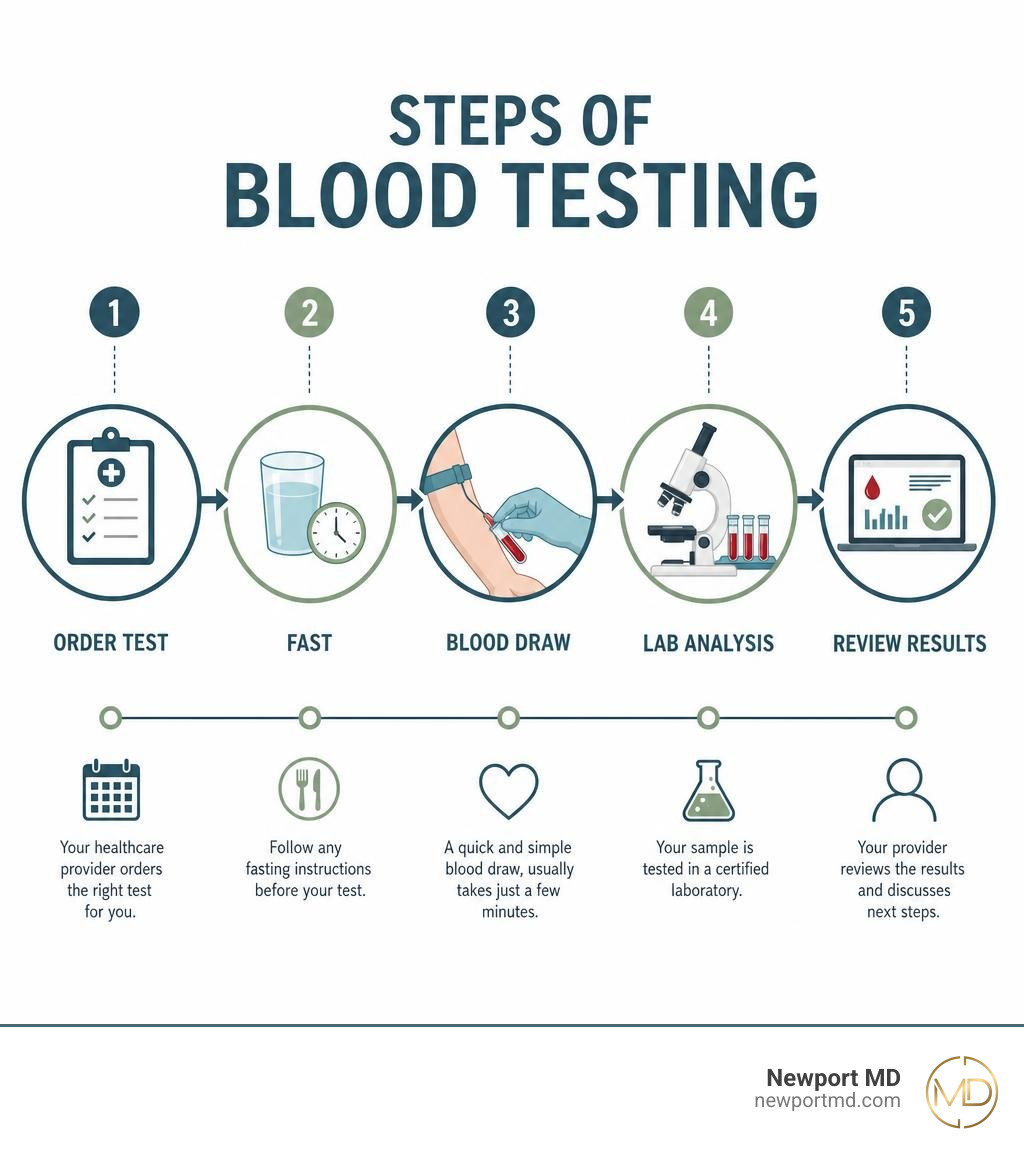
Why Routine Blood Testing Is Essential for Health Optimization
When we think about healthcare, we often think about reacting to problems after they arise. However, at Newport MD, we believe true health optimization is proactive. It is about tracking key biomarkers over time to establish your unique physiological baseline and fine-tune your daily wellness.
This is where routine blood testing becomes indispensable. A comprehensive scientific overview of blood analysis demonstrates that examining the physical and chemical properties of your blood is one of the most accurate ways to evaluate organ function, detect nutrient gaps, and identify metabolic shifts. Rather than waiting for symptoms of fatigue or metabolic slowdown to disrupt your life, routine tracking allows us to make precise, data-driven adjustments to your daily routine.
By monitoring these biomarkers regularly, we can design highly personalized wellness services that support your body’s natural balance. Whether you want to optimize your sleep, improve your physical recovery, or simply ensure your metabolism is running at its peak, your blood work provides the roadmap.
Analyzing Essential Panels: CBC and CMP
When you go in for routine screening, two foundational panels form the cornerstone of your lab work: the Complete Blood Count (CBC) and the Comprehensive Metabolic Panel (CMP). Together, they provide a snapshot of both your cellular health and your metabolic efficiency.
What a Complete Blood Count Reveals About Your Cells
The Complete Blood Count (CBC) is a routine test that evaluates the cells circulating in your bloodstream. It is vital for assessing your immune function and how efficiently your body transports oxygen. A standard CBC measures:
- Red Blood Cells (RBCs): These cells carry oxygen from your lungs to the rest of your body. Low levels may be associated with fatigue or anemia.
- White Blood Cells (WBCs): These are the defenders of your immune system. For healthy adults, a typical WBC count ranges between 4,000 and 11,000 cells per microliter. Temporary elevations often suggest your body is actively clearing an infection or recovering from physical trauma.
- Platelets: These tiny cell fragments are essential for normal blood clotting. A typical healthy range is between 150,000 and 450,000 platelets per microliter.
- Hemoglobin and Hematocrit: Hemoglobin is the iron-rich protein in red blood cells that binds to oxygen, while hematocrit measures the percentage of your total blood volume made up of red cells.
By looking at these cellular metrics, we can gain valuable insights into your baseline vitality and immune resilience.
Assessing Metabolic Health with a Comprehensive Metabolic Panel
While the CBC looks at your blood cells, the Comprehensive Metabolic Panel (CMP) focuses on the chemistry of your blood plasma. The CMP is a routine screening tool that measures 14 different substances to evaluate your metabolic health, fluid balance, and organ function.
Specifically, a CMP helps monitor:
- Kidney Function: By measuring blood urea nitrogen (BUN), creatinine, and calculating your estimated glomerular filtration rate (eGFR), we can observe how effectively your kidneys filter metabolic waste.
- Liver Enzymes: Levels of alanine aminotransferase (ALT), aspartate aminotransferase (AST), and alkaline phosphatase (ALP) indicate liver health and cellular integrity.
- Electrolyte and Fluid Balance: Sodium, potassium, calcium, chloride, and carbon dioxide levels are evaluated to ensure your cells are properly hydrated and your nerves and muscles can function optimally.
- Proteins: Total protein and albumin levels help track nutritional status and organ health.
For a deeper dive into how these 14 substances interact, you can read this detailed guide on the Comprehensive Metabolic Panel.
Evaluating Cardiovascular and Metabolic Markers
To build a complete picture of your long-term wellness, we must look closely at how your body processes fats and sugars. Cardiovascular and metabolic efficiency are closely linked, and tracking these markers helps us support your vitality.
Lipid Panels and Heart Health Biomarkers
A lipid panel measures the fats in your blood to help evaluate cardiovascular health and metabolic efficiency. This panel typically includes total cholesterol, high-density lipoprotein (HDL), low-density lipoprotein (LDL), and triglycerides.
| Lipid Marker | Typical Reference Guide | Role in the Body |
|---|---|---|
| Total Cholesterol | General baseline indicator | Overall measure of cholesterol in your blood |
| HDL Cholesterol | “Good” cholesterol (often optimal around 150 mg/dL or higher depending on context) | Helps clear excess cholesterol from your blood vessels |
| LDL Cholesterol | “Bad” cholesterol (levels over 200 mg/dL may suggest elevated risk) | Transports cholesterol to cells; excess can accumulate in blood vessels |
| Triglycerides | Storage form of energy | Unused calories stored as fat; elevated levels relate to metabolic efficiency |
In addition to standard lipid panels, updated clinical guidelines recommend testing for Lipoprotein(a), or Lp(a), at least once in a lifetime. Lp(a) is a specific genetic variant of LDL that provides deeper insight into your cardiovascular risk profile, allowing for highly personalized lifestyle planning.
The HbA1c Test and Blood Sugar Regulation
While standard glucose measurements only capture a single moment in time, the Hemoglobin A1c (HbA1c) test provides a broader look at your blood sugar regulation. It measures your average blood glucose levels over the preceding 8 to 12 weeks.
This marker is incredibly valuable because metabolic imbalances, such as insulin resistance or prediabetes, often develop silently without any obvious symptoms. Tracking your HbA1c allows us to observe how effectively your body metabolizes carbohydrates over time. If your metabolic efficiency needs support, we can integrate these insights into a customized medical weight loss program designed to optimize insulin sensitivity, balance your energy levels, and support sustainable body composition goals.
Specialized Biomarkers: Hormones, Vitamins, and Inflammation
To truly optimize your health, we look beyond basic metabolic panels to evaluate specialized biomarkers. Hormonal balance, micronutrient levels, and systemic inflammation play critical roles in how you feel, perform, and age.
Thyroid and Hormone Optimization Blood Testing
Your endocrine system acts as your body’s chemical communication network. When hormones are out of balance, you may experience persistent fatigue, unexplained weight changes, brain fog, or low mood.
Through targeted hormone panels, we measure:
- Thyroid Function: Testing Thyroid Stimulating Hormone (TSH), Free T3, and Free T4 tells us how effectively your thyroid is regulating your metabolism and energy production.
- Sex Hormones: Evaluating testosterone, estrogen, and progesterone levels helps us understand your energy, recovery, libido, and cognitive clarity.
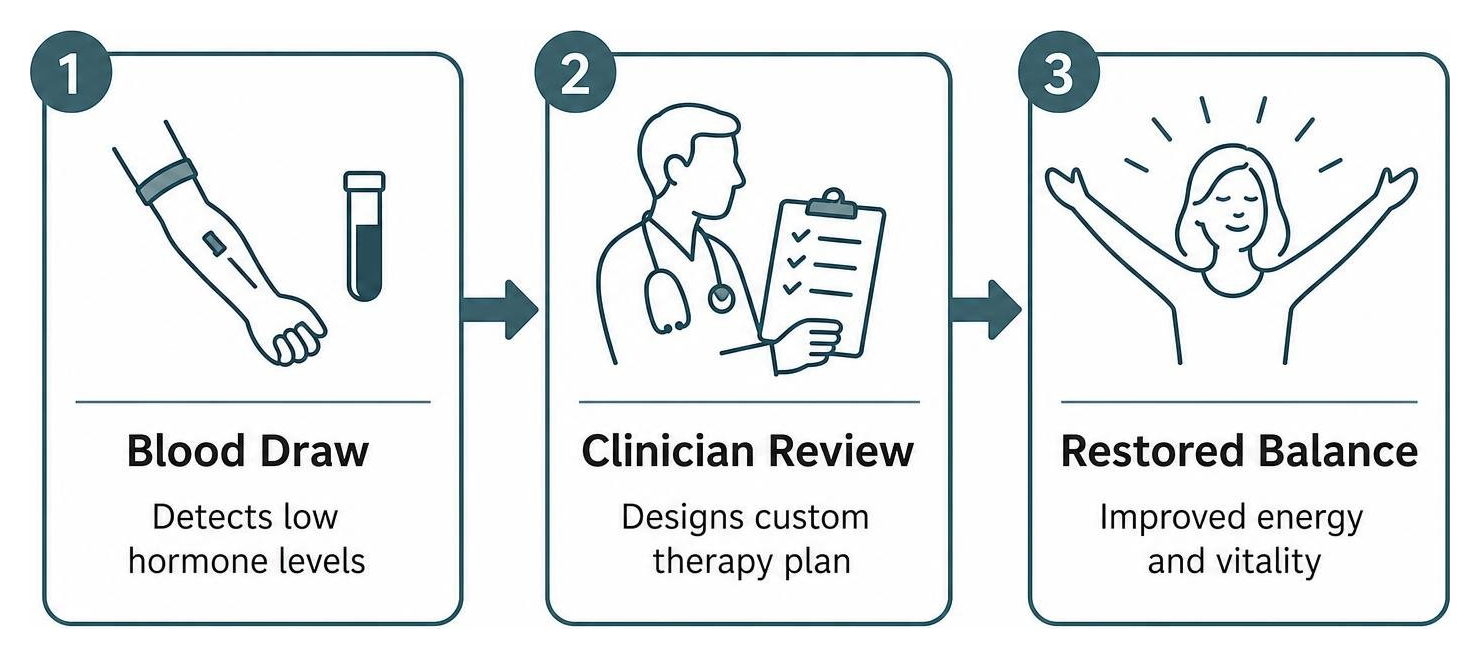
If your labs suggest that your hormone levels are not in their optimal ranges, we can develop a personalized plan for hormone optimization. This tailored approach focuses on restoring physiological balance so you can reclaim your vitality and feel like yourself again.
Micronutrient and Inflammation Blood Testing
Even with a balanced diet, micronutrient deficiencies can hold you back from feeling your best. Evaluating vitamin levels—especially Vitamin D and Vitamin B12—helps us identify hidden gaps that affect your immune function, bone density, and cellular energy production. For those who need a rapid boost to correct these deficiencies, we offer customized vitamin injections to deliver essential nutrients directly to your system.
Additionally, tracking inflammatory markers like high-sensitivity C-reactive protein (hs-CRP) is vital. Elevated hs-CRP can indicate systemic inflammation, which is often associated with physical stress, poor recovery, or metabolic imbalances. Identifying and addressing this hidden inflammation is a key step in protecting your long-term cellular health.
Practical Preparation and Lab Provider Options

Getting accurate results from your blood testing depends heavily on how you prepare before your blood draw. Fortunately, the preparation process is straightforward when you know what steps to follow.
How to Prepare for Your Lab Appointment
To ensure your metabolic and hormone markers are highly accurate, please keep the following preparation steps in mind:
- Fast as Instructed: Many common panels, including lipid profiles and metabolic tests, require you to fast (avoiding all food and drink except plain water) for 12 hours before your appointment.
- Stay Hydrated: Drink plenty of water before your blood draw. Being well-hydrated makes your veins easier to locate, ensuring a quick and comfortable draw.
- Be Mindful of Supplements: Certain vitamins can interfere with lab measurements. In particular, biotin (Vitamin B7) can temporarily alter thyroid and hormone panel results. We recommend pausing biotin supplements for at least 72 hours before your blood draw.
- Review Your Medications: Let our team know about all prescription medications, over-the-counter drugs, and supplements you take regularly so we can interpret your results accurately.
Navigating Lab Providers and Testing Locations
At Newport MD, we make the testing process as seamless as possible. We work with trusted, CLIA-certified clinical laboratories to ensure your results are highly accurate and secure.

If you are located in the Newport Beach or wider Orange County area, you have access to several convenient, high-quality outpatient drawing locations. You can compare California lab options to find the best fit, or visit these local facilities:
- Quest Diagnostics: Located conveniently at 1401 Avocado Ave, Newport Beach.
- Labcorp Newport Beach: Located at Labcorp on Avocado Ave, Newport Beach.
- Labcorp Orange: Conveniently situated for North Orange County residents at Labcorp in Orange (92868).
- Orange County Public Health Laboratory: Providing specialized local testing services through the Public Health Laboratory of Orange County.
- Foundation Laboratory: Offering comprehensive diagnostic services across Southern California through Foundation Laboratory.
To coordinate your testing requisition and find the most convenient location for your schedule, visit our locations page or contact our team directly.
Frequently Asked Questions About Lab Work
How often should routine lab work be performed?
For most healthy adults, we recommend scheduling routine wellness panels at least once a year. This annual screening helps us establish your health baseline and catch subtle physiological changes early. However, if you are undergoing active hormone optimization, a metabolic reset, or tracking a specific health goal, we may recommend more frequent monitoring—typically every 3 to 6 months—to fine-tune your personalized program.
What is the difference between a CBC and a CMP?
A Complete Blood Count (CBC) focuses on the cellular components of your blood, measuring your red blood cells, white blood cells, and platelets to evaluate immune function and oxygen transport. A Comprehensive Metabolic Panel (CMP) measures the chemical substances in your plasma, focusing on blood sugar, electrolytes, and kidney and liver enzymes to evaluate metabolic and organ function.
Can biotin supplements affect lab results?
Yes. High doses of biotin (often found in hair, skin, and nail supplements) can interfere with the clinical assays used to measure hormones, particularly thyroid panels (such as TSH, Free T3, and Free T4). This interference can cause results to appear falsely high or low. To ensure your hormone testing is completely accurate, we recommend stopping biotin supplements for at least 72 hours before your blood draw.
Conclusion
Your blood work is much more than a collection of numbers on a page — it is a personalized blueprint of your health, energy, and metabolic potential. By looking closely at these essential biomarkers, we can move away from generic wellness advice and build a science-driven plan tailored entirely to your body’s unique needs.
At Newport MD, we are dedicated to helping you interpret these insights and translate them into actionable, life-changing wellness strategies. Whether you want to restore hormonal balance, optimize your metabolic rate, or simply establish a clear health baseline, we are here to guide you every step of the way.
Ready to take control of your health? Book a consultation with us today, or schedule a personalized blood testing consultation at our Newport Beach clinic to begin your journey toward optimized vitality.