

Why Athletes Are Obsessed with the BPC-157 and TB-500 Combo
Why the BPC-157 TB-500 Stack Has Become the Go-To Recovery Protocol
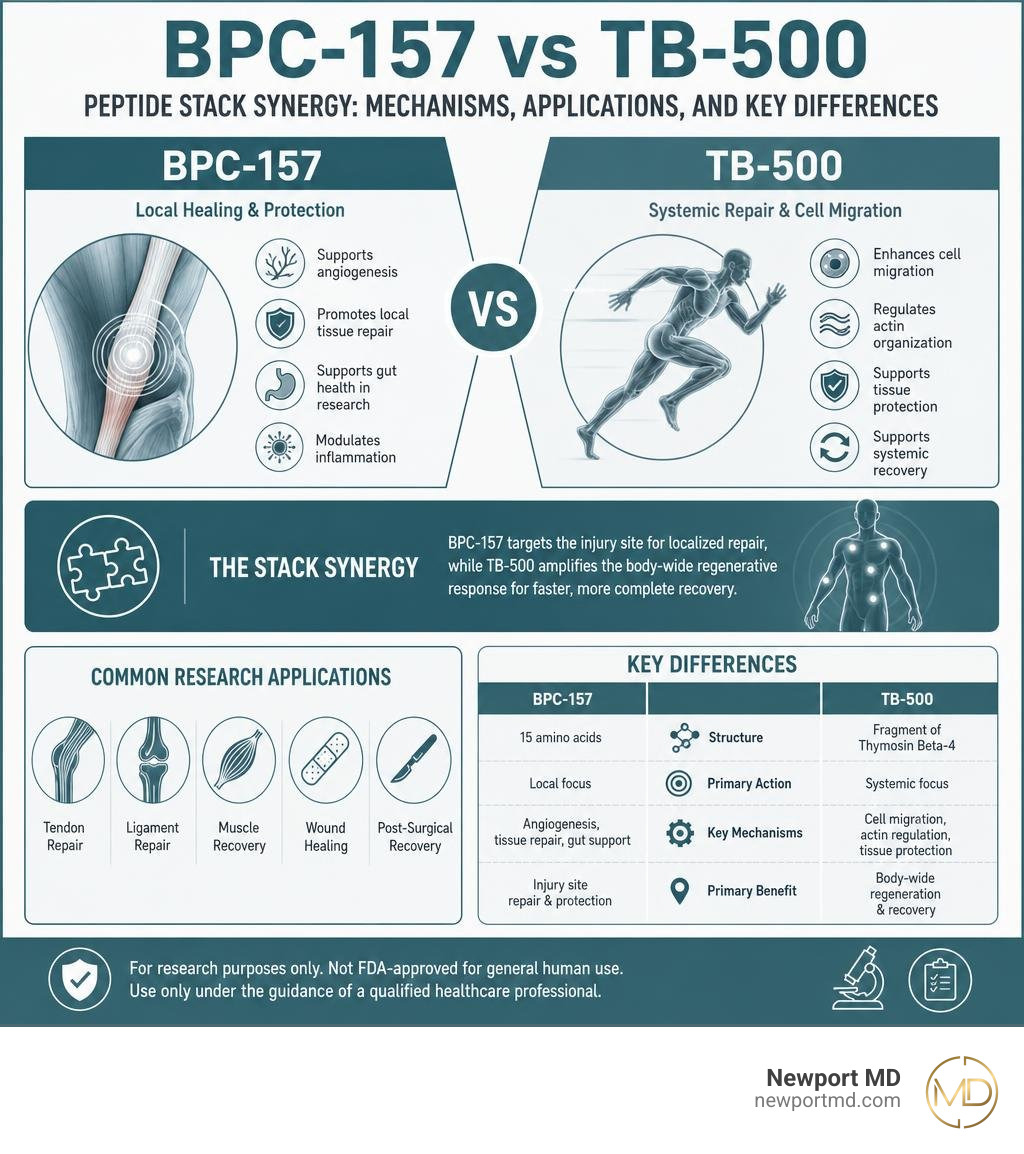
The BPC-157 TB-500 combination is the most talked-about peptide pairing in recovery and regenerative medicine — and for good reason. These two synthetic peptides target different but overlapping stages of tissue repair, which is exactly why researchers and clinicians often study them together.
Quick answer: What is the BPC-157 and TB-500 stack?
- BPC-157 is a 15-amino-acid peptide derived from a protein found in gastric juice. It is associated with local tissue repair, angiogenesis, and gut protection in preclinical research.
- TB-500 is a synthetic fragment of Thymosin Beta-4 (Tβ4). It is associated with systemic cell migration, actin regulation, and broader soft-tissue regeneration.
- Together, they are thought to complement each other: BPC-157 drives localized healing at the injury site, while TB-500 supports the body-wide cellular response.
- Common research applications include tendon, ligament, and muscle repair — as well as wound healing and post-surgical recovery models.
- Neither peptide is FDA-approved for general human use, and any clinical application should be guided by a qualified healthcare provider.
If you are a health-conscious adult dealing with slow recovery, nagging joint pain, or tissue injuries that won’t fully resolve, understanding how these two peptides work — and how they differ — is a smart first step.
The peptide research space has moved fast. As of July 2026, regulatory changes around compounding have shifted the landscape significantly, making it more important than ever to understand what the science actually says before pursuing any protocol.
Simple bpc 157 tb 500 glossary:
The Science of bpc 157 tb 500: How They Differ
To understand why the bpc 157 tb 500 stack is so popular, we first have to look at their chemistry. Though they are often lumped together under the umbrella of “healing peptides,” they are entirely different molecules with distinct origins, sizes, and biochemical structures.
In the broader world of Peptides, size and structure dictate how a compound interacts with cellular receptors. BPC-157 is a relatively small, highly stable peptide, whereas TB-500 is a synthetic derivative of a much larger, naturally occurring mammalian protein.
What is BPC-157?
BPC-157 (Body Protection Compound 157) is a synthetic pentadecapeptide, meaning it consists of a chain of 15 amino acids. It is derived from a cytoprotective protein naturally found in human gastric juice.
What makes BPC-157 unique is its extreme stability. Most peptides degrade rapidly when exposed to stomach acid or enzymes, but BPC-157 was designed to survive these harsh environments. Preclinical research suggests it operates upstream at the cell surface, modulating crucial healing pathways like:
- VEGFR2 internalization: Promoting new blood vessel growth (angiogenesis) even in the absence of traditional growth factors.
- Nitric oxide (NO) modulation: Helping regulate blood flow and vascular tone.
- FAK-paxillin cascades: Promoting cellular adhesion and migration to rebuild damaged tissue matrices.
Because of its gastric origins, BPC-157 is highly associated with mucosal healing. For an in-depth look at its systemic potential and whether the hype matches the science, check out our detailed guide: Is BPC-157 Too Good to Be True?.
What is TB-500?
TB-500 is a synthetic peptide containing 17 amino acids. It represents the active, N-acetylated fragment (specifically the 17–23 amino acid sequence) of Thymosin Beta-4 (Tβ4), a major cellular protein found in high concentrations in blood platelets and wound fluid.
While full-length Thymosin Beta-4 is a 43-amino-acid protein, TB-500 is synthesized to isolate its primary active site: the LKKTETQ motif. This specific sequence is responsible for:
- Actin sequestration: Binding to G-actin (monomeric actin) to prevent it from polymerizing into F-actin, which is essential for maintaining cell structure, flexibility, and mobility.
- Cell migration: Helping progenitor cells, fibroblasts, and endothelial cells migrate rapidly to injured tissues.
- Upregulation of matrix metalloproteinases (MMPs): Enzymes that break down and remodel damaged extracellular matrices.
Essentially, if BPC-157 acts as the localized cellular architect, TB-500 is the transportation system that helps repair cells travel to where they are needed most.
Complementary Mechanisms and Tissue Repair
When tissue damage occurs, the body initiates a complex cascade of events: inflammation, cell migration, blood vessel formation (angiogenesis), collagen synthesis, and matrix remodeling.
BPC-157 and TB-500 influence different stages of this repair process. This is why researchers at institutions like Baltic BioLabs study their mechanisms side-by-side. Rather than competing for the same pathways, they act through distinct, complementary biological processes.
| Feature | BPC-157 | TB-500 |
|---|---|---|
| Origin | Human gastric juice (synthetic fragment) | Thymosin Beta-4 (synthetic fragment) |
| Size | 15 amino acids (1,419.5 Da) | 17 amino acids (889.0 Da for active fragment) |
| Primary Mechanism | VEGFR2 activation, NO modulation, growth factor upregulation | G-actin sequestration (LKKTETQ motif), cell migration |
| Target Area | Highly localized (tendons, ligaments, gut lining) | Systemic (muscles, skin, heart, blood vessels) |
| Half-Life (Rat) | ~4 minutes (intravenous) | ~2 to 3 hours (subcutaneous) |
| WADA Status | Not explicitly listed on the Prohibited List | Banned (S2 category – Peptide Hormones & Mimetics) |
Synergistic Mechanisms of the bpc 157 tb 500 Stack
The primary reason athletes and researchers favor the bpc 157 tb 500 stack is the concept of local versus systemic synergy.
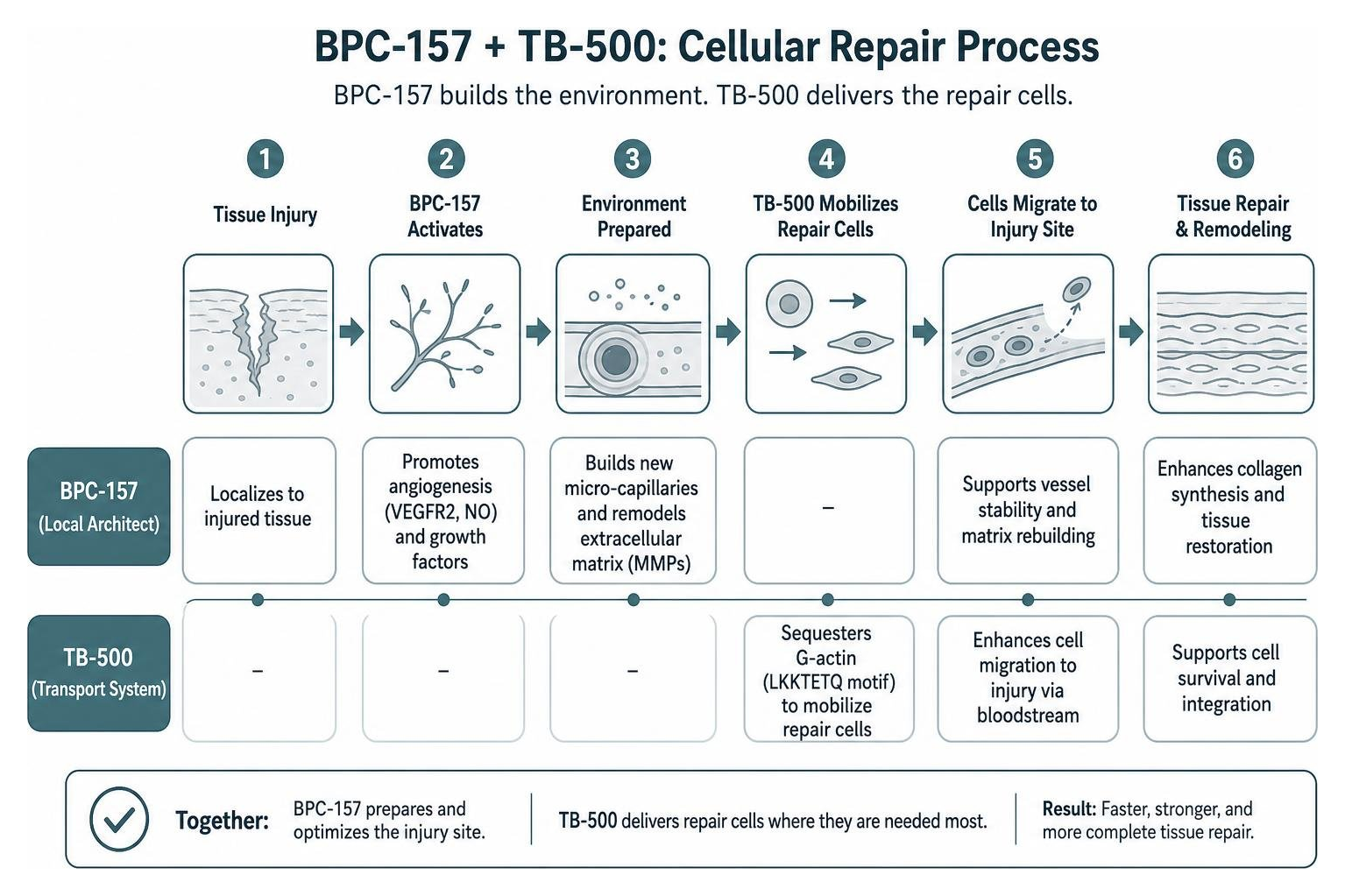
When a muscle or tendon is torn, the local blood supply is often compromised, which delays healing. BPC-157 works locally to rapidly build new micro-capillaries (angiogenesis), bringing oxygen and nutrients back to the damaged site. At the same time, TB-500 works systemically to mobilize fibroblasts and stem cells, allowing them to travel through those newly formed blood vessels directly to the injury.
This powerful dual-action process is illustrated in the diagram below:
This dual mechanism is the foundation of the popular Wolverine Blend, a combined formulation containing 10mg of BPC-157 and 10mg of TB-500. This blend is highly sought after by those recovering from severe soft-tissue trauma or joint wear and tear, as it aims to address both the structural and circulatory limitations of injured tissue.
Evidence for Tendon, Muscle, and Gut Healing
What does the published research actually show? While human clinical trials are still limited, animal and in-vitro studies have yielded compelling results:
- Tendon and Ligament Repair: Preclinical models of Achilles tendon transection in rats (such as those by Staresinic et al.) show that BPC-157 significantly accelerates tendon outgrowth, increases fibroblast survival, and improves load-bearing capacity. Similarly, studies on medial collateral ligament (MCL) healing show accelerated structural recovery.
- Muscle and Wound Healing: TB-500 (and its parent molecule Tβ4) has been shown in diabetic and aged mouse models to accelerate dermal wound closure and re-epithelialization. It plays a key role in reducing scar tissue formation, promoting flexible, functional muscle fibers rather than rigid scar tissue.
- Gastrointestinal Protection: BPC-157 shines brightly in gut health. In models of TNBS-induced colitis and gastric ulcers, it has demonstrated powerful cytoprotective and anti-inflammatory properties.
If you are curious about how these gut-healing mechanisms work, you can read more in our article: Go With Your Gut: How Peptide Therapy Can Fix Your Digestive Woes.
Legal Status, Safety, and Regulatory Changes in 2026

For residents in California, particularly those looking for peptide therapy in Newport Beach, CA or general peptide therapy in Orange County, the regulatory environment has changed:
- FDA Compounding Status: On April 15, 2026, the FDA officially removed TB-500 (along with 11 other peptides) from the Section 503A Category 2 list. This list previously restricted compounding pharmacies from preparing these substances. This removal opened the door for licensed compounding pharmacies to prepare TB-500 under a valid, patient-specific prescription.
- Advisory Committee Evaluation: A Pharmacy Compounding Advisory Committee (PCAC) meeting scheduled for July 23-24, 2026, is set to evaluate whether TB-500 should be formally added to the authorized bulk-substances list for compounding pharmacies.
- BPC-157 Status: BPC-157 was placed on the FDA Category 2 list in late 2023, which restricted compounding pharmacies from bulk-compounding it. However, it remains widely studied, and clinical availability continues to evolve under strict medical oversight.
- WADA and Athletic Status: It is critical for competitive athletes to know that TB-500 is completely banned by the World Anti-Doping Agency (WADA) under class S2 (Peptide Hormones, Growth Factors, Related Substances, and Mimetics). Using it will result in a doping violation. BPC-157 is not currently on the WADA Prohibited List, but athletic organizations monitor its use closely.
- Research-Use-Only Restrictions: Many online sources sell these peptides labeled as “research chemicals” or “not for human consumption.” We strongly caution against purchasing these unverified, unregulated products. They bypass safety testing and may contain heavy metals, harmful impurities, or incorrect dosages.
Research Dosing Protocols for bpc 157 tb 500
In clinical and research models, administration routes and dosing schedules are carefully structured around the pharmacokinetics of each peptide:
- Administration Route: Both peptides are typically administered via subcutaneous injection (into the fatty tissue, usually around the abdomen) for optimal systemic absorption. While BPC-157 is stable in gastric juice and can be taken orally, TB-500 must be injected, as it degrades rapidly in the digestive tract.
- BPC-157 Dosing: Preclinical and observational human protocols often utilize a daily dose of 250 mcg to 500 mcg, administered once or twice daily. Because of its short half-life (~4 minutes in plasma), daily administration is necessary to maintain therapeutic levels.
- TB-500 Dosing: TB-500 is typically administered in a “loading-then-maintenance” pattern over 4-to-6-week blocks. A common research protocol involves a loading phase of 2 mg to 5 mg per week (split into two injections) for the first 4 weeks, followed by a lower maintenance dose of 2 mg per week.
- The Wolverine Stack: When combined, researchers often use separate injections to maintain the stability of each peptide, running them concurrently over a 4-to-8-week recovery cycle.
Safety Profiles and Side Effects
While many users report excellent tolerance, no therapeutic compound is entirely without risk. Because long-term human safety studies are limited, clinical monitoring is highly recommended.
Reported side effects are generally mild and may include:
- Injection-site redness, itching, or mild irritation.
- Transient fatigue or lethargy shortly after administration.
- Lightheadedness or mild headache (often associated with temporary changes in blood pressure due to nitric oxide modulation).
Because peptides can influence cellular growth and blood vessel formation, they should only be used under the direct supervision of a qualified physician.
At Newport MD, we recommend baseline blood testing before starting any peptide protocol. This includes checking inflammatory markers like high-sensitivity C-reactive protein (hs-CRP), a complete metabolic panel (CMP), and liver and kidney function tests to ensure your body is in an optimal state for healing.
Frequently Asked Questions
Can you mix BPC-157 and TB-500 in the same vial?
We do not recommend mixing BPC-157 and TB-500 in the same vial before injection. These peptides have different molecular weights, structures, and optimal pH levels. Combining them in a single vial can cause chemical degradation, reducing the potency and effectiveness of both compounds.
Instead, draw them into separate syringes and inject them into different areas of the body. For those seeking professional medical guidance on administration, consulting a qualified health optimization clinic can provide precise, safe protocols.
How long does it take for the peptide stack to work?
In typical research and clinical models, treatment cycles are structured in 4-to-6-week blocks. Many individuals report noticing improvements in joint mobility, localized soreness, and systemic inflammation within the first 2 to 3 weeks.
However, deeper structural healing, such as repairing tendon tissue or remodeling old muscle scars, is a gradual process that can take several months. Tracking progress through inflammatory markers like hs-CRP can help verify if the therapy is successfully modulating systemic inflammation.
Are these peptides banned in competitive sports?
Yes, TB-500 is strictly banned at all times (both in-competition and out-of-competition) by WADA and other major athletic governing bodies under the S2 class.
Even though BPC-157 is not currently on the prohibited list, competitive athletes should exercise extreme caution, as anti-doping regulations are constantly updated, and using unverified sources carries a high risk of cross-contamination.
Conclusion
The bpc 157 tb 500 stack represents a fascinating frontier in regenerative medicine. By combining the localized, blood-vessel-building power of BPC-157 with the systemic, cell-mobilizing properties of TB-500, this duo offers a highly logical, multi-faceted approach to tissue repair.
However, because the regulatory landscape in 2026 is complex and human clinical data is still emerging, self-prescribing with unregulated online research chemicals is highly discouraged.
If you are ready to explore how advanced peptide therapy, personalized hormone optimization, and science-driven wellness programs can help you recover faster and perform at your best, we invite you to explore our resources. Learn more about customized recovery protocols on our Health Optimization Blog or schedule a comprehensive consultation at Newport MD in Newport Beach, CA, by visiting our dedicated Peptides page. Let us help you navigate your recovery safely, legally, and with expert medical oversight.