

The Golden State Guide to Expert Medical Weight Loss
Why So Many Californians Are Turning to Expert Medical Weight Loss
If you’re exploring expert medical weight loss in California, here’s what you need to know right away:
Quick Answer: What is expert medical weight loss in California?
- It is a physician-supervised approach to weight management that goes beyond calorie counting
- Programs typically include comprehensive lab testing, metabolic assessment, and personalized treatment plans
- Common treatments include GLP-1 medications (like semaglutide and tirzepatide), nutritional guidance, and lifestyle coaching
- Candidates generally include adults with a BMI of 30 or higher, or 27 or higher with a weight-related health concern
- Programs are available in-person at clinics across California, and increasingly via telehealth statewide
National data summarized by the National Institute of Diabetes and Digestive and Kidney Diseases indicates that a substantial majority of U.S. adults are living with overweight or obesity. Yet many people who struggle with their weight have already tried dieting – sometimes repeatedly. The problem is not always effort or willpower. It is that standard diet programs rarely address what may be driving the weight gain.
Hormones. Metabolism. Insulin sensitivity. Sleep. Stress. Genetics.
These are some of the factors that can make weight management complex. And they are exactly the kinds of issues that expert medical weight loss programs in California are designed to evaluate under clinician supervision.
Clinical studies on structured medical weight loss suggest what may be possible when medicine is combined with careful monitoring, personalized planning, and ongoing support. Major medical institutions have been refining medically supervised approaches for decades to better address the biological factors associated with weight retention.
This guide breaks down how these programs work, who they’re for, what they cost, and how to find the right fit for your health goals.
Why Choose Expert Medical Weight Loss California
When it comes to losing weight, the prevailing cultural narrative has always been simple: “eat less, move more.” But if you have ever spent months meticulously tracking calories only to watch the scale refuse to budge, you know that human physiology is rarely that simple.
Choosing expert medical weight loss california means shifting the focus from sheer willpower to biological reality. Obesity and chronic weight gain are now widely recognized by the medical community as complex metabolic conditions. If your body’s internal chemistry is actively working against you, restriction alone is unlikely to yield sustainable results.

By partnering with a medical professional, you gain access to clinical tools, diagnostics, and supervision that traditional commercial programs simply cannot provide. At Newport MD, we specialize in helping our patients uncover the biological roadblocks preventing them from achieving their goals. We look at the body as an interconnected system, utilizing customized strategies that align with your unique metabolism. To learn more about how we structure these clinical plans, you can read about our medical weight loss services.
The Science Behind Expert Medical Weight Loss California
At the core of medical weight management is a deep dive into your body’s endocrine and metabolic systems. When you struggle to lose weight despite a caloric deficit, several hidden physiological factors are often at play:
- Hormonal Imbalances: Hormones like leptin (which signals fullness) and ghrelin (which signals hunger) can become dysregulated, leaving you in a constant state of perceived starvation. Additionally, age-related hormone decline can slow down metabolic rates.
- Thyroid Function: Your thyroid acts as your body’s metabolic thermostat. Even subtle, subclinical sluggishness in thyroid output can make shedding weight incredibly difficult.
- Insulin Sensitivity: When your cells become resistant to insulin, your body has to produce more of it to manage blood sugar. Because insulin is a primary fat-storage hormone, elevated levels make it biochemically difficult to access and burn stored fat.
By utilizing sophisticated blood panels and metabolic testing, clinicians can pinpoint these specific imbalances. Rather than forcing you onto a generic meal plan, we target these root causes directly to restore metabolic equilibrium. For a deeper dive into how endocrine health affects your scale, check out our clinical perspectives on metabolic health and weight management.
Medical Weight Loss vs. Commercial Programs
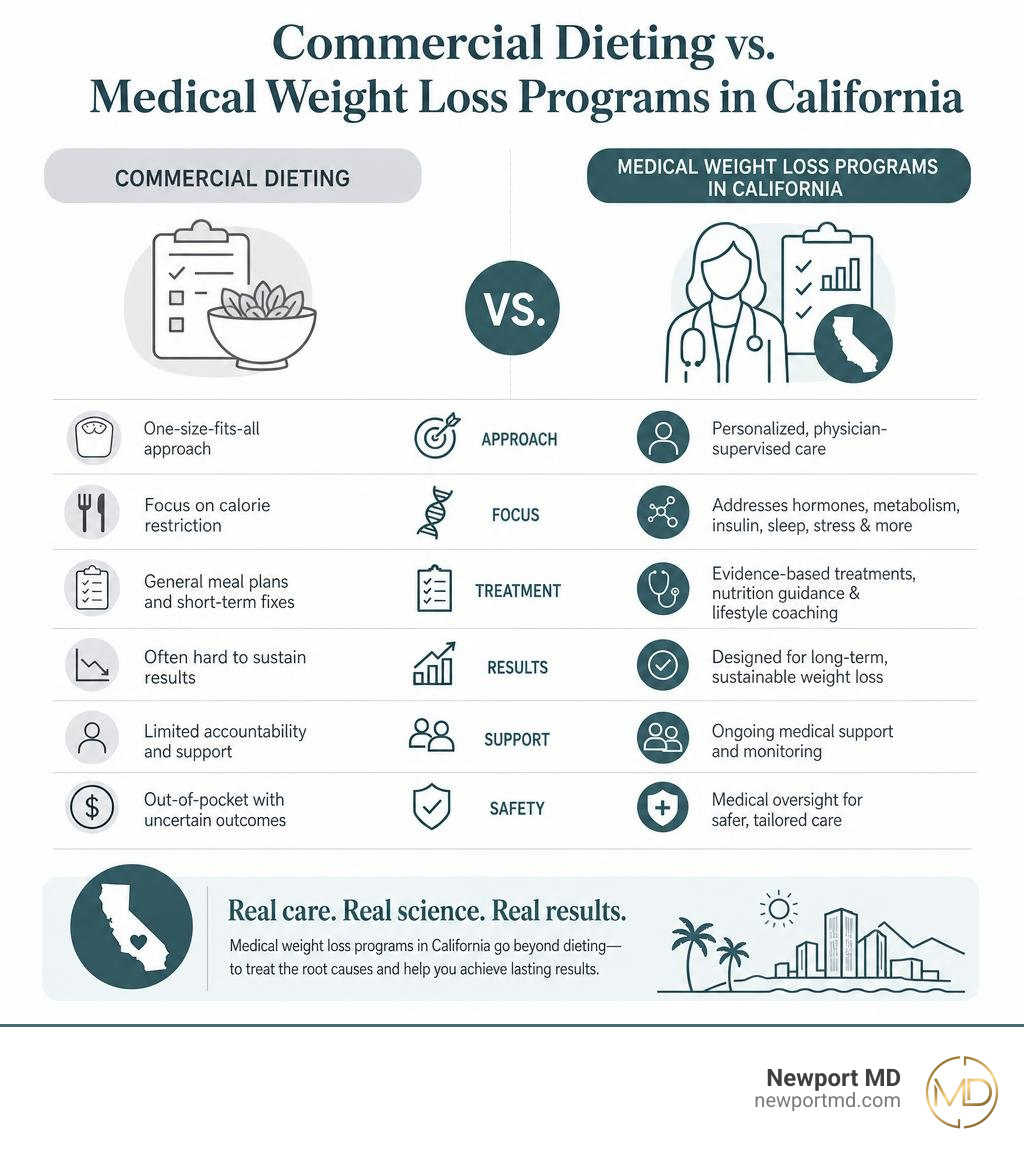
Commercial weight loss programs are built on a business model of mass appeal. They offer pre-packaged foods, point systems, or generic group meetings designed to work moderately well for the average person. However, they lack the medical authority to evaluate your blood work, prescribe advanced therapies, or adjust protocols based on your cellular health.
Here is how the two approaches compare:
| Feature | Commercial Diet Programs | Expert Medical Weight Loss |
|---|---|---|
| Primary Approach | Caloric restriction and group accountability | Metabolic correction and clinical supervision |
| Supervision | Peer leaders or self-guided | Board-certified physicians and clinical staff |
| Diagnostic Testing | None (typically self-reported weight) | Comprehensive blood panels, hormones, and body composition |
| Medication Options | None | FDA-approved GLP-1s, peptides, and targeted supplements |
| Personalization | Low (standardized point systems or meal plans) | High (tailored to your unique lab results and physiology) |
| Long-Term Focus | Continued enrollment or product purchase | Tapering, metabolic reset, and biological maintenance |
Core Components of California Medical Weight Loss Programs
What actually happens when you enroll in a clinical program in California? It doesn’t start with a prescription; it starts with data.
To build a plan that works, physicians must first map your internal biology. This involves comprehensive lab testing, advanced blood work, and precise body composition analysis. We don’t just look at the number on a traditional scale—we look at what that number is made of.

By measuring your visceral fat (the dangerous fat surrounding your organs), skeletal muscle mass, and intracellular water, we can ensure that the weight you lose is actually fat, not valuable muscle tissue. If you are interested in exploring how we integrate these diagnostics into our broader wellness plans, discover our full suite of health optimization services.
Advanced Pharmacotherapy and GLP-1 Medications
As we navigate through July 2026, the landscape of weight management has been completely revolutionized by GLP-1 (glucagon-like peptide-1) receptor agonists. Medications such as semaglutide and tirzepatide have emerged as highly effective tools for metabolic rehabilitation.
These compounds work by mimicking natural gut hormones that are released after eating. They target the areas of the brain that regulate appetite and food intake, helping you feel satisfied with smaller portions. Additionally, they slow down gastric emptying, which keeps you feeling full longer, and improve insulin sensitivity to help your body manage glucose more efficiently.
For patients in Southern California, accessing these advanced options under strict clinical guidance is key. Working with a qualified provider ensures your dosage is carefully monitored and adjusted to your body’s needs.
At Newport MD, we view these medications not as a lifetime crutch, but as a powerful metabolic reset button. When combined with our custom protocols, they help quiet “food noise” so you can establish sustainable lifestyle habits. To learn more about how we utilize metabolic compounds, check out our guide on peptide therapies.
Holistic and Supportive Therapies
Medication is only one piece of the puzzle. To truly optimize your metabolism and maintain your energy levels during a fat-loss phase, your body needs targeted micronutrient support.
When you reduce your caloric intake, it can be challenging to consume all the essential vitamins and minerals your body requires to run its cellular machinery. This is where supportive therapies become invaluable:
- Nutritional Guidance: Moving away from restrictive dieting and focusing on nutrient-dense, whole foods that support gut health and preserve lean muscle.
- Vitamin Injections: Administering lipotropic compounds, B-complex vitamins, and vitamin D directly into the bloodstream bypasses the digestive tract for maximum absorption, helping to maintain energy and support liver pathways.
- Hormone Support: If lab work reveals suboptimal thyroid or sex hormone levels, balancing these hormones can dramatically improve your metabolic rate and mood.
To see how we use these targeted therapies to protect your energy and support your cellular health, explore our options for vitamin injections and browse our supportive health optimization approaches.
Candidate Criteria, Safety, and the Patient Journey
Is medical weight loss right for you? While these programs are highly effective, they are clinical protocols that require careful screening to ensure safety and efficacy.
Who is a Candidate for Medical Weight Loss?
Medical weight loss programs are typically designed for individuals who have struggled to achieve lasting results through diet and exercise alone, and whose health may be impacted by excess weight.
While exact protocols vary, common candidate eligibility criteria for clinical evaluation include:
- A Body Mass Index (BMI) of 30 or higher.
- A BMI of 27 or higher accompanied by weight-related health concerns (such as elevated blood pressure, insulin resistance, or joint discomfort).
- A history of chronic weight cycling (losing and regaining the same weight repeatedly).
- Individuals preparing for or recovering from major surgeries who need to optimize their metabolic health.
For those looking for specialized clinical evaluations, consulting with a qualified healthcare provider is the first step to discuss your eligibility and design a safe, effective plan.
What to Expect from Expert Medical Weight Loss California
Your journey through a professional program is a structured, multi-phase process designed to prioritize your safety and long-term success:
- Initial Consultation & Assessment: You will meet with a clinician to discuss your complete medical history, lifestyle, and goals.
- Comprehensive Diagnostics: You will undergo detailed blood testing to evaluate your thyroid, metabolic markers, hormone levels, and cardiovascular health.
- Personalized Plan Design: Based on your lab results, we construct a customized plan combining nutrition, lifestyle modifications, and pharmacotherapy if appropriate.
- Dose Titration & Monitoring: If GLP-1 medications are prescribed, you will start at a very low, conservative dose. We gradually adjust the dosage over several weeks to minimize potential side effects while maximizing your body’s positive response.
- Ongoing Check-ins: Regular follow-up appointments allow us to monitor your body composition, check your vitals, and adjust your plan as your metabolism adapts.
Costs, Insurance, and Long-Term Maintenance
Investing in your metabolic health is one of the most significant decisions you can make. Understanding the financial landscape and the path to long-term maintenance is essential for planning your journey.
Navigating Costs and Fees in California
Because medical weight loss programs are highly customized and often incorporate advanced pharmacotherapy, pricing can vary. Traditional health insurance plans in California may cover diagnostic blood work and visits related to underlying metabolic conditions (like insulin resistance or thyroid dysfunction). However, many insurance providers do not fully cover GLP-1 medications when prescribed primarily for weight management.
To accommodate this, many premier clinics operate on a transparent cash-pay or membership model. This ensures you receive comprehensive, unhurried care without insurance restrictions dictating your treatment. Many clinics also accept financing options like CareCredit to help break up the cost of medical assessments and ongoing monitoring.
For local context on program structures and specialized clinical care, it is helpful to compare regional options and understand how different clinics structure their fees. For more tips on budgeting for your wellness journey, read our expert guidance on health optimization.
Preventing Weight Regain and Supporting Longevity
The true measure of a successful weight loss program isn’t just the weight you lose — it’s the weight you keep off. Many commercial programs fail because they lack an exit strategy. Once you stop white-knuckling the diet, the weight returns.
Expert medical programs prioritize a structured maintenance phase. As you near your goal, your clinical team will work on medication tapering—gradually reducing your therapeutic doses while ensuring your natural metabolic pathways are strong enough to take over.
By pairing this taper with continuous habit reinforcement, stress management, and personalized lifestyle coaching, you can successfully lock in your new set point. Learn more about protecting your metabolic progress for the long haul by reading our resources on health optimization.
Frequently Asked Questions About Medical Weight Loss
What are the potential side effects of GLP-1 medications?
The most common side effects of GLP-1 receptor agonists are gastrointestinal, including mild nausea, indigestion, or changes in bowel habits. These symptoms are typically temporary and can be minimized through slow, cautious dosing titration and individualized clinical evaluation.
How long do patients typically stay on medical weight loss programs?
Most programs consist of an active weight loss phase (typically 16 to 24 weeks) followed by a transition and early maintenance phase. Some patients with chronic metabolic challenges may choose to stay on supportive therapies longer to maintain their results, under guided clinical supervision.
Can medical weight loss help address underlying hormonal imbalances?
Yes. Unlike commercial diets, medical weight loss programs place a heavy emphasis on optimizing your endocrine system. By addressing sluggish thyroid function, insulin resistance, or age-related hormone decline through comprehensive blood testing, we help restore your body’s natural fat-burning potential.
Conclusion
Losing weight is a deeply personal journey, and you do not have to navigate it alone. By stepping away from restrictive, one-size-fits-all commercial diets and embracing a science-driven, medically supervised approach, you can work with your biology instead of against it.
At Newport MD, located in beautiful Newport Beach, CA, we are committed to providing personalized wellness programs that focus on the root causes of weight gain. Through precise blood testing, advanced peptide therapies, and expert medical oversight, we help you optimize your metabolic health, balance your hormones, and reclaim your vitality.
If you are ready to experience the difference that personalized medicine can make, discover how we approach hormone optimization and Book a consultation for expert medical weight loss with us today. Let’s build a healthier, more vibrant future together.