
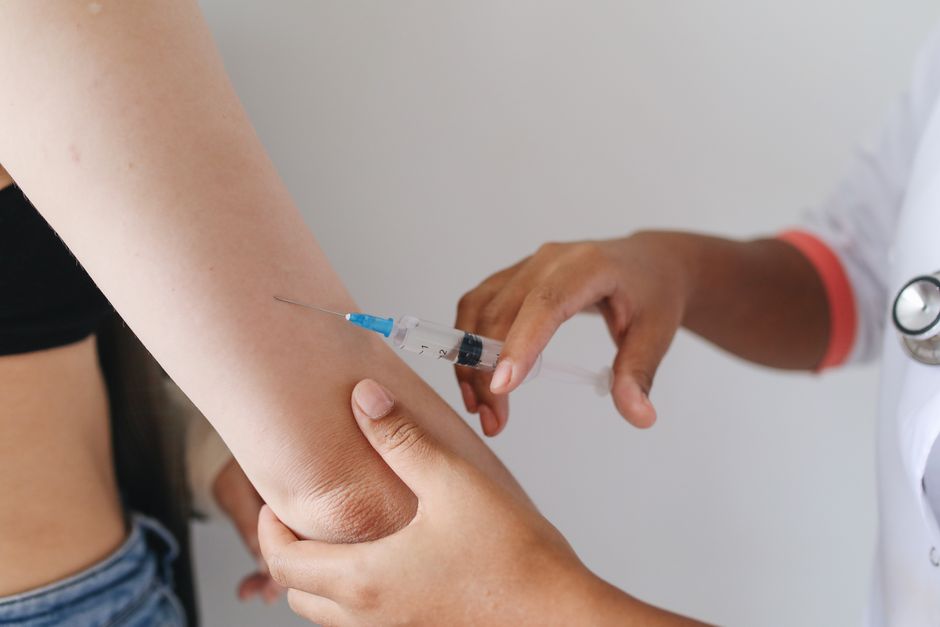
Why the 1000 mcg B12 Shot is a Fan Favorite
The 1000 mcg B12 Shot: What You Need to Know Before Getting One
A B12 1000 mcg injection is one commonly used dose for addressing vitamin B12 deficiency. It delivers vitamin B12 directly into the body, bypassing the digestive system. Many patients pair B12 with a NAD+ shot.
Quick answer: What is a B12 1000 mcg injection used for?
- Correcting low vitamin B12 levels when oral supplements may not absorb well
- Supporting normal red blood cell production, nerve function, and energy metabolism
- Treating vitamin B12 deficiency related to certain absorption issues
- Providing maintenance therapy for people who cannot absorb enough B12 through food or oral supplements
If you’re dealing with persistent fatigue, brain fog, or low energy, it may be worth discussing B12 testing with a qualified healthcare provider. Vitamin B12 deficiency can become more common with age and in people with certain dietary patterns or absorption challenges.
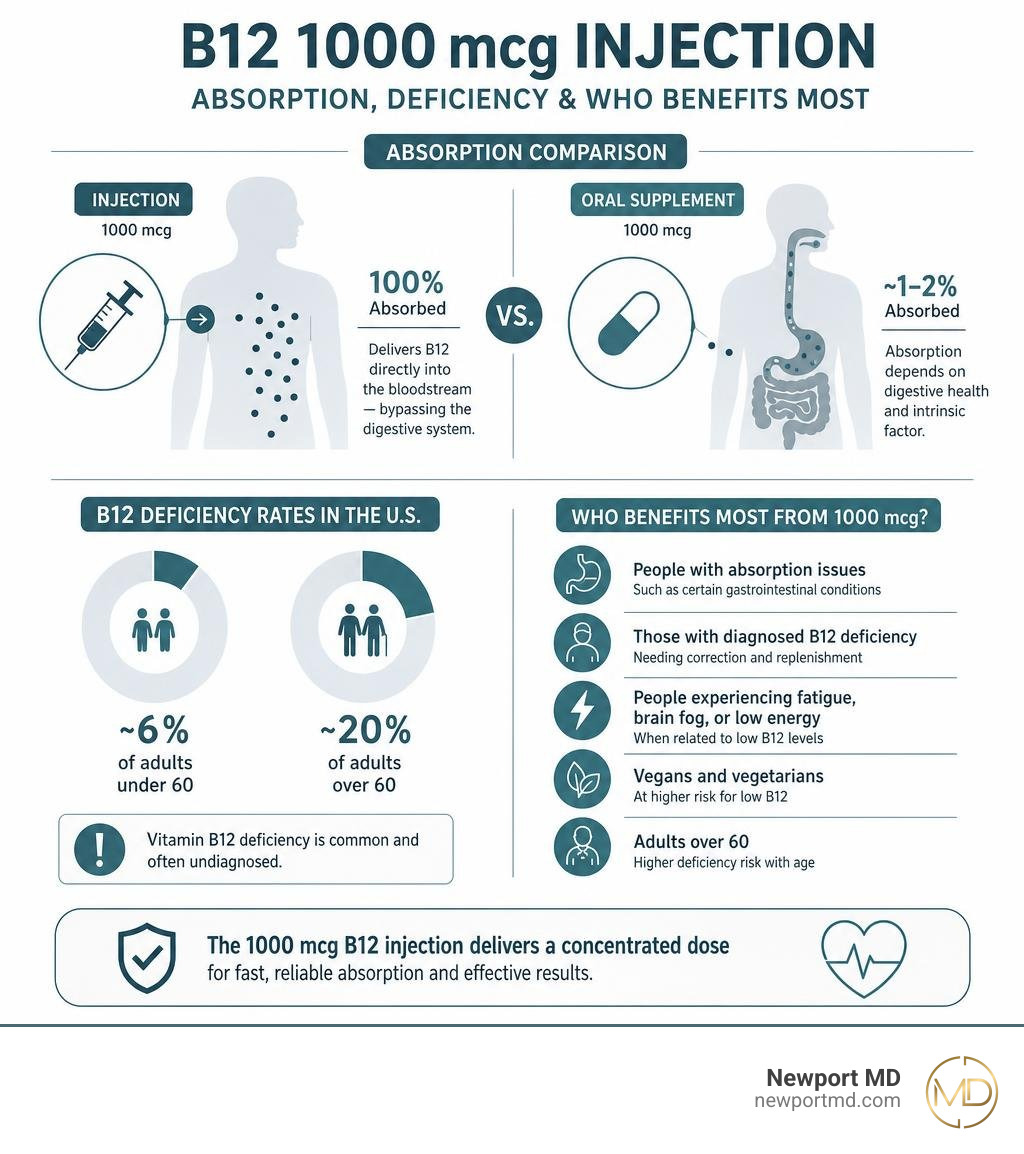
The appeal of the 1000 mcg dose is that it bypasses digestion. Unlike oral supplements, which depend on your gut’s ability to absorb B12, an injection delivers the vitamin directly into muscle tissue or under the skin, where it can be absorbed into circulation.
Still, B12 injections aren’t a one-size-fits-all solution. Whether this dose is appropriate depends on your health history, current B12 levels, and what a qualified healthcare provider recommends after proper evaluation.
What is a b12 1000 mcg injection?
At its core, a b12 1000 mcg injection is a sterile solution of cyanocobalamin, a widely used synthetic form of vitamin B12. This red-hued liquid is formulated for parenteral administration, meaning it is injected into muscle tissue (intramuscularly) or beneath the skin (subcutaneously).
Vitamin B12 contains cobalt, which contributes to its characteristic deep red color. Because the body cannot make vitamin B12 on its own, it must come from food, supplements, or medically administered replacement when clinically appropriate.
A balanced diet may supply vitamin B12 through animal-based foods and fortified products, but certain health conditions, digestive limitations, medications, and dietary choices can contribute to low levels. When oral intake or absorption is not enough, a clinician may recommend a 1000 mcg/mL injectable formulation as part of a deficiency treatment plan.

How a b12 1000 mcg injection Works in the Body
After a b12 1000 mcg injection is administered, cyanocobalamin is absorbed from the injection site into circulation and binds to transport proteins in the bloodstream. Those proteins help carry B12 to tissues that use it for normal cellular processes.
In the body, vitamin B12 serves as an essential coenzyme for several metabolic pathways:
- DNA and Nucleoprotein Synthesis: B12 contributes to normal cell division and replication.
- Red Blood Cell Production (Hematopoiesis): Adequate B12 is needed for normal red blood cell formation.
- Myelin Synthesis: B12 helps support the myelin sheath, the protective coating around nerve fibers.
The liver stores a significant portion of the body’s vitamin B12 supply, which is one reason deficiency may develop gradually. When stores become depleted, symptoms and abnormal lab findings can appear. For more detail on the pharmacological properties and regulatory labeling of cyanocobalamin injection, see the DailyMed label for Cyanocobalamin Injection USP 1000 mcg/mL.
Injectable vs. Oral B12 Absorption
You might wonder why someone would use an injection instead of a tablet or sublingual supplement. The answer often comes down to how vitamin B12 is absorbed through the digestive tract.
Under normal circumstances, dietary B12 is bound to proteins in food. Stomach acid and digestive enzymes help release it, and then B12 binds to intrinsic factor, a transport protein made by stomach cells. This B12-intrinsic factor complex travels to the ileum, the lower part of the small intestine, where absorption occurs.
If any part of this pathway is impaired, oral absorption may be reduced. This can happen with low stomach acid, lack of intrinsic factor, certain gastrointestinal conditions, or prior digestive surgery. High-dose oral supplements may still be appropriate for some people, but injections are often used when absorption is a concern.
| Feature | Oral B12 Supplements | Injectable B12 (1000 mcg) |
|---|---|---|
| Primary Route | Digestive tract | Intramuscular or subcutaneous |
| Absorption | Depends on digestive function and supplement form | Bypasses the digestive tract |
| Convenience | Often taken daily | Given on a clinician-directed schedule |
| Suitability | May fit mild dietary gaps or maintenance needs | Often used for malabsorption, pernicious anemia, or clinically confirmed deficiency |
| Excretion | Processed through digestion and kidneys | Excess B12 is filtered by the kidneys and excreted in urine |
Because a b12 1000 mcg injection bypasses the digestive tract, it can be useful for people with compromised absorption. A clinician can determine whether injections, oral supplementation, dietary changes, or additional testing are most appropriate.
Who Benefits Most from High-Dose Vitamin B12?
B12 injections are most relevant for people with confirmed deficiency or underlying barriers to absorption. At Newport MD, we focus on identifying these root issues through comprehensive diagnostics to determine whether a targeted protocol is appropriate for your unique biology.

Addressing Pernicious Anemia and Malabsorption
One clinical use for a b12 1000 mcg injection is pernicious anemia. This autoimmune condition affects intrinsic factor, the protein needed to absorb vitamin B12 efficiently from food and oral supplements. When intrinsic factor is absent or severely reduced, parenteral B12 therapy may be recommended under medical supervision.
Beyond pernicious anemia, a variety of gastrointestinal surgeries and chronic conditions can disrupt B12 absorption:
- Bariatric and Gastric Surgeries: Gastric bypass or partial gastrectomy can reduce stomach acid production and intrinsic factor availability.
- Inflammatory Bowel Diseases: Conditions that affect the ileum, such as Crohn’s disease, may interfere with the site where B12 is absorbed.
- Other Absorption Challenges: Certain digestive disorders, medications, or bacterial overgrowth may contribute to low B12 levels in some patients.
For individuals navigating these structural and inflammatory challenges, clinicians may recommend structured injection protocols to bypass the gut. To explore official prescribing information, review the DailyMed label for Cyanocobalamin Injection USP 1000 mcg/mL.
Dietary Deficiencies and Lifestyle Factors
Vitamin B12 is found primarily in animal-based foods, including meat, fish, poultry, eggs, and dairy. People who follow vegan or vegetarian diets may be more likely to need fortified foods or supplementation to maintain adequate levels.
Age can also affect B12 status. As people get older, reduced stomach acid can make it harder to release B12 from food proteins, which may contribute to low levels even when the diet contains B12-rich foods.
If you suspect your lifestyle, diet, or age might be affecting nutrient absorption, personalized testing can help clarify the next step. To learn more about how we approach long-term vitality, visit our Health Optimization Blog.
Clinical Guidelines: Dosage, Administration, and Safety
Administering a b12 1000 mcg injection requires medical oversight to support safe and appropriate use. While B12 is a water-soluble vitamin with a generally favorable safety profile, a qualified clinician can help determine the right dosage and frequency for your specific needs.
Standard Protocols for a b12 1000 mcg injection
For individuals diagnosed with vitamin B12 deficiency or pernicious anemia, clinical protocols may involve two phases:
- The Loading Phase: A clinician may use more frequent injections at the beginning of treatment to restore depleted levels.
- The Maintenance Phase: Once laboratory markers and symptoms are stable, patients may transition to a less frequent maintenance schedule. For people with irreversible absorption issues, such as pernicious anemia or certain gastric surgeries, maintenance therapy may be long term.
Medical professionals inspect the solution before administration. The solution should be clear and red, without cloudiness, particles, or discoloration. To review prescribing guidelines and official administration information, read the DailyMed label for Cyanocobalamin Injection USP 1000 mcg/mL.
Potential Side Effects and Contraindications
Vitamin B12 injections are often well tolerated, but there are clinical precautions and potential side effects to keep in mind:
- Cobalt Sensitivity: Because cyanocobalamin contains cobalt, anyone with a known allergy or sensitivity to cobalt or cobalamin should discuss alternatives with a healthcare provider.
- Leber’s Disease: Individuals with Leber’s hereditary optic neuropathy should avoid cyanocobalamin unless specifically directed by a physician.
- Low Potassium Risk During Treatment: When severe B12-related anemia is treated, potassium levels may need monitoring during early treatment.
- Benzyl Alcohol Preservative: Some multi-dose vials contain benzyl alcohol as a preservative, which can be unsafe for newborns and infants.
Before starting any injection protocol, a clinical assessment is important. At Newport MD, we use precise Blood Testing to evaluate baseline vitamin levels, kidney function, and electrolyte balance so treatment can be tailored to your needs.
Frequently Asked Questions About B12 Shots
Navigating vitamin supplementation can raise plenty of questions. Here are some common questions patients ask when learning about B12 therapy.
How quickly does a B12 injection start working?
Because the injection bypasses the digestive tract, cyanocobalamin can be absorbed from the injection site into circulation. However, changes in energy, mental clarity, or nerve-related symptoms are not guaranteed and are rarely immediate.
The timeline depends on your baseline B12 status, the cause of deficiency, your overall health, and the treatment plan your clinician recommends. Blood monitoring can help show whether levels are improving.
Can I receive a B12 injection intravenously?
Cyanocobalamin injections are typically formulated for intramuscular (IM) or subcutaneous (SC) injection, not routine intravenous use. Follow the route of administration specified by the prescribing clinician and product labeling.
Using the wrong route can change how the medication is handled by the body and may increase risk. If you have questions about administration, ask your healthcare provider before receiving or self-administering an injection.
How long do I need to continue B12 injection therapy?
The duration of your B12 therapy depends on the underlying cause of your low levels:
- Temporary Deficiency: If low levels are related to a correctable dietary gap or temporary issue, injections may only be needed until levels improve, followed by dietary changes or oral maintenance when appropriate.
- Permanent Malabsorption: If your body cannot produce intrinsic factor, as in pernicious anemia, or if you have had significant stomach or small-intestine surgery, long-term B12 replacement may be recommended.
Periodic blood monitoring is the best way to determine how your body is responding and whether your protocol needs adjustment.
Conclusion
A b12 1000 mcg injection is a commonly used method for restoring vitamin B12 levels when deficiency or absorption issues are present. By bypassing the gut, it can be useful for patients who do not absorb enough B12 through food or oral supplements.
At Newport MD in Newport Beach, CA, we take a personalized, science-driven approach to wellness. Through medical oversight, diagnostics, and tailored care plans, we help patients understand their nutrient status and choose options that fit their health needs.
If you are concerned about low B12, fatigue, or nutrient absorption, we invite you to schedule a consultation for vitamin injections with our Orange County team today.