

What to Expect from Hormone Panel Testing Newport Beach
Why Hormone Panel Testing in Newport Beach Matters More Than You Think
Hormone panel testing in Newport Beach is one of the most effective ways to find out why you feel tired, foggy, or just not like yourself — even when standard lab results look “normal.”
Here’s a quick overview of what to expect:
| What | Details |
|---|---|
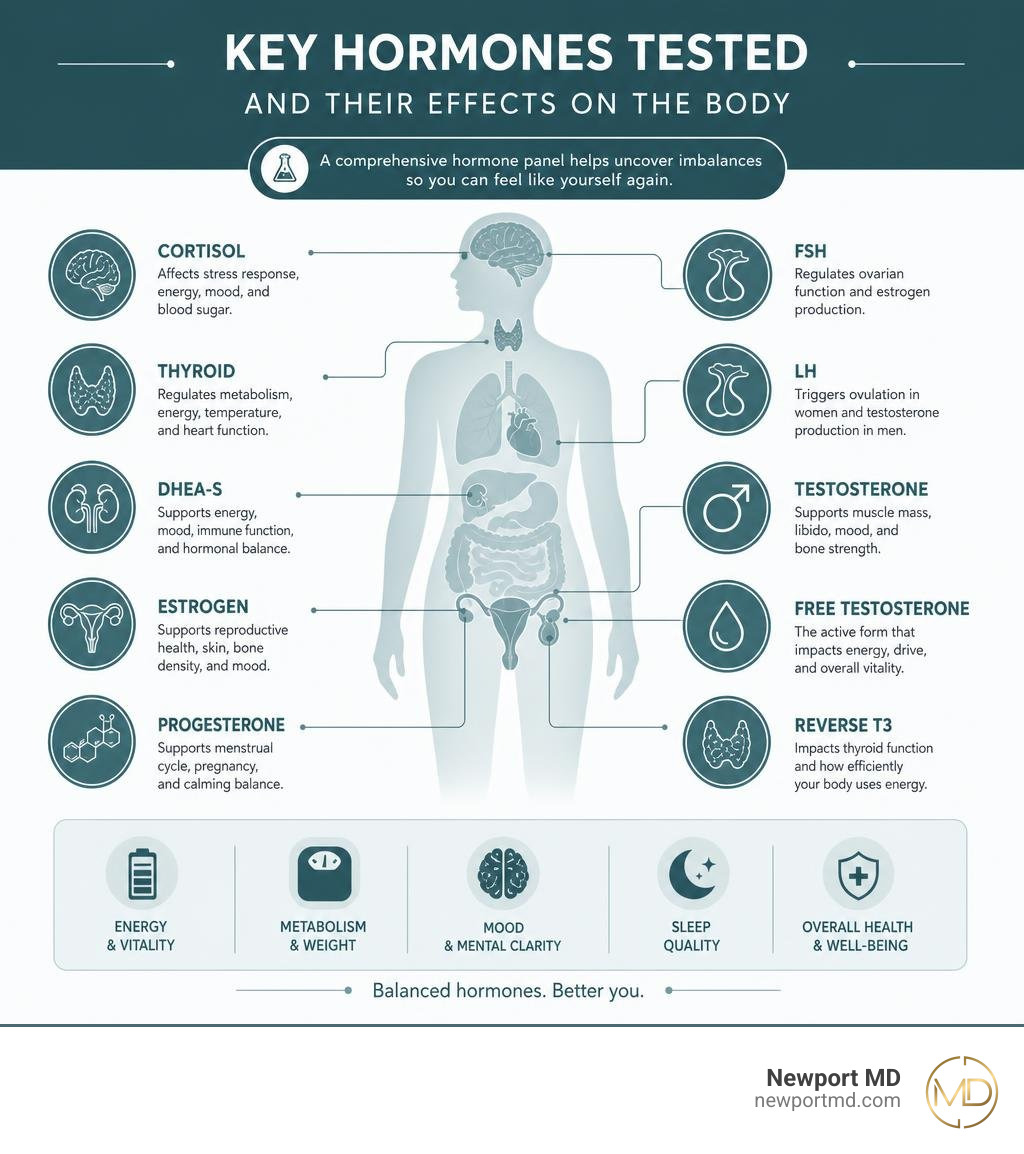
| What it is | A blood test measuring multiple hormones — estrogen, progesterone, testosterone, thyroid, cortisol, DHEA-S, FSH, LH, and more |
| Who it’s for | Adults experiencing fatigue, weight changes, mood shifts, sleep problems, or symptoms of perimenopause or menopause |
| How to prepare | Fast 10–12 hours before the draw; time the test to your menstrual cycle if relevant |
| How long it takes | Blood draw: 15–30 minutes; results typically within 1–5 business days |
| What happens next | A qualified provider reviews results with you and builds a personalized plan |
| Typical cost | Varies with the number of biomarkers tested; reviewed at your free consultation |
Your hormones control almost everything — energy, metabolism, mood, sleep, and sexual function. When even one is out of balance, the effects can ripple across your whole body.
The problem is that most standard checkups don’t go deep enough. A basic panel might miss key markers like free testosterone, DHEA-S, or reverse T3 — the ones that often explain why you feel off despite being told everything looks fine.
Newport Beach has a growing number of clinics offering comprehensive hormone evaluation, which means you have real options for getting answers that go beyond a one-size-fits-all lab printout. But knowing what to expect from the process — and how to choose the right provider — makes all the difference.
What is Hormone Panel Testing Newport Beach?

At its core, a comprehensive hormone panel is an in-depth blood assessment designed to measure the chemical messengers that coordinate almost every physiological process in your body. Rather than looking at a single marker in isolation, we look at the entire endocrine ecosystem to see how different systems interact.
When you undergo hormone panel testing Newport Beach, the laboratory analyzes several vital biomarker groups:
- Sex Hormones: This includes estradiol (the primary form of estrogen), progesterone, and both free and total testosterone. While testosterone is often associated with men, it is equally vital for women’s energy, libido, and muscle mass preservation.
- Thyroid Function: A complete thyroid evaluation goes far beyond a basic Thyroid Stimulating Hormone (TSH) test. It evaluates Free T3, Free T4, Reverse T3, and thyroid antibodies to rule out underlying thyroid imbalances that are frequently misdiagnosed.
- Adrenal Health: Markers like cortisol and DHEA-S (dehydroepiandrosterone sulfate) help us assess how your body is managing chronic physical and psychological stress.
- Metabolic Markers & Proteins: Sex Hormone-Binding Globulin (SHBG), fasting insulin, and follicle-stimulating hormone (FSH) help us understand how active your hormones are at the cellular level and stage your specific reproductive transition.
Who is a Candidate for Hormone Panel Testing Newport Beach?
How do you know if it is time to look under the hood? Many of our patients in Orange County are high-performing individuals who do everything right—they exercise, monitor their diet, and prioritize sleep—yet they still feel progressively flatter, foggier, or more fatigued.
You are an ideal candidate for a comprehensive assessment if you are experiencing:
- The Perimenopause or Menopause Transition: For women, the average age of natural menopause in the United States is 51. However, the transitional phase (perimenopause) can begin in your late 30s or 40s, bringing unpredictable cycles, hot flashes, and night sweats.
- Unexplained Weight Changes: Stubborn abdominal fat accumulation that resists changes in diet and exercise is frequently associated with shifts in estrogen, progesterone, and thyroid function.
- Persistent Fatigue and Brain Fog: Feeling exhausted by 2 p.m. or struggling with mental clarity can point to suboptimal testosterone, thyroid, or adrenal function.
- Mood Fluctuations and Sleep Disturbances: Estrogen and progesterone heavily influence neurotransmitters in the brain. A sudden drop in these hormones can trigger anxiety, irritability, and non-restorative sleep.
If these symptoms sound familiar, you can read more about how specialized diagnostics can help on our blood testing services page.
How to Prepare for Your Hormone Panel Testing Newport Beach
To ensure we get the most accurate, representative snapshot of your endocrine health, proper preparation is essential. When scheduling your draw at our Newport Beach location, keep these clinical guidelines in mind:
- Fasting Guidelines: We recommend fasting for 10 to 12 hours prior to your blood draw. While water is perfectly fine (and highly encouraged to keep your veins hydrated), black coffee, tea, and food can alter fasting insulin, glucose, and lipid markers.
- Hydration: Drink plenty of water the morning of your test. Well-hydrated veins make the blood draw process quick, comfortable, and usually complete in under 15 minutes.
- Medication and Supplement Timing: If you are already taking thyroid medications or hormone therapies, consult your clinician regarding when to take your morning dose relative to your blood draw. Additionally, avoid biotin supplements for 48 to 72 hours before testing, as biotin can interfere with certain lab assays (especially thyroid tests).
- Menstrual Cycle Timing: If you are still menstruating regularly, the timing of your blood draw matters. To accurately measure progesterone and estrogen levels, we typically recommend scheduling your draw during the mid-luteal phase of your cycle—usually days 19 to 21 of a standard 28-day cycle.
The Clinical Importance of Comprehensive Hormone Evaluation
One of the most frustrating phrases a patient can hear is, “Your labs look completely normal.”
The truth is, there is a vast difference between “normal” reference ranges and optimal hormone levels. Standard laboratory reference ranges are broad averages calculated from a wide population of people—many of whom may not feel well themselves.
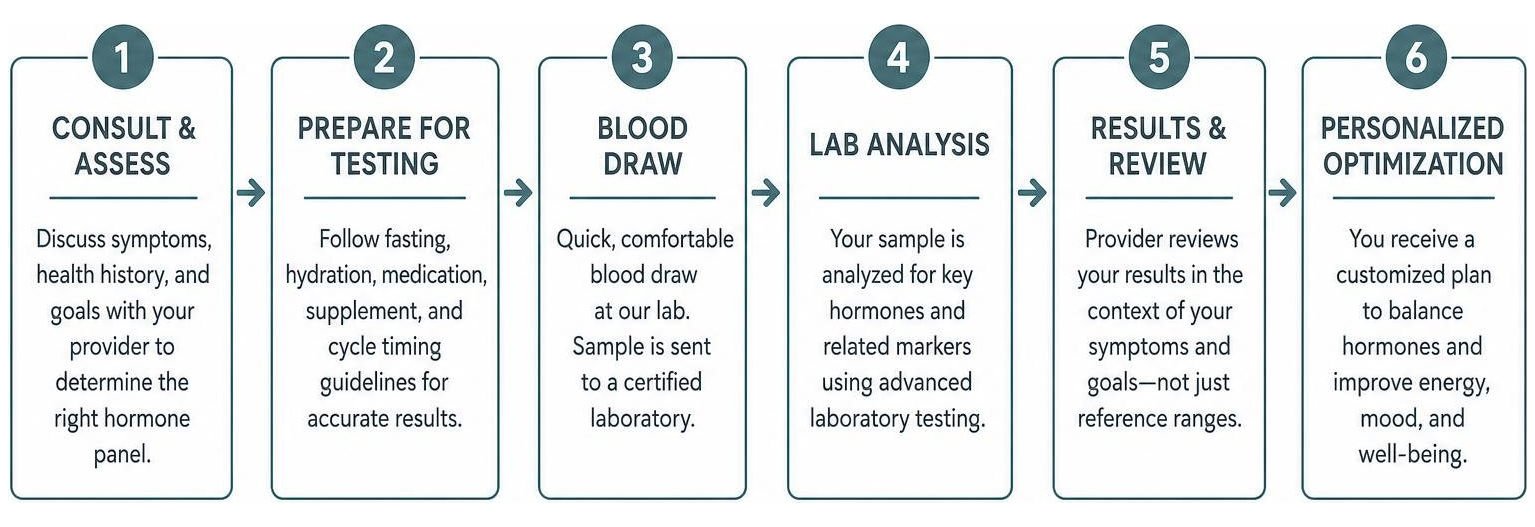
At Newport MD, we practice clinician-guided care that prioritizes your symptoms and personal wellness goals over an arbitrary lab number. We focus on optimizing your hormones to the ranges where you feel your best, recover efficiently, and maintain high cognitive and physical function.
Addressing Fatigue, Weight Gain, and Mood Changes
When multiple hormones fall out of alignment, they create a compounding effect that impacts daily life. For instance, a decline in progesterone relative to estrogen—often referred to as estrogen dominance—can trigger mood swings, heavy periods, and fluid retention.
Simultaneously, if your daily cortisol rhythm is disrupted due to chronic stress, it can suppress thyroid conversion and lead to insulin resistance. This hormonal traffic jam makes it incredibly difficult for your body to access stored fat for fuel, explaining why weight gain occurs even when you are maintaining a caloric deficit. By identifying these specific intersections through our hormone optimization protocols, we can target the root cause of your symptoms.
The Impact of Hormonal Decline on Aging and Bone Health
As we age, the systemic decline of key hormones does more than just cause temporary discomfort; it directly affects long-term structural health.
- Bone Density: Estradiol plays a vital role in maintaining bone mineral density. A rapid decline in estrogen during menopause is associated with accelerated bone loss, increasing the risk of osteoporosis.
- Cardiovascular Associations: Estrogen is associated with vascular elasticity and healthy lipid profiles. Addressing these declines early can be a protective step for overall cardiovascular wellness.
- Cognitive and Muscle Preservation: Testosterone and growth factors help preserve lean muscle mass, support metabolic rate, and maintain neurotransmitter balance.
To precisely determine where you are in this transition, clinicians utilize the STRAW+10 (Stages of Reproductive Aging Workshop) staging system. This clinical framework allows us to map your current hormonal stage and tailor therapies to your exact physiological needs.
Navigating Hormone Replacement Therapy (HRT) Options
If your hormone panel reveals clear deficiencies or imbalances, and you are experiencing clinical symptoms, you may be a candidate for hormone replacement therapy in Newport Beach.
Modern HRT is highly customized. Depending on your health profile, lifestyle, and preferences, hormones can be delivered via several routes:
- Transdermal Estrogen: Patches, gels, or creams absorbed through the skin. This route is often preferred because it avoids first-pass hepatic (liver) metabolism and may have a different risk profile than oral options.
- Oral Progesterone: Typically prescribed as micronized progesterone taken at bedtime, which may support sleep quality and is commonly used to help provide endometrial protection when estrogen is prescribed for patients with a uterus.
Bioidentical vs. Synthetic Hormones
When exploring treatment, it is important to understand the structural differences between hormone formulations:
| Feature | Bioidentical Hormones | Synthetic Hormones |
|---|---|---|
| Molecular Structure | Identical to the hormones naturally produced by the human body. | Modified molecular structure, differing slightly from human hormones. |
| Source | Derived from plant sources (like wild yams or soy) and synthesized to match human biology. | Often derived from animal sources or created entirely in a laboratory. |
| Physiological Response | Designed to fit into your cellular hormone receptors, mimicking natural function. | May bind differently to receptors, occasionally causing distinct side effects. |
| Customization | Can be individually customized to your exact physiological needs. | Typically available only in standardized, pre-set commercial doses. |
FDA-Approved Therapies vs. Compounded Formulations
There is a lively debate in the wellness community regarding FDA-approved bioidentical hormones versus customized compounded formulations.
FDA-approved bioidentical products (such as transdermal estradiol patches and micronized progesterone capsules) undergo rigorous clinical trials to evaluate safety, purity, and standardized dosing. They also include standardized package inserts detailing potential risks. The FDA provides patient information on compounded menopausal hormone therapy, which can be helpful to review with a qualified clinician when comparing options.
On the other hand, compounded bioidentical hormones are prepared by specialized compounding pharmacies to meet a specific prescription written for an individual patient. This allows for highly customized dosing and unique delivery combinations. However, because they are custom-made, they do not carry the same standardized FDA safety labeling, meaning selecting a reputable, accredited pharmacy is of utmost importance.
Choosing the Right Provider and Monitoring Protocol in Orange County

Hormone optimization is not a “set-and-forget” treatment. Because hormones are incredibly powerful chemical messengers, starting therapy requires careful medical oversight, precise diagnostics, and routine monitoring to ensure safety and efficacy.
What to Look for in a Hormone Specialist
When searching for a specialist in Orange County, look for a provider who practices evidence-based, integrative medicine. A qualified specialist should:
- Perform a comprehensive, head-to-toe clinical intake.
- Evaluate your symptoms in tandem with your blood work, rather than treating lab numbers alone.
- Possess recognized credentials and board certifications in endocrinology, anti-aging medicine, or gynecology.
For a deeper dive into selecting the right professional for your needs, you can read our guide on how to choose a top hormone replacement specialist.
Standard Lab Monitoring and Follow-Up Schedules
Your safety is our priority. A responsible hormone optimization program always follows a structured monitoring timeline:
- Baseline Testing: Comprehensive blood panels are completed before any therapy is prescribed.
- 8-Week Follow-Up: Your first follow-up panel is scheduled around the two-month mark. This allows us to see how your body is absorbing the hormones and make precise dosage adjustments.
- Quarterly Labs: During your first year, we check your levels every three months to monitor safety markers (such as red blood cell counts, lipids, and liver function).
- Annual Reassessment: Once your levels are stable and you are feeling great, we transition to comprehensive annual wellness checks to reassess your ongoing candidacy and treatment goals.
Frequently Asked Questions About Hormone Testing
Navigating hormone health can feel overwhelming. Here are some of the most common questions we hear from patients looking for specialized local women’s health clinics and diagnostic options in Newport Beach:
How much does hormone testing and therapy cost in Newport Beach?
In Orange County, the cost of hormone optimization varies depending on the depth of the diagnostic testing and the type of therapy utilized:
- Hormone Panels: The cost of a comprehensive blood panel depends on the number of biomarkers evaluated.
- Monthly Therapy Programs: Ongoing bioidentical hormone therapy is priced by plan and usually covers your customized prescriptions, regular follow-up consultations, and clinical monitoring. At Newport MD, we review pricing at your free consultation before you commit.
How often should hormone levels be tested?
During the initial phase of your treatment, you should expect to be tested at baseline, at 8 weeks, and again at the 3-to-6-month mark. Once your hormone levels are optimized and your clinical symptoms have improved, routine testing is typically performed once or twice a year during your annual wellness evaluations.
Does insurance cover hormone panel testing?
Many traditional health insurance plans will cover standard baseline blood draws if you are experiencing documented symptoms like extreme fatigue or menstrual irregularities. However, specialized wellness panels or ongoing bioidentical therapies may not be fully covered.
At Newport MD, we accept Health Savings Accounts (HSA) and Flexible Spending Accounts (FSA) for many of our diagnostic and treatment services, allowing you to utilize pre-tax dollars for your health optimization.
Conclusion
Your hormones are the foundation of your energy, cognitive clarity, and physical strength. If you are tired of feeling run down, dealing with unexplained weight changes, or struggling through the menopausal transition, you do not have to navigate it alone.
At Newport MD, we are dedicated to helping you reclaim your vitality through personalized, science-driven wellness programs under expert medical oversight. We invite you to take the first step toward feeling like yourself again—reach out to our local team and schedule a hormone optimization consultation today.