
The Ultimate Guide to Peptides for Skin Tightening and Repair
Why Peptides Are Changing the Way We Think About Skin Aging
Peptides skin care products have become one of the most talked-about categories in skincare — and for good reason.
Here’s a quick summary of what to know:
- What they are: Peptides are short chains of amino acids — the building blocks of proteins like collagen and elastin
- What they may support: Peptides are commonly used in formulas designed to support a smoother-looking, firmer-looking complexion and a healthy skin barrier
- Who they’re typically for: Many skin types, including sensitive skin — peptide formulas are often positioned as gentle, but individual reactions can vary
- When results may appear: Hydration and texture improvements can vary by product and person; visible changes, when they occur, usually require consistent use over time
- Best paired with: Hydrating and barrier-supporting ingredients such as hyaluronic acid, niacinamide, ceramides, and antioxidants
Here’s the issue many people notice with time: skin can start to look less firm, less plump, and less smooth as collagen levels naturally change with age and environmental exposure.
Many people reach for whatever product promises fast results. But skincare works best when expectations are realistic and products are chosen based on formula quality, consistency, and overall skin needs.
That’s where peptides can fit into a routine.
They are used in skincare formulas to support the appearance of healthier, more resilient skin. Rather than promising dramatic changes, peptide products are best understood as one part of a consistent, well-rounded skincare routine.
This guide breaks down the science, the different peptide types, how to use them, and what to look for when choosing a product.
What Are Peptides and How Do They Work in Skincare?
To understand how peptides function, it helps to look at the basic biology of the skin.
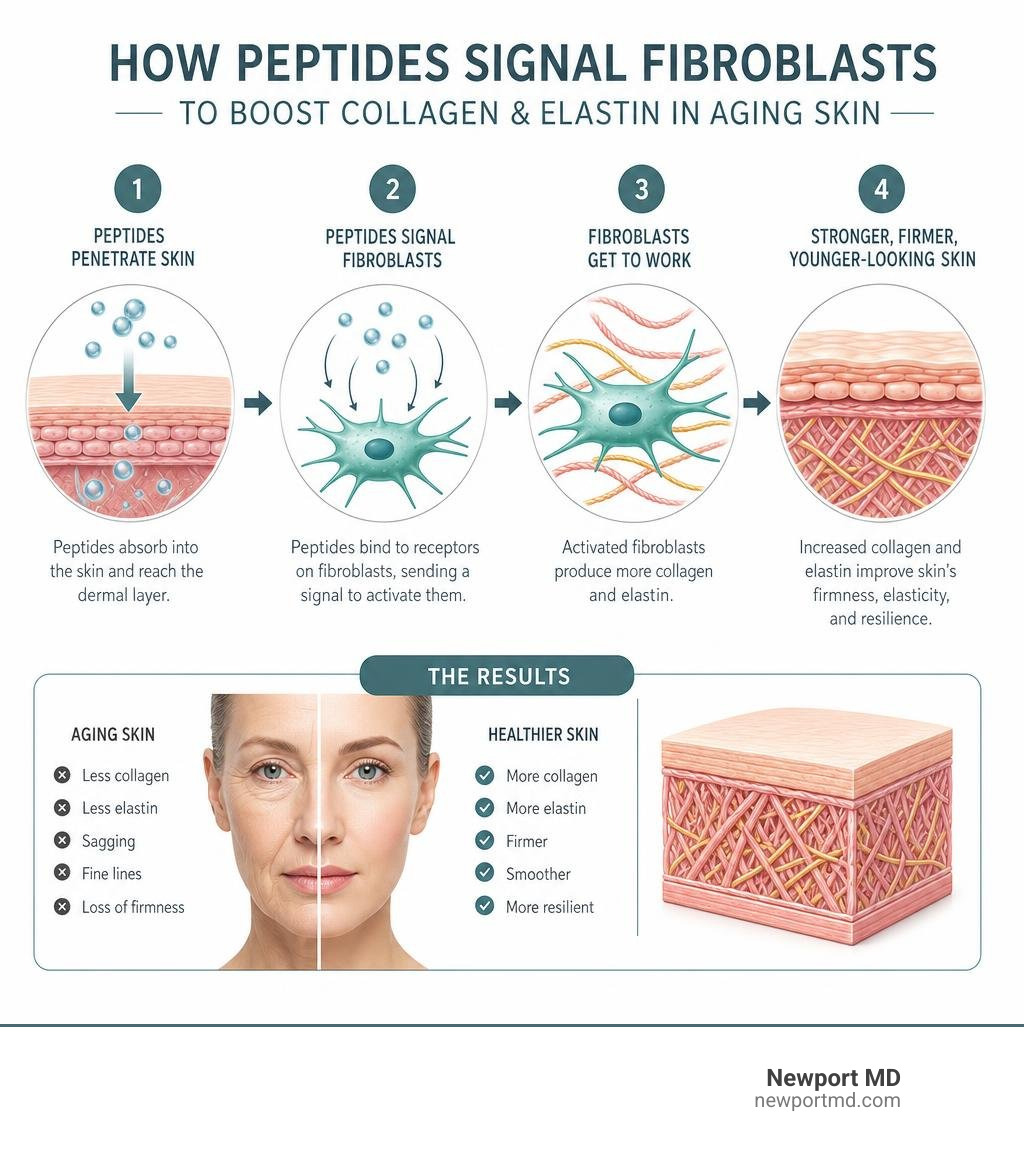
Skin contains structural proteins, including collagen, elastin, and keratin. These proteins help contribute to the look and feel of skin that appears firm, elastic, and smooth. Proteins are constructed from smaller chains of organic compounds called amino acids.
When these amino acids link together in short chains, they form peptides. When those peptide chains grow longer and fold into complex structures, they become full-fledged proteins.
In skincare, topical peptides are often described as signaling ingredients. As collagen naturally changes due to aging, UV exposure, and environmental stress, peptide fragments can be part of the skin’s normal repair communication process. Cosmetic peptide formulas are designed to support that appearance-focused pathway.
In practical terms, peptides skin care products are used to help support the look of smoother, firmer, more hydrated skin and a healthier-looking skin barrier. Results vary based on the formula, concentration, skin type, and consistency of use.

Types of Peptides: Signal, Carrier, and Neurotransmitter-Inhibiting Peptides
Not all peptides are created equal. In cosmetic chemistry, peptides are often categorized based on their intended role in a formula. Three common categories found in skincare include:
- Signal Peptides: These are widely used in products for mature-looking skin. They are included in formulas intended to support the appearance of firmness, smoothness, and elasticity. Common examples include Palmitoyl Pentapeptide-4, Palmitoyl Tripeptide-1, and Palmitoyl Tetrapeptide-7.
- Carrier Peptides: These peptides are designed to bind with trace minerals, such as copper or manganese, and are commonly used in formulas focused on skin comfort, cosmetic recovery support, and barrier care. Copper Tripeptide-1 is a common example.
- Neurotransmitter-Inhibiting Peptides: Sometimes marketed as “expression-line” peptides, these ingredients are used in cosmetic formulas intended to soften the look of lines associated with repeated facial expressions. Acetyl Hexapeptide-8 is one recognizable example.
These categories can help you read labels more confidently, but the finished formula matters more than any single ingredient name.
The Key Benefits of Peptides for Skin Tightening and Repair
If you are looking to support the appearance of aging or stressed skin, a well-formulated peptide product may offer several cosmetic benefits:
- Firmer-Looking Skin: Peptides are commonly included in formulas designed to support the look of elasticity and firmness, especially around areas where skin may appear less taut over time.
- Smoother-Looking Fine Lines: With consistent use, some peptide formulas may help soften the appearance of fine lines and wrinkles.
- Barrier Support: Peptide products are often paired with moisturizing and barrier-supporting ingredients to help skin feel more comfortable and resilient.
- Hydration Support: Many peptide formulations work alongside humectants like hyaluronic acid to help skin look plumper and more hydrated.
- Comfort-Focused Formulas: Certain peptide products are designed for skin that appears dry, stressed, or easily irritated, especially when combined with ceramides, niacinamide, and other calming cosmetic ingredients.
To help you understand which peptides to look for on your ingredient labels, here is a quick-reference guide:
| Peptide Type | Common INCI Names | Cosmetic Benefit | Often Used For |
|---|---|---|---|
| Signal Peptides | Palmitoyl Pentapeptide-4, Palmitoyl Tripeptide-1, Palmitoyl Tetrapeptide-7 | Supports the appearance of firmness, smoothness, and elasticity | Loss of visible firmness, fine lines, mature-looking skin |
| Carrier Peptides | Copper Tripeptide-1, Manganese Tripeptide-1 | Supports barrier care and skin comfort | Dryness, visible redness, stressed-looking skin |
| Neurotransmitter-Inhibiting Peptides | Acetyl Hexapeptide-8, Acetyl Octapeptide-3 | Helps soften the look of expression lines | Crow’s feet, forehead lines, smile lines |
How Peptides Skin Care Products Compare to Retinol and Vitamin C
When building a skincare routine, consumers often wonder whether they should choose peptides, retinol, or vitamin C. These ingredients do not have to compete; they are often used for different cosmetic goals.
- Retinol (Vitamin A): Retinol is used to support visible skin renewal and a smoother-looking texture. It can be effective for many people, but it may also cause dryness, peeling, redness, or sun sensitivity, especially when first introduced. Peptides are often used as a gentler-feeling option in routines focused on hydration, comfort, and visible firmness.
- Vitamin C: Vitamin C is an antioxidant commonly used to help brighten the appearance of uneven tone and support skin against visible environmental stress. Peptides are more often used in formulas focused on the appearance of firmness, smoothness, and barrier support.
If your skin is too sensitive to tolerate retinoids, peptide products may be a useful cosmetic option to discuss with a skincare professional.
Choosing the Best Peptides Skin Care Products for Your Routine
With thousands of peptides skin care products on the market, finding a formula that fits your skin can feel overwhelming. To make a more informed choice, keep these three factors in mind:
- Formulation Quality and Product Type: Peptides can be sensitive to formulation conditions, so the overall product design matters. Look for leave-on products like serums, essences, or lightweight moisturizers. Peptide cleansers may be less useful because they are rinsed away quickly.
- Delivery and Formula Design: Because peptides vary in size and structure, cosmetic chemists often use formulation strategies that help keep them stable and compatible with the rest of the product. Packaging, pH, and supporting ingredients can all affect how pleasant and effective a product feels in a routine.
- Synergistic Ingredients: Peptides are often paired with supporting cosmetic ingredients. A well-rounded peptide serum may also contain barrier-supporting ingredients like ceramides, niacinamide, and hyaluronic acid to support hydration and skin comfort.
How to Layer Peptides Skin Care Products in Your Daily Routine
To get the most out of peptide products, proper layering is helpful. As a general rule of thumb, apply skincare products from thinnest to thickest consistency.
Here is a simple way to structure a morning and evening routine:
Morning Routine:
- Cleanse: Use a gentle cleanser to prep your skin.
- Tone/Essence: Apply a hydrating toner or essence if you use one.
- Peptide Serum: Apply your peptide serum as directed on the product label, often before moisturizer.
- Antioxidant/Vitamin C: If tolerated, layer your vitamin C product separately or as directed by the formula.
- Moisturizer: Lock in hydration with a moisturizer suited to your skin type.
- Sunscreen: Finish with broad-spectrum sunscreen during the day.
Evening Routine:
- Cleanse: Remove makeup, sunscreen, and daily impurities.
- Peptide Serum: Apply your peptide serum as directed.
- Retinol or Treatment: If you use retinol, apply it according to product instructions and your skin’s tolerance.
- Night Cream: Apply a moisturizer containing barrier-supporting ingredients such as ceramides or lipids if your skin feels dry.
Step-by-Step Peptide Application Rules:
- Rule 1: Follow the instructions on your specific peptide product, since formulas can vary.
- Rule 2: Allow each layer to absorb before applying heavier creams or face oils over it.
- Rule 3: Include the neck and décolleté if the product is intended for those areas.
- Rule 4: If you are using strong exfoliating acids, consider alternating them with peptides or spacing out application to reduce the chance of irritation.
Combining Peptides with Other Active Ingredients
Peptides are versatile and can fit into many skincare routines.
- Hyaluronic Acid: Hyaluronic acid helps attract and hold water in the skin’s surface layers, which can make skin look plumper and more hydrated.
- Niacinamide: Niacinamide is commonly used to support the look of a more even, comfortable, balanced complexion.
- Ceramides: Ceramides are lipids used in barrier-supporting formulas and can pair well with peptide products in dry or mature-looking skin routines.
What to Avoid: Be cautious when layering peptides directly with strong exfoliating acids, such as AHAs and BHAs, or highly acidic L-ascorbic acid formulas. Some people prefer to use exfoliating acids in the evening and peptides in the morning, or to wait between applications, depending on product directions and skin tolerance.
Frequently Asked Questions About Peptide Skincare
Who should avoid using peptides?
Peptide skincare products are commonly marketed for a wide range of skin types, including dry, oily, combination, and sensitive-looking skin. However, every finished formula is different, and individual reactions can vary.
If you are pregnant, breastfeeding, managing a skin condition, or using prescription skincare, ask a qualified healthcare or skincare professional before adding a new active product to your routine.
As with any new skincare product, it is a good idea to perform a patch test on your inner arm or jawline for 24 hours before applying it to your entire face, especially if your skin is reactive.
How long does it take to see results from peptides?
Skincare is a consistency game, and this is especially true for peptides.
Some people may notice that skin feels more hydrated or comfortable relatively quickly, depending on the base formula. More visible changes in texture, fine lines, or firmness, when they occur, usually require consistent use over several weeks.
Can topical peptides replicate the effects of Botox?
No. Topical peptide skincare products should not be viewed as a replacement for injectable neuromodulators.
Some neurotransmitter-inhibiting peptides are marketed for the appearance of expression lines, but topical products work at the skin surface and cannot provide the same effect as an injectable treatment performed by a qualified medical professional. They may be best viewed as cosmetic skincare support rather than a substitute for professional care.
Conclusion: A Holistic Approach to Skin Rejuvenation
Incorporating well-formulated peptides skin care products into your daily routine may help support the appearance of hydrated, smoother, and firmer-looking skin.
However, skin appearance is influenced by more than topical products alone. At Newport MD, we take a personalized, medically guided approach to wellness and aesthetic goals, helping patients understand options that may fit their needs, preferences, and overall health profile.
If you are curious about peptide-related wellness services, skin-focused support, or broader health optimization, our medical team can help you review appropriate options and set realistic expectations.
Ready to learn more?
- Explore our comprehensive Services to see available wellness and optimization options.
- Learn more about Newport MD’s peptide therapy services.
- Book a Consultation with our medical team in Orange County, CA.