
Your Local Guide to Finding a Men’s Hormone Specialist in Newport
Why Finding a Hormone Optimization Specialist Near Me Could Change How You Feel Every Day
If you’ve been searching for a hormone optimization specialist near me, here’s what you need to know right away:
How to find a hormone optimization specialist near you:
- Search for board-certified physicians or functional medicine providers with specific training in hormone therapy
- Look for clinics that require comprehensive lab testing before starting any treatment
- Confirm they offer personalized protocols — not one-size-fits-all programs
- Check whether they provide ongoing monitoring and dosage adjustments over time
- Consider both in-person clinics in your area and telehealth options if local availability is limited
Somewhere between your late 30s and early 50s, things can start to feel… off. Energy drops. Sleep suffers. The scale creeps up even when nothing has changed. Focus slips. These shifts are often dismissed as “just aging” — but for many people, they’re tied to measurable changes in hormone levels.
About 20% of men over age 60 have testosterone deficiency, and over 50% of women aged 45–55 report moderate to severe symptoms related to hormonal change. That’s a significant portion of the population dealing with real, daily disruptions to their quality of life.
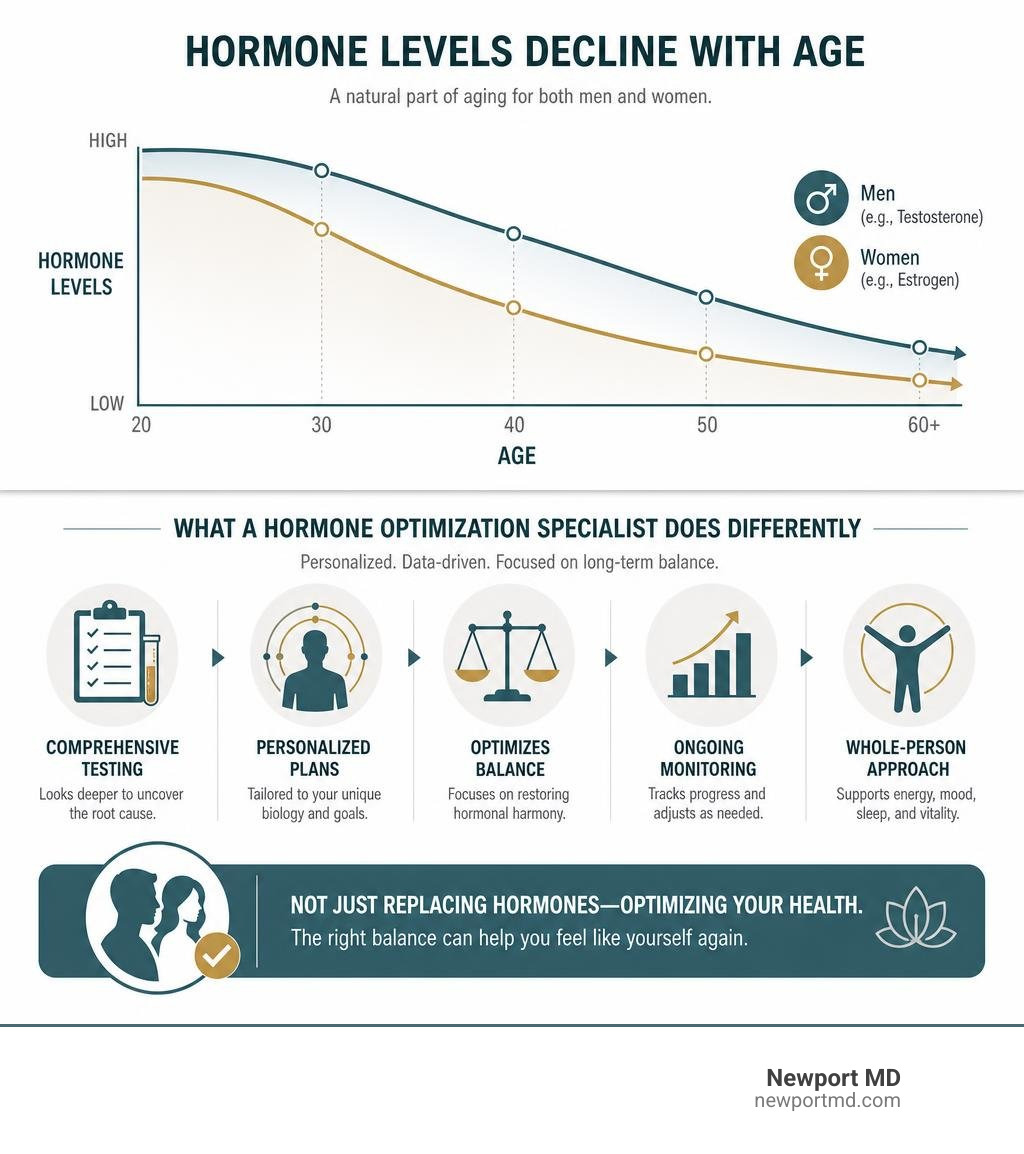
A hormone optimization specialist is a medical provider who goes beyond simply replacing what’s missing. They work to restore balance in a way that’s personalized to your biology, your symptoms, and your goals — using advanced lab testing and evidence-informed protocols.
This guide is built specifically for people in Newport who want to find the right specialist, understand what the process looks like, and make a confident, informed decision about their care.
What is a Hormone Optimization Specialist Near Me and How Do They Differ from Traditional HRT?
When searching for a hormone optimization specialist near me, it is common to wonder how this approach differs from traditional hormone replacement therapy (HRT). While both approaches address hormonal imbalances, their philosophies, testing methodologies, and clinical goals are fundamentally different.
Traditional HRT is typically reactive. It focuses on treating severe, acute symptoms—such as debilitating hot flashes in menopausal women—by bringing hormone levels up to the bare minimum required to stop those symptoms. Often, traditional HRT relies on synthetic hormones and standardized, mass-produced dosages.
Conversely, hormone optimization is a proactive, preventative discipline. It aims to restore your hormones to their “optimal” functional ranges rather than just “normal” reference ranges. Reference ranges on standard blood tests are based on broad population averages, which include many individuals who are chronically ill or elderly. A hormone optimization specialist focuses on how you actually feel, aiming for the levels associated with peak vitality, cognitive clarity, and physical performance.
For a deeper dive into how this approach can transform your health, explore our detailed guide on Hormone Optimization.
| Feature | Traditional Hormone Replacement Therapy (HRT) | Hormone Optimization |
|---|---|---|
| Primary Goal | Symptom management and disease prevention thresholds | Peak vitality, metabolic efficiency, and long-term wellness |
| Hormone Sources | Often synthetic or animal-derived estrogens/progestins | Bioidentical hormones structurally identical to human hormones |
| Dosing Model | Standardized, one-size-fits-all pharmaceutical dosages | Bespoke, compounded dosages tailored to individual biomarkers |
| Lab Testing | Basic panels, often evaluating only a few key markers | Comprehensive biomarker panels (thyroid, sex hormones, nutrients, inflammation) |
| Approach | Reactive (treating symptoms after they manifest) | Proactive (optimizing levels before significant decline occurs) |
Recognizing Potential Signs: When to Consult a Hormone Specialist
Hormones serve as the body’s chemical messengers, regulating everything from metabolism and body temperature to mood and cognitive function. When these chemical messengers fall out of balance, the body sends clear distress signals.
Many people spend years trying to treat individual symptoms with over-the-counter supplements, sleep aids, or caffeine, unaware that an underlying hormonal imbalance is the root cause. If you are experiencing a combination of the following signs, it may be time to consult a specialist:
- Persistent Fatigue: Feeling exhausted even after a full night of sleep, or experiencing a severe afternoon energy crash.
- Stubborn Weight Gain: Noticing an increase in belly fat or a loss of lean muscle mass, despite maintaining a healthy diet and consistent exercise routine.
- Brain Fog and Cognitive Decline: Having difficulty focusing, experiencing mild memory lapses, or feeling a general lack of mental clarity.
- Low Libido and Sexual Dysfunction: A noticeable decline in sexual desire, performance issues, or a lack of physical responsiveness.
- Mood Fluctuations: Experiencing unexplained irritability, anxiety, or mild depressive episodes that feel out of character.
To learn more about the customized pathways available to address these symptoms, you can read about our Hormone therapy options.

Identifying Potential Symptoms of Testosterone Deficiency
While testosterone is often associated primarily with male vitality, it is a crucial hormone for both men and women. In men, testosterone levels begin a gradual decline of about 1% per year starting around age 30. This gradual decline can eventually lead to a clinical state known as andropause, often referred to as the male equivalent of menopause.
Common indicators of low testosterone or andropause include:
- Loss of Lean Muscle Mass: Finding it increasingly difficult to build or maintain muscle strength, even with regular resistance training.
- Increased Body Fat: A shift in body composition, particularly an accumulation of visceral fat around the midsection.
- Reduced Bone Density: An unrecognized decline in bone strength, which can increase the risk of fractures over time.
- Sleep Disturbances: Struggling with insomnia, waking up frequently throughout the night, or experiencing sleep apnea symptoms.
- Emotional Changes: A decrease in self-confidence, lack of motivation, and increased feelings of irritability or sadness.
How a Hormone Optimization Specialist Near Me Evaluates Your Biomarkers
A reputable hormone optimization specialist will never prescribe a treatment plan based on symptoms alone. The foundation of any safe and effective protocol is a comprehensive diagnostic evaluation.
When you work with a specialist, they will order an extensive blood panel to look at your unique biochemical blueprint. Unlike standard physical exams that only look at basic blood counts, this panel evaluates over 100 different biomarkers. Key areas of focus include:
- Sex Hormones: Free and total testosterone, estradiol, progesterone, and DHEA.
- Thyroid Function: A complete thyroid panel including TSH, Free T3, Free T4, and thyroid antibodies to ensure your cellular metabolism is functioning correctly.
- Adrenal Health and Stress Markers: Cortisol levels, which help evaluate how chronic stress may be depleting your hormone reserves.
- Metabolic Markers: Fasting insulin, HbA1c, and lipid panels to evaluate insulin sensitivity and cardiovascular risk.
- Nutrient and Inflammatory Markers: Vitamin D3, Vitamin B12, and high-sensitivity C-reactive protein (hs-CRP) to identify systemic inflammation.
Understanding these biomarkers is key to choosing the right partner for your health journey. For guidance on selecting a qualified provider, see our resource on How to choose a specialist.
Common Therapies Offered by Hormone Optimization Clinics
Hormone optimization clinics utilize a variety of advanced therapeutic modalities to restore systemic balance. Because every individual’s biology is unique, these treatments are highly customized.

Bioidentical Hormone Replacement Therapy (BHRT)
Bioidentical Hormone Replacement Therapy (BHRT) has become a preferred choice for many patients seeking hormone restoration. Unlike conventional synthetic hormones, which are chemically modified and do not perfectly match human hormones, bioidentical hormones are derived from plant extracts (such as wild yams or soy) and compounded to be structurally identical to the hormones naturally produced by the human body.
Because the body recognizes bioidentical hormones as its own, they typically bind to hormone receptors more cleanly, which may reduce the risk of unwanted side effects. BHRT is highly customizable and can be delivered in several convenient formats:
- Topical Creams and Gels: Applied daily to the skin, allowing for steady, transdermal absorption directly into the bloodstream while avoiding the liver’s first-pass metabolism.
- Subcutaneous Pellets: Tiny, custom-compounded pellets (about the size of a grain of rice) inserted just beneath the skin of the hip during a quick, in-office procedure. Pellets release a consistent, low dose of hormones over several months, mimicking the body’s natural release patterns.
- Oral Capsules: Often used for bioidentical progesterone to support deep sleep, relaxation, and emotional balance.
For women navigating the transitions of perimenopause and menopause, specialized medical guidance can provide valuable support. You can explore resources from the Mayo Clinic on Hormone Therapy or the Endocrine Society to understand how hormone levels affect overall health.
To learn more about the customized BHRT formulations we offer, explore our BHRT options.
Testosterone Optimization and Peptide Therapies
For patients dealing with age-related decline in vitality, testosterone optimization and peptide therapies offer targeted solutions.
Testosterone Optimization Therapy (TRT): For men diagnosed with clinical testosterone deficiency, TRT may help support energy levels, lean muscle mass retention, body composition, and cognitive focus. TRT can be administered via weekly self-injections, daily topical gels, or long-acting subcutaneous pellets.
Peptide Therapy: Peptides are short chains of amino acids that act as cellular signaling molecules, directing the body to perform specific regenerative functions. In a hormone optimization context, peptides are often used to support natural growth hormone production, accelerate tissue repair, improve sleep quality, and optimize metabolic function. Common peptides include growth hormone secretagogues (like Ipamorelin and Sermorelin), which encourage the pituitary gland to naturally release its own growth hormone, avoiding the risks associated with synthetic human growth hormone (HGH).
Navigating the Potential Benefits, Risks, and Safety Protocols of Treatment
While hormone optimization can support physical and mental well-being, any medical intervention requires a careful evaluation of the potential benefits and risks.
Potential Benefits
Optimizing hormones to healthy, youthful levels may support:
- Increased physical energy, stamina, and workout recovery.
- Improved body composition, including reduced visceral fat and preserved lean muscle.
- Enhanced cognitive function, memory recall, and mental focus.
- Better emotional resilience, stable moods, and improved sleep quality.
- Long-term support for bone density and cardiovascular health.
Potential Risks and Contraindications
Hormone therapy is highly effective, but it must be prescribed and monitored carefully. Potential risks of unmonitored therapy include elevated red blood cell count (erythrocytosis), fluid retention, or mild skin acne.
Furthermore, hormone therapy may not be suitable for individuals with certain pre-existing medical conditions. Contraindications include active breast or prostate cancer, severe liver disease, uncontrolled cardiovascular disease, or a history of deep vein thrombosis (blood clots). This is why comprehensive baseline testing and ongoing medical oversight are absolutely essential.
Our Clinical Safety Protocols
To ensure the highest standards of patient safety, we implement strict medical protocols:
- Comprehensive Baseline Testing: No hormones are prescribed without an in-depth blood panel and a thorough medical history review.
- Individualized Dosing: We prescribe the lowest effective dose required to achieve clinical optimization, avoiding excessive or supraphysiologic levels.
- High-Quality Compounding: We source our bioidentical hormones and peptides exclusively from accredited, licensed compounding pharmacies.
- Routine Follow-Up Lab Work: Blood tests are repeated at regular intervals to monitor metabolic markers, blood viscosity, and hormone levels.
- Proactive Risk Mitigation: We adjust treatments immediately if any adverse markers or symptoms arise.
How a Hormone Optimization Specialist Near Me Monitors Your Progress
True hormone optimization is an ongoing journey, not a single prescription. Your body’s response to therapy can change based on stress, lifestyle modifications, and the natural aging process.
During the first year of therapy, you will typically undergo follow-up blood panels every 3 to 6 months. These tests allow your specialist to verify that your hormone levels are reaching their target ranges and to ensure your liver, kidneys, and lipid markers remain healthy.
Alongside lab work, your specialist will track your clinical symptoms. If your lab values look perfect on paper but you are still experiencing mild fatigue, your provider may adjust your dosage or delivery method. Once your levels have stabilized and you are feeling your best, monitoring typically transitions to an annual or bi-annual schedule.
Choosing the Right Provider: In-Person vs. Telehealth Services
As you look for a hormone optimization specialist near me, you will find both local, in-person clinics and virtual telehealth platforms. Both models have unique advantages, and the right choice depends on your lifestyle and medical needs.
- In-Person Evaluation: Visiting a local clinic in Newport Beach allows for a highly personalized, hands-on physical evaluation. It is ideal for therapies that require in-office procedures, such as subcutaneous hormone pellet insertion. Additionally, building a face-to-face relationship with your medical team fosters trust and allows for immediate, in-person adjustments.
- Telehealth Convenience: Virtual consultations offer flexibility for busy professionals. You can review your lab results, discuss your symptoms, and adjust your protocols from the comfort of your home or office. Medications are shipped directly to your door from trusted compounding pharmacies.
Many modern clinics, including Newport MD, offer a hybrid model that combines the best of both worlds: an initial in-person evaluation and diagnostic workup, followed by convenient virtual check-ins for ongoing monitoring.
Key Credentials to Look For in a Specialist
Hormone optimization is a highly specialized branch of medicine. Because traditional medical school curricula rarely focus on preventative hormone optimization, it is crucial to select a provider who has pursued advanced postgraduate training in functional, regenerative, or anti-aging medicine.
When evaluating a clinic, look for the following credentials:
- Board Certification: Providers should be board-certified in their primary specialties (such as internal medicine, family medicine, or gynecology) and hold active credentials with recognized integrative medicine bodies.
- Advanced Training in Endocrinology or Functional Medicine: Look for active membership or fellowship training with organizations like the American Academy of Anti-Aging Medicine (A4M) or the Institute for Functional Medicine (IFM).
- Clinical Longevity: Choose a clinic with a proven track record of patient safety and clinical experience.
At Newport MD, our clinical team brings decades of combined medical expertise to your care. To learn more about our providers, visit our Meet Our Medical Team page, where you can read about the backgrounds of Allyson Berkey M.D., Marie Earvolino Ramirez PhD NP MSN BSN, and Lindsay Morgan MSN FNP-C.
Frequently Asked Questions About Hormone Optimization
To help you make an informed decision, we have compiled answers to the most common questions patients ask when exploring hormone optimization.
How long does it take to see potential results from hormone optimization?
The timeline for experiencing the potential benefits of hormone optimization varies depending on the individual, the hormone being optimized, and the delivery method.
- Weeks 1 to 4: Many patients report initial improvements in sleep quality, morning energy levels, and mental focus.
- Weeks 4 to 8: Improvements in libido, sexual function, and emotional resilience typically begin to manifest during this window.
- Months 3 to 6: Changes in body composition, such as increased lean muscle tone and reduced body fat (when paired with proper nutrition and exercise), become more noticeable. Bone density and cardiovascular support develop over the long term.
Is hormone optimization covered by health insurance?
Traditional health insurance models are designed to cover late-stage disease management rather than proactive, preventive wellness. Consequently, comprehensive hormone optimization programs and advanced biomarker testing are rarely covered fully by standard insurance plans.
To provide the highest standard of personalized care without the constraints of insurance-mandated restrictions, most top-tier clinics operate on a direct-pay model. However, many clinics accept Health Savings Account (HSA) and Flexible Spending Account (FSA) cards, allowing you to use pre-tax dollars to cover your consultations, laboratory diagnostics, and compounded medications.
What is the difference between synthetic and bioidentical hormones?
The primary difference lies in their chemical structure and how they interact with your body’s hormone receptors:
- Synthetic Hormones: These are chemically modified variations of human hormones. Because their molecular structure is slightly different from what your body naturally produces, they can sometimes cause unwanted side effects or bind unpredictably to non-target receptors.
- Bioidentical Hormones: These are compounded from natural plant sources to be a perfect molecular match to the hormones your body produces. Because they are structurally identical, your body processes them naturally, which typically results in a smoother, more predictable therapeutic experience.
Conclusion
Hormonal health is a cornerstone of overall vitality, cognitive clarity, and physical performance. If you have been searching for a hormone optimization specialist near me, taking the first step toward understanding your unique biomarker profile can be a transformative decision for your long-term wellness.
At Newport MD, we specialize in personalized, science-driven health optimization programs. Located in the heart of Newport Beach, CA, our clinic combines advanced diagnostic testing, expert medical oversight, and customized bioidentical hormone and peptide protocols to help you feel like yourself again at every stage of life.
Are you ready to stop guessing and start optimizing? Contact our team or Book a consultation today to schedule your comprehensive evaluation. You can also learn more about our local services by visiting our Locations page, checking our Contact details, or going directly to Book a Consultation.