

The Ultimate Guide to Finding a Wellness Health Clinic Near You
Why More Adults Are Turning to a Wellness Health Clinic for Answers
A wellness health clinic is a medical practice that goes beyond treating illness — it focuses on optimizing your overall health through personalized, root-cause care.
Quick answer: What does a wellness health clinic do?
- Identifies why you feel off, not just what symptoms you have
- Offers services like hormone optimization, advanced lab testing, nutrition guidance, and integrative therapies
- Builds a personalized health plan around your goals and biology
- Supports both physical and mental wellbeing under one roof
- Works proactively to help you feel your best — not just avoid disease
If you’ve ever left a doctor’s office feeling unheard — told your labs look “normal” while you still feel exhausted, foggy, or just not yourself — you’re not alone. Many adults in their late 30s and beyond find that traditional medicine doesn’t have satisfying answers for low energy, hormone shifts, weight changes, or declining performance.
That gap is exactly where wellness clinics step in.
Unlike a standard primary care visit, a wellness health clinic typically spends more time with you, digs deeper into your biomarkers, and creates a plan built around you — not a one-size-fits-all protocol.
This guide walks you through everything you need to know to find the right clinic for your needs.
What is a Wellness Health Clinic and How Does It Differ from Traditional Medicine?
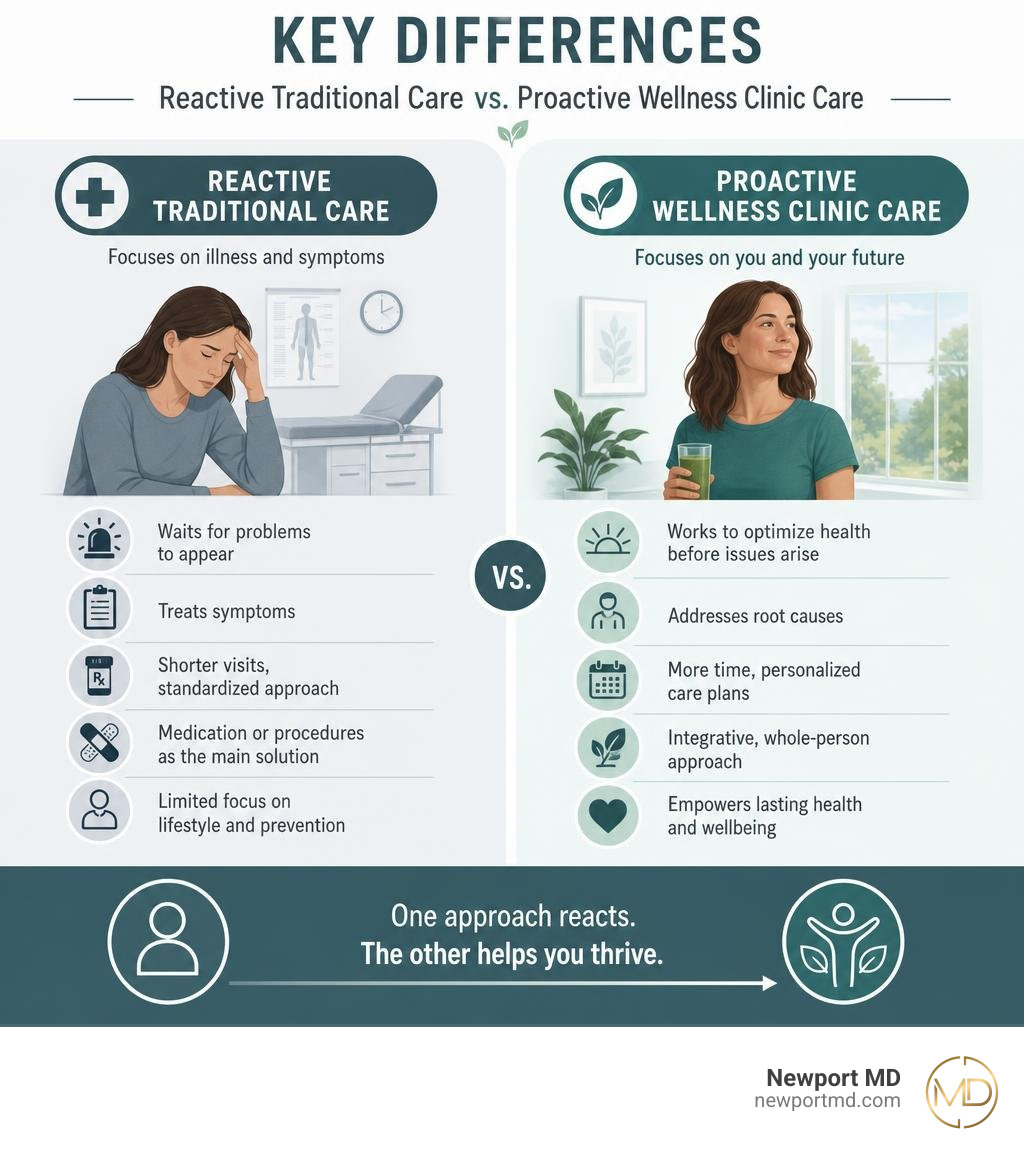
To understand what a wellness health clinic does, it helps to look at how we typically interact with healthcare. Most of us grew up with a “reactive” medical model. You get sick, you make an appointment, you get a prescription or a quick recommendation, and you go home.
Traditional primary care is incredibly important for acute illnesses, injuries, and emergencies. However, it was never designed to optimize your daily vitality, balance your hormones, or prevent age-related decline before it starts. Because traditional clinics are often bound by insurance constraints, doctors are frequently forced to limit patient visits to just 10 or 15 minutes. That is barely enough time to say hello, let alone uncover why you have been feeling sluggish for the last three years.
In contrast, a wellness health clinic focuses on a proactive, patient-centered approach. Instead of asking, “What disease do you have?” we ask, “How can we optimize your cellular, hormonal, and metabolic systems so you feel like yourself again?”
This approach relies heavily on root-cause analysis. If you are experiencing brain fog and fatigue, a traditional practitioner might run a basic thyroid panel and, finding it within the broad “normal” reference range, tell you you are simply getting older. A wellness practitioner will look closer, analyzing optimal (not just “normal”) levels, examining gut health, looking for systemic inflammation, and assessing hormone balance.
To see how these two models compare side-by-side, consider the following table:
| Feature | Traditional Primary Care | Wellness Health Clinic |
|---|---|---|
| Primary Focus | Symptom management and disease diagnosis | Proactive health optimization and prevention |
| Appointment Length | Typically 10–15 minutes | Often 45–90 minutes for initial evaluations |
| Diagnostic Depth | Standard, basic lab panels | Advanced biomarkers, functional testing, deep hormone panels |
| Treatment Approach | Prescription drugs, acute care, referral to specialists | Personalized lifestyle adjustments, hormone optimization, peptide therapy, targeted nutrients |
| The Goal | Absence of disease (“You aren’t sick”) | Peak vitality and longevity (“You are thriving”) |
By shifting the focus from managing sickness to cultivating vitality, a modern wellness clinic helps you address the subtle imbalances that drag down your quality of life. If you want to explore how this philosophy translates into daily health strategies, you can read more on our Health Optimization Blog.
Core Services Offered at a Modern Wellness Health Clinic

When you walk into a state-of-the-art wellness clinic, you will find a suite of services designed to work synergistically. Rather than treating different parts of your body as isolated systems, these clinics offer therapies that support your body’s natural healing and regenerative capabilities.
- Hormone Optimization: As we age, our hormone levels naturally decline, which can lead to fatigue, muscle loss, mood fluctuations, and a lower libido. Targeted hormone replacement therapies aim to restore these key chemical messengers to their youthful, optimal levels.
- Peptide Therapy: Peptides are short chains of amino acids that act as precise signaling molecules in the body. They can be used to help repair tissues, boost growth hormone production, improve sleep quality, and support immune function. To understand the science behind these targeted molecules, you can read more about how we use peptides to support cellular repair.
- Nutritional and Vitamin Support: Modern life and compromised digestive systems can make it difficult to absorb the nutrients we need. Many wellness clinics offer targeted vitamin injections to deliver essential nutrients directly into your system, bypassing the digestive tract for maximum absorption and quick energy support.
- Metabolic and Weight Management: Sustainable weight management is rarely as simple as “eating less and moving more.” Hormones, gut health, and metabolic rate play massive roles. A science-driven clinic can help you discover customized medical weight loss options that address the biological roadblocks keeping you from your goals.
Specialized Therapies at a Wellness Health Clinic
Two areas where wellness clinics excel far beyond traditional medicine are hormone balance and gut health.
Hormones govern almost every process in your body, from your metabolism and sleep cycles to your mood and cognitive function. When they are out of alignment, you feel it everywhere. Because hormone health is highly complex and deeply individual, it is crucial to work with a specialist who understands the nuances of bioidentical hormone replacement therapy (BHRT). If you are looking for an expert in the Southern California area, check out our guide to choosing a hormone specialist to ensure you receive safe, evidence-based care.
Similarly, your digestive system is often referred to as your “second brain.” Chronic bloating, indigestion, and food sensitivities are not just inconvenient; they can drive systemic inflammation, affect your mood, and deplete your energy. Modern research shows that targeted therapies can help repair the gut lining and restore microbial balance. For example, you can learn how peptide therapy supports gut health by reducing inflammation and promoting cellular regeneration in the digestive tract.
Diagnostic Tools in a Wellness Health Clinic
You cannot optimize what you do not measure. Traditional blood tests often look at a very narrow set of markers to rule out major diseases. A wellness clinic, however, utilizes highly comprehensive diagnostics to get a complete picture of your internal biochemistry.
These advanced diagnostics go beyond standard blood counts to analyze:
- Complete thyroid panels (including Free T3, Free T4, and Thyroid Antibodies)
- Inflammatory markers (like hs-CRP and Homocysteine)
- Full cardiovascular and lipid particle profiles
- Micronutrient levels to identify cellular deficiencies
- Comprehensive hormone panels (including DHEA, Cortisol, Estrogen, Progesterone, and Testosterone)
By tracking these biomarkers over time, clinicians can spot trends before they turn into chronic health issues. If you are ready to see what is actually happening beneath the surface, you can learn more about our advanced blood testing services.
Who Benefits from Integrative and Holistic Care?

Integrative and holistic care is not just for elite athletes or those with complex, unexplained illnesses. It is designed for anyone who refuses to settle for “just okay” health.
In particular, a wellness health clinic is an excellent fit for adults experiencing:
- Persistent Fatigue: If you wake up tired despite getting eight hours of sleep, a wellness clinic can investigate mitochondrial function, adrenal health, and hormone levels.
- Metabolic Slowdown: If you are experiencing unexpected weight gain, muscle loss, or difficulty maintaining your body composition despite a healthy diet and exercise routine.
- Brain Fog and Cognitive Decline: If you struggle to focus, remember names, or maintain mental clarity throughout the workday.
- Stress and Mood Imbalances: Modern stress takes a heavy physical toll. In the United States, 1 in 5 adults experience mental illness each year, and mental health conditions cost the global economy an estimated $1 trillion annually in lost productivity. Yet, in 2021, only 46.2% of U.S. adults with mental illness received treatment.
Wellness clinics recognize that the mind and body are deeply connected. Chronic physical imbalances — like gut dysbiosis, systemic inflammation, or low hormone levels — can directly trigger or worsen feelings of anxiety and depression. By addressing these physical root causes alongside lifestyle and stress management, wellness clinics offer a more complete path to mental and emotional wellbeing.
For those living in Southern California who are looking for local, community-based mental health and integrative support, organizations like Wellness Center Central provide wonderful peer-to-peer resources and community support programs designed to help individuals navigate mental health journeys in a welcoming environment.
Navigating Costs, Insurance, and Membership Models
Because wellness clinics prioritize long, unhurried consultations, advanced testing, and highly personalized treatments, their business models differ from traditional insurance-based clinics.
Many top-tier wellness clinics operate on a concierge medicine or membership model. Instead of billing insurance for every quick interaction, patients pay a monthly or annual fee, or pay out-of-pocket for specialized packages.
While this might seem unexpected at first, there are several reasons why this model benefits the patient:
- No Insurance Bureaucracy: Insurance companies often dictate what tests a doctor can run and what treatments they can prescribe. By stepping outside of this system, wellness clinicians are free to order the exact diagnostic tests and therapies you actually need.
- Longer, Quality Visits: Membership fees allow clinics to limit their patient rosters, ensuring that your provider has the time to sit down, listen to your story, and truly understand your health goals.
- HSA and FSA Eligibility: Many wellness services, advanced lab tests, and doctor consultations can be paid for using Health Savings Accounts (HSAs) or Flexible Spending Accounts (FSAs). It is always wise to check with your specific provider to see what qualifies.
While premium, personalized clinics require an investment in your health, there are also vital community health initiatives designed to support those who are uninsured or underserved. Community-based services are incredibly impactful; in fact, research shows that community-based mental health services can reduce hospital readmissions by up to 50%.
If you are looking for community-focused wellness programs or public health resources in the Los Angeles and Orange County areas, organizations like The Wellness Center in LA and the Wellness Centers | Orange County California – Health Care Agency provide accessible, low-cost, or free programs. These centers focus on mental health, physical fitness, and community education, ensuring that holistic wellness support is available to everyone, regardless of income or insurance status.
How to Choose the Right Provider for Your Health Goals
Choosing a wellness clinic is a highly personal decision. Because you are investing your time, energy, and resources, you want to make sure you partner with a clinic that aligns with your values and health goals.
Here are a few key factors to consider when evaluating clinics:
- Provider Credentials: Ensure the clinic is led by licensed, board-certified medical professionals (such as MDs or DOs) who have specialized training in integrative, functional, or age-management medicine.
- A Personalized Approach: Avoid clinics that push the same “signature package” on every single patient. Your biology is unique, and your treatment plan should reflect that.
- Advanced Diagnostic Capabilities: A reputable clinic should always base your treatment on comprehensive objective data, such as detailed blood work, rather than guesswork.
- Local Convenience: Wellness is a journey, not a one-time event. Choosing a clinic that is easily accessible for follow-up appointments, lab draws, and consultations makes it much easier to stay consistent.
If you are located in Southern California and are looking for a trusted partner in your health journey, Newport MD offers a science-driven, highly personalized approach to health optimization. Our expert medical team specializes in hormone therapy, peptide treatments, and advanced diagnostics to help support your vitality and wellness goals. To find a convenient location near you, explore our locations.
Frequently Asked Questions about Wellness Clinics
What should I expect during my first visit to a wellness clinic?
Your first visit to a wellness clinic is typically much longer and more comprehensive than a standard doctor’s appointment. You will sit down with a clinical provider for an in-depth consultation to review your medical history, current lifestyle, sleep patterns, stress levels, and specific health goals.
From there, the provider will recommend a targeted panel of advanced diagnostic tests. Once your lab results are back, you will meet again to walk through your biomarkers together and co-create a personalized wellness plan.
Do wellness clinics accept health insurance?
Many premium wellness clinics operate on a fee-for-service or membership-based model and do not bill insurance directly. This allows them to offer cutting-edge therapies and extended appointment times that insurance companies typically do not cover.
However, many clinics can provide you with a detailed invoice (superbill) that you can submit to your insurance company for potential out-of-network reimbursement. Additionally, you can often use your HSA or FSA funds to pay for consultations, blood testing, and many prescribed therapies.
How do wellness clinics measure patient success and outcomes?
Success in a wellness clinic is measured both objectively and subjectively. Objectively, we track key biomarkers through follow-up blood testing to ensure your hormone levels, inflammatory markers, and metabolic indicators are moving into optimal ranges.
Subjectively, we measure success by how you actually feel. We track improvements in your daily energy levels, sleep quality, mental clarity, libido, body composition, and overall quality of life.
Conclusion
Your health is the foundation of everything you do. When you feel energetic, sharp, and physically strong, you can show up fully for your career, your family, and the activities you love. If you are tired of merely surviving and are ready to start thriving, partnering with a wellness health clinic is a powerful first step.
At Newport MD, we believe that true wellness is built on personalized, science-driven care under expert medical oversight. We don’t believe in guessing — we believe in measuring, optimizing, and supporting your body so you can feel like yourself again at any age.
Are you ready to take control of your health journey? Book a consultation today to speak with one of our specialists, or explore our comprehensive services to learn more about how we can help you reach your peak vitality.