

Going Natural: What Is Hormone Replacement Therapy and Can Herbs Do the Trick?
When Your Hormones Shift: What Every Adult Should Know About HRT
What is hormone replacement therapy (HRT)? Here’s the short answer:
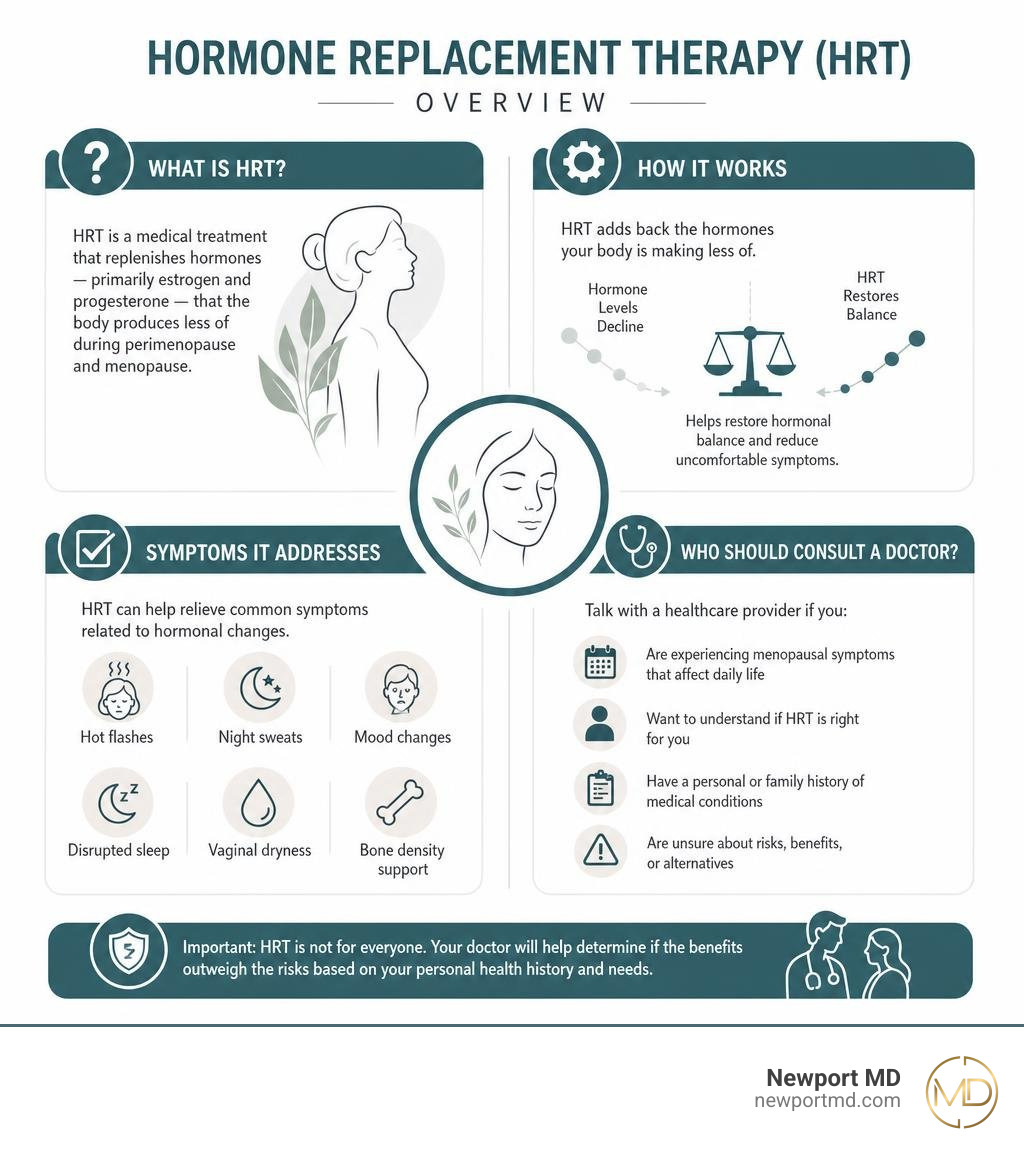
Hormone replacement therapy (HRT) is a medical treatment that replenishes hormones — primarily estrogen and progesterone — that the body produces less of during perimenopause and menopause. It is used to relieve common symptoms like hot flashes, night sweats, vaginal dryness, and disrupted sleep, and may also help support bone density.
Quick-reference summary:
- What it is: A treatment using hormones to replace those lost during menopause
- Main hormones used: Estrogen, progesterone (or progestin), and sometimes testosterone
- Common forms: Pills, skin patches, gels, creams, vaginal rings
- Primary uses: Relief of vasomotor symptoms, vaginal discomfort, and bone loss support
- Who should avoid it: Those with a history of certain cancers, blood clots, stroke, heart attack, liver disease, or pregnancy
- Key principle: Use the lowest effective dose for the shortest time needed, under medical supervision
If you’re in your late 30s, 40s, or early 50s and you’ve noticed your energy dropping, your sleep getting worse, or symptoms you can’t quite explain — you’re not imagining it. Hormonal shifts are real, and they affect nearly every system in your body.
Between 70% and 80% of women experience symptoms during the menopausal transition. Yet many go without treatment for over a year, often because the options feel confusing or the risks feel unclear.
HRT has a complicated reputation. It was once routinely prescribed, then largely abandoned after large clinical trials raised concerns in the early 2000s. Since then, research has become far more nuanced — and so has clinical guidance. As of 2026, even the FDA has updated how it communicates HRT risks on product labels.
This guide cuts through the noise. You’ll learn what HRT actually is, how it works, who it may help, what the real risks look like, and whether herbal alternatives are a viable substitute.
What Is Hormone Replacement Therapy and How Does It Work?

To understand what is hormone replacement therapy and how it functions, we first have to look at the endocrine system. Hormones are the body’s chemical messengers. They travel through your bloodstream, telling tissues and organs how to behave.
When the ovaries begin to produce fewer hormones, it does not just affect reproductive health—it sends ripples through your entire physiological system. You can learn more about this in the Scientific overview of hormone replacement therapy.
Understanding the Basics: What Is Hormone Replacement Therapy?
At its core, HRT is designed to supplement the body with the hormones it is no longer producing in abundance. During perimenopause (the transitional phase leading up to menopause) and menopause itself, ovarian function naturally declines.
This drop in estrogen and progesterone is not a slow, gentle slope. For many, it is a rollercoaster of sudden spikes and sharp drops.
By introducing medical-grade hormones back into the system, HRT helps stabilize these fluctuations. The goal is not to restore youthful reproductive levels, but to bring hormones back into a balanced range that prevents the brain and body from going into a state of cellular panic.
How Hormones Interact with the Body
Every cell in your body has receptors designed specifically for estrogen and progesterone. When hormone levels drop:
- Receptor binding decreases: Cellular signaling slows down, which can affect everything from skin elasticity to body temperature regulation.
- Metabolic rate shifts: Estrogen plays a key role in metabolic health. When it declines, many women notice changes in how their bodies distribute fat, often leading to an increase in abdominal fat.
- Symptom modulation: The hypothalamus—the brain’s thermostat—becomes highly sensitive to minor temperature changes, triggering sudden, intense hot flashes and night sweats.
By introducing supplemental hormones, we bind to these vacant receptors, restoring cellular communication and helping to normalize the metabolic and thermal processes that keep you feeling like yourself.
Main Types and Administration Methods of Hormone Therapy

Hormone therapy is not a one-size-fits-all treatment. Today, there are multiple delivery methods designed to fit different lifestyles, health profiles, and personal preferences.
Systemic vs. Local Delivery Options
The first major decision in hormone optimization is choosing between systemic and local delivery.
- Systemic Therapy: These treatments release hormones directly into the bloodstream, allowing them to travel throughout the entire body. Systemic options are highly effective for treating whole-body symptoms like hot flashes, night sweats, brain fog, and systemic bone loss. They are available as oral tablets, transdermal skin patches, topical gels, and subcutaneous pellets.
- Local Therapy: If your primary concerns are localized to the vaginal or urinary tract (such as dryness or discomfort during intimacy), local low-dose vaginal estrogen is often preferred. Because these creams, tablets, or rings are applied directly to the tissue, only a tiny amount enters the bloodstream, minimizing systemic effects.
To help you visualize the differences, we have outlined the primary administration methods below:
| Delivery Method | Type of Therapy | Bypasses Liver? | Primary Use Case |
|---|---|---|---|
| Oral Tablets | Systemic | No (Processed by liver) | Hot flashes, night sweats, systemic bone support |
| Transdermal Patches | Systemic | Yes | Steady hormone release, lower risk of blood clots |
| Topical Gels/Creams | Systemic or Local | Yes | Flexible daily dosing, localized or systemic relief |
| Vaginal Rings/Tablets | Local (usually) | Yes | Targeted relief for vaginal dryness and discomfort |
For a deeper dive into these options, you can review the Guide to hormone therapy options.
Estrogen-Only vs. Combined Regimens
The specific hormones you take depend largely on your surgical history:
- Estrogen-Only Therapy (ET): This regimen is typically recommended for women who have undergone a hysterectomy (removal of the uterus). Because there is no uterine lining to protect, estrogen can be taken safely on its own.
- Combined Estrogen-Progestogen Therapy (EPT): If you still have an intact uterus, taking estrogen alone can cause the uterine lining to thicken, which increases the risk of abnormal cellular changes. Adding a progestogen (either synthetic progestin or natural micronized progesterone) protects the uterine lining by keeping it thin and healthy.
At Newport MD, our focus is always on finding the precise, individualized dosage that works harmoniously with your unique biology.
Candidates, Benefits, and Safety Considerations
Deciding to start hormone therapy requires a careful balance of benefits and risks. For many, the transition is smooth, but for others, clinical guidance is essential to ensure safety. You can read more about standard medical recommendations in the Clinical guidelines on hormone therapy.
Who May Benefit from What Is Hormone Replacement Therapy?
The ideal candidates for HRT are healthy individuals experiencing moderate-to-severe vasomotor symptoms (hot flashes and night sweats) who are within 10 years of reaching menopause or are under the age of 60.
Research shows that when hormone therapy is initiated within this optimal window—often referred to as the “timing hypothesis”—the benefits of cardiovascular support, bone density preservation, and symptom relief generally outweigh the potential risks.
Additionally, women who experience premature ovarian insufficiency (losing ovarian function before age 40) or early menopause are excellent candidates, as their bodies require hormone support for a longer duration to protect bone and cardiovascular health.
Understanding the Risks and Contraindications
While HRT is highly effective, it is not suitable for everyone. Absolute contraindications include:
- Active or past history of blood clots or deep vein thrombosis (VTE)
- History of stroke or heart attack
- Active liver disease
- Unexplained, undiagnosed vaginal bleeding
- Pregnancy
- History of certain estrogen-sensitive tissue changes or malignancies
Historically, boxed warnings on hormone products painted a very broad stroke of risk. However, in recent years, the FDA has updated its labeling guidelines. The agency has moved certain cardiovascular and cognitive risk warnings from the prominent “boxed warning” section into the standard “Warnings and Precautions” section for specific low-dose and transdermal products. This reflects a growing medical consensus that transdermal options (like patches and gels) bypass the liver and carry a significantly lower risk of blood clots than oral alternatives.
Can Herbs and Natural Alternatives Do the Trick?
It is incredibly common to wonder if you can bypass pharmaceutical treatments entirely by “going natural.” Many women turn to herbal supplements, botanical ingredients, and lifestyle changes to manage their symptoms.
While some find mild relief, it is important to understand the science behind these alternatives, as detailed in this Analysis of menopause management alternatives.
- Phytoestrogens: Found in soy, flaxseeds, and red clover, these plant-based compounds mimic estrogen in the body, but at a much weaker level. They may offer modest relief for very mild hot flashes, but they are generally not potent enough to manage severe symptoms or protect bone density.
- Black Cohosh: One of the most popular herbal remedies for hot flashes, black cohosh has shown mixed results in clinical trials. Some women report improvement, while others see no change. Because herbal supplements are not tightly regulated, consistency and purity can vary widely.
- Lifestyle Modifications: Simple adjustments like dressing in layers, keeping your bedroom cool, avoiding triggers (like spicy foods, caffeine, and alcohol), and practicing stress reduction can help make symptoms more manageable.
- Cognitive Behavioral Therapy (CBT) and Clinical Hypnosis: Both of these non-pharmacological approaches have been clinically proven to help reduce the perceived severity and distress of hot flashes by helping the brain better manage the body’s stress response.
While natural remedies and lifestyle shifts are excellent supportive tools, they rarely match the biological efficacy of bioidentical hormones when it comes to resolving moderate-to-severe hormonal imbalances.
Frequently Asked Questions About Hormone Therapy
How long is hormone therapy typically utilized?
There is no rigid expiration date for hormone therapy. In the past, doctors strictly limited treatment to five years. Today, clinical guidelines recommend an individualized approach.
Most women use systemic HRT for three to five years to get through the peak of their menopausal symptoms. However, treatment duration should be based on regular, periodic reassessments (ideally every 3 to 6 months) with your healthcare provider to ensure you are still using the lowest effective dose for your needs.
What is the difference between bioidentical and synthetic hormones?
The term “bioidentical” refers to hormones that have the exact same molecular structure as those naturally produced by the human body.
- FDA-Approved Bioidenticals: These are highly standardized, strictly regulated preparations (such as micronized progesterone and estradiol patches) available at standard pharmacies. They offer the safety of bioidentical structures combined with rigorous quality control.
- Compounded Bioidenticals: These are custom-mixed by compounding pharmacies. While they offer highly personalized dosing, they lack standardized FDA oversight, which means their strength and consistency can sometimes vary.
- Synthetic Hormones: These are chemically modified hormones (like medroxyprogesterone acetate) that mimic human hormones but have a slightly altered molecular structure.
How is hormone therapy monitored by healthcare professionals?
Safe hormone optimization requires careful, ongoing clinical oversight. At Newport MD, our monitoring process involves:
- Baseline and Periodic Blood Testing: Checking your hormone levels, metabolic markers, and liver function to establish a clear physiological picture.
- Symptom Tracking: Regularly reviewing how you feel to adjust your dosages as your body acclimates.
- Annual Wellness Evaluations: Ensuring you stay up-to-date on essential screenings, such as mammograms, blood pressure checks, and pelvic exams.
Working with an expert clinic makes all the difference in your journey. For advice on finding the right clinical partner, read our guide on Choosing a top hormone replacement specialist.
Conclusion
Hormonal transitions are a natural part of life, but suffering through them does not have to be. Whether you are dealing with disruptive night sweats, brain fog, or changes in your energy levels, understanding what is hormone replacement therapy is the first step toward reclaiming your vitality.
While herbal remedies and lifestyle adjustments can offer mild, supportive relief, they often fall short of addressing the root physiological shifts of endocrine decline. For true, lasting balance, a personalized, science-driven approach is key.
At Newport MD, located in beautiful Newport Beach, CA, we specialize in helping you navigate these transitions with expert medical oversight, advanced blood testing, and customized hormone optimization plans. We believe that wellness should be tailored to your unique biology, helping you feel like yourself again at every stage of life.
Are you ready to explore how personalized hormone therapy can support your health goals? Learn more about our hormone optimization services or explore our full range of wellness services. If you would like to meet our team, visit our about us page, or take the first step today and book a consultation with us.