

Peptides on Demand: The Ultimate Guide to Personalized Medicine’s New Best Friend
Why Peptide Therapy for Personalized Medicine Is Changing How We Think About Wellness
Peptide therapy for personalized medicine is an emerging area of clinician-guided wellness and medical research.
Quick answer: What is peptide therapy for personalized medicine?
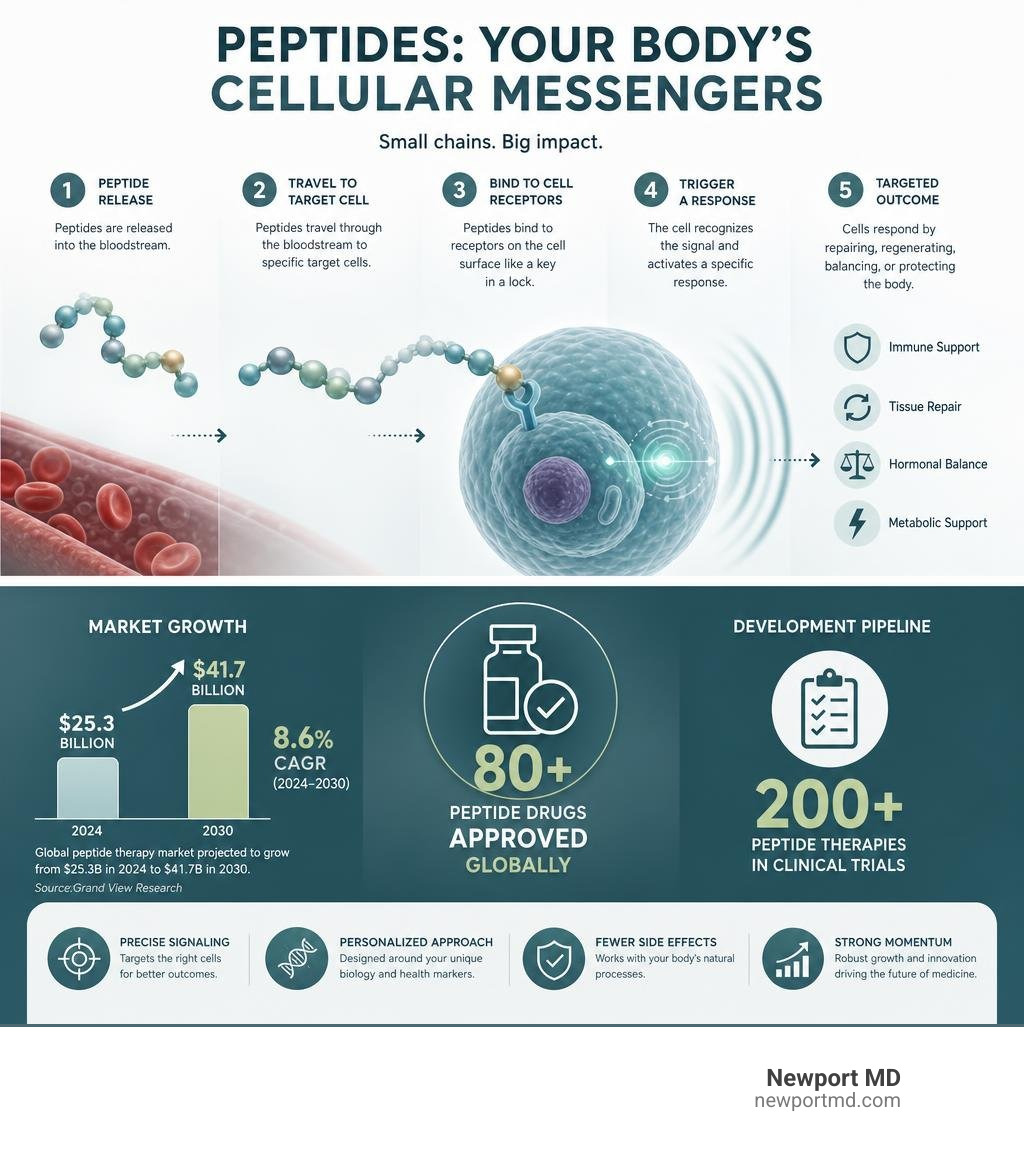
- Peptides are short chains of amino acids involved in cell-to-cell signaling
- Personalized approaches consider factors such as health history, lab markers, goals, and clinician evaluation
- Research is exploring how peptide-based approaches may support more tailored care
- Some peptide-based medications are FDA-approved, while many wellness peptides remain investigational or require careful clinical oversight
- Individual results, safety, and appropriateness vary by person
If you have been exploring more individualized wellness support, peptide therapy may be a topic worth discussing with a qualified medical professional. Unlike one-size-fits-all wellness plans, a personalized approach starts with your health history, lab work, lifestyle, goals, and risk factors.
Your body naturally produces many peptides. These small molecules help cells communicate and participate in normal biological processes. In a clinical setting, peptide-based options should be considered carefully, with attention to quality, dosing, monitoring, and whether they are appropriate for the individual.
Peptide therapy is best understood as a personalized, medically supervised tool — not a guaranteed solution. Potential benefits, limitations, and risks should be reviewed with a qualified provider before starting any protocol.
This guide explains how personalized peptide therapy is discussed, what customization can involve, where the research is heading, and what patients should ask before considering treatment.
What Is Peptide Therapy and How Is It Different from Traditional Medicine?
Peptide therapy refers to the clinical use of peptide-based compounds under professional guidance. Peptides are made from amino acids and are involved in many normal signaling processes in the body.
In general, medications and biologic therapies vary by size, structure, mechanism, safety profile, and regulatory status. Peptides sit between small-molecule drugs and larger biologic therapies, which is one reason they are of interest in personalized medicine research.
However, it is important not to overstate what this means for an individual patient. A peptide’s potential effect depends on the specific compound, the quality of the source, the dose, the patient’s medical history, and whether the therapy is appropriate for that person.
| Characteristic | Small-Molecule Drugs | Therapeutic Peptides | Biologics |
|---|---|---|---|
| Relative Size | Smaller | Medium | Larger |
| Design | Often standardized | May be targeted or protocol-specific | Highly complex |
| Use in Care | Broadly used | Varies by compound and indication | Often specialist-directed |
| Monitoring Needs | Depends on medication | Clinician oversight recommended | Clinician oversight required |
| Regulatory Status | Varies | Varies widely | Varies |
Because peptide-based options can vary significantly, patients should avoid self-directed use and work with a qualified clinician who can evaluate risks, review lab work when appropriate, and monitor response over time. At Everwell MD, peptide-related care is approached as part of a broader, individualized wellness plan rather than as a standalone promise of results.
The Science of Customization: Designing Peptide Therapy for Personalized Medicine
Personalized peptide therapy begins with the idea that care should be adapted to the individual rather than applied identically to everyone.
A clinician may consider health history, symptoms, lifestyle, medications, lab markers, age, goals, contraindications, and follow-up data before discussing whether peptide therapy is appropriate. In research settings, personalization can also involve molecular profiling and advanced data analysis, though those methods are not the same as routine wellness care.
The goal is not to claim that a custom peptide protocol can predict or guarantee a specific outcome. Instead, personalization helps clinicians make more informed decisions about whether a peptide-based option is reasonable, what monitoring may be needed, and when a protocol should be adjusted or stopped.

AI and Machine Learning in Peptide Research
Artificial intelligence and machine learning are increasingly used in peptide research. These tools can help scientists study peptide structure, stability, binding behavior, and potential applications more efficiently than traditional trial-and-error methods.
For patients, this does not mean every peptide protocol is AI-designed or proven to work. It means the broader field is evolving, and future clinical options may become more refined as research, regulation, and manufacturing standards continue to develop.
Manufacturing and Quality Control of Personalized Peptides
Quality control matters. Peptide-based compounds can vary by purity, formulation, storage, and source, which is why medical supervision and reputable sourcing are important.
Patients should be cautious with products purchased online or used without a prescription or clinical oversight. A responsible personalized medicine approach includes reviewing the source of the compound, discussing potential risks, and monitoring for side effects or lack of response.
How Personalized Peptide Therapies May Be Used in Clinical and Wellness Settings
Peptide therapy is not one single treatment. It is a broad category that includes FDA-approved medications, investigational compounds, and wellness protocols that require careful clinical judgment.
Research and Specialist-Led Applications
In research and specialty care, peptide-based approaches are being studied for highly targeted uses. These applications are complex, carefully monitored, and not comparable to general wellness protocols.
For patients reading about peptide therapy online, this distinction matters. A study showing promise in a controlled research setting does not mean the same approach is appropriate, available, or effective for general use. Any peptide-related care should be discussed with a qualified clinician who understands the patient’s medical history and goals.
Metabolic and Body Composition Support
Some peptide-based medications are used in medically supervised programs related to body composition and metabolic health. These options require individualized screening, dosing, and monitoring, and they are not appropriate for everyone.
At Everwell MD, peptide-related options may be discussed as part of a customized medical weight loss program when clinically appropriate. The emphasis is on evaluation, safety, realistic expectations, and ongoing follow-up rather than guaranteed outcomes.
Performance, Recovery, and Healthy Aging Goals
Some patients ask about peptide therapy because they are interested in energy, recovery, performance, or healthy aging. These goals should be approached carefully. While certain peptide compounds are discussed in wellness and longevity settings, evidence and regulatory status vary widely.
A clinician-guided plan may include lab testing, lifestyle recommendations, hormone evaluation, nutrition support, or other non-peptide strategies before considering whether a peptide protocol makes sense.
Whole-Person Wellness Planning
Personalized peptide therapy is most responsibly discussed as one possible part of a broader wellness plan. Sleep, nutrition, movement, stress management, lab interpretation, and medical history all influence whether a treatment is appropriate.
For Everwell MD patients, peptide therapy may be considered alongside other health optimization services when a provider determines it fits the patient’s goals and safety profile.
Potential Advantages of a Targeted, Clinician-Guided Approach
The appeal of personalized peptide therapy is not that it guarantees a specific result. The appeal is that it encourages a more tailored, closely monitored approach to care.

Why Patients Explore Peptide Therapy for Personalized Medicine
- Individualized evaluation: A personalized approach can account for lab markers, goals, medical history, and risk factors.
- Targeted protocols: Some peptide-based options are designed with specific biological pathways in mind, though outcomes vary.
- Medical supervision: Clinician oversight can help determine whether a protocol is appropriate and when it should be adjusted.
- Integration with broader wellness care: Peptide therapy may be considered alongside lifestyle, nutrition, hormone evaluation, and other supportive strategies.
Integrating Peptide Therapy with Standard Care
Peptide therapy should not replace appropriate medical care or be used without professional guidance. For many patients, the first step is a comprehensive evaluation to understand what is actually driving their concerns.
At Everwell MD, peptide-related care is integrated with personalized wellness planning, lab review, and ongoing monitoring. When appropriate, it may be discussed alongside hormone optimization, nutrition, lifestyle support, and other clinician-guided services.
Limitations, Safety Considerations, and Responsible Use
Peptide therapy should be approached with realistic expectations. While the field is evolving quickly, not every peptide discussed online has the same level of evidence, regulatory approval, or safety data.
Stability, Delivery, and Administration
Peptides can be sensitive to digestion, storage conditions, and formulation. Some peptide-based medications are administered by injection or other non-oral routes because standard digestion may break peptides down before they can be absorbed.
The best delivery method depends on the compound, its intended use, regulatory status, and the clinician’s judgment. Patients should not assume that a peptide is safe or effective simply because it is marketed as “natural” or “bioidentical.”
Side Effects, Contraindications, and Monitoring
Side effects and risks vary by peptide. Some people may experience localized irritation, digestive symptoms, medication interactions, or other unwanted effects depending on the compound and their health profile.
A responsible protocol includes screening for contraindications, reviewing medications and medical history, setting realistic goals, and monitoring response. If a patient does not respond as expected or experiences side effects, the protocol may need to be adjusted or discontinued.
Regulation and Quality Concerns
Personalized peptide therapy can involve different regulatory categories depending on the compound and how it is prescribed or prepared. This is one reason patients should avoid unverified online products and seek care from qualified professionals.
Quality, purity, dosing accuracy, and storage all matter. Medical supervision helps reduce avoidable risk and supports more informed decision-making.
Future Directions and Ethical Considerations
The future of peptide-based personalized medicine is promising, but it should be discussed carefully. Research continues to explore how peptide design, delivery, and monitoring may become more precise over time.
As the field develops, responsible care will depend on clear patient education, appropriate sourcing, realistic expectations, and ethical marketing. Patients should be able to understand what is established, what is still being studied, and what risks or uncertainties may apply.
At Everwell MD, the focus is on personalized, science-informed wellness care with medical oversight. For patients in Newport Beach, Orange County, and the surrounding Southern California area, peptide therapy may be considered only when it fits the broader clinical picture and the patient’s individual goals.
Frequently Asked Questions about Peptide Therapy
How long does it take to notice changes with personalized peptide therapy?
Timelines vary. Some patients may notice changes within weeks, while others may not notice meaningful changes at all. The timeline depends on the peptide, the reason it is being considered, baseline health, dosing, lifestyle factors, and ongoing monitoring.
Is peptide therapy safe?
Safety depends on the specific peptide, source, dose, patient history, medications, and monitoring plan. Some peptide-based medications have established clinical uses, while others are investigational or used in more limited settings. A qualified clinician can help determine whether a peptide protocol is appropriate.
How are personalized peptides administered?
Administration varies by compound. Some are administered through small subcutaneous injections, while others may be available in different formulations. The appropriate route should be determined by a medical professional based on the peptide, the patient’s goals, and safety considerations.
Conclusion
Peptide therapy for personalized medicine is an evolving field that reflects a broader shift toward more individualized, data-informed wellness care. While peptide-based options may be worth discussing for certain patients, they should not be viewed as a guaranteed solution or used without medical guidance.
At Everwell MD, peptide therapy is considered within a comprehensive wellness framework that may include lab testing, lifestyle review, hormone evaluation, and ongoing clinical monitoring. The goal is to help patients make informed, realistic decisions based on their individual needs and safety profile.
If you are curious about whether peptide therapy belongs in your personalized wellness plan, the next step is a clinician-guided consultation.
Schedule a personalized peptide therapy consultation with Everwell MD.